
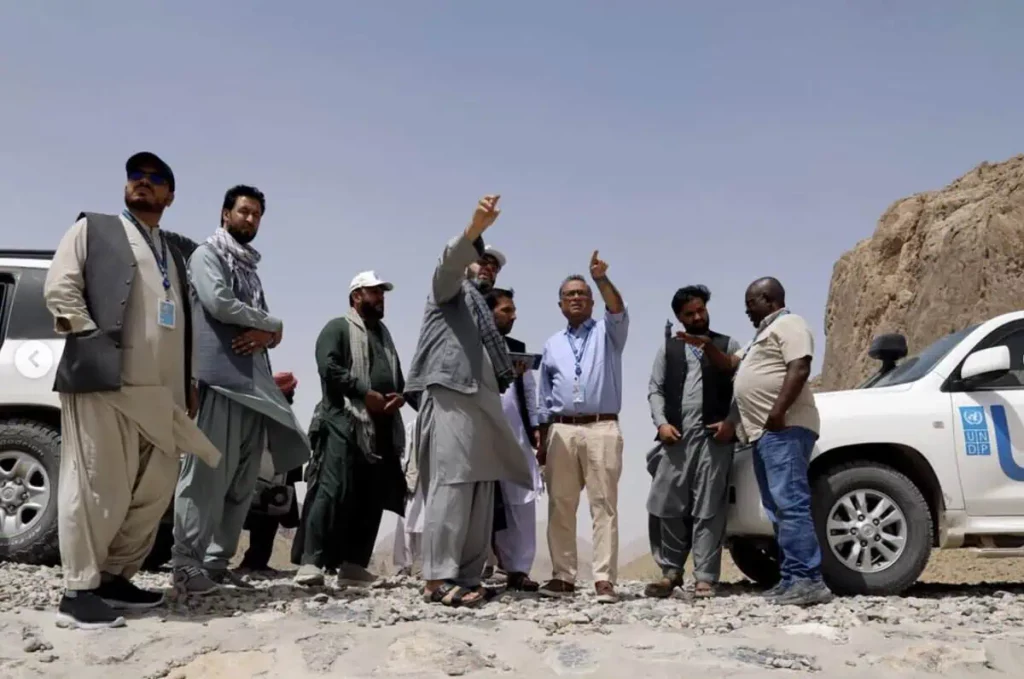
For the second time in a generation, official development assistance — as conventionally measured by the Organization for Economic Cooperation and Development — is collapsing.
In the 1990s, ideologically driven development assistance declined after the end of the Cold War. In the 2020s, the major donors have shown a preference for hard power over soft power channelling more funds into defense, at the direct expense of foreign aid. Spending on immigration from conflict-torn states has also drawn funds away from traditional aid budgets.
The scale of the latest decline and the consequence for the United Nations system have been well documented. According to the Organization for Economic Cooperation and Development (OECD), aid fell by $50 billion in 2025 to $174 billion, a decline of 23 percent in one year and one-third less than in 2023.
Apart from the size of the decline, the harshest consequence is the suddenness of the collapse. A precipitous fall in funding is hugely disruptive. It leads to widespread redundancies in the aid industry, and more important, it pulls the plug on many ongoing life-saving initiatives in low-income countries, as witnessed most dramatically by the abolition of USAID.
But while the short-term disruption has been dramatic and painful, it is also important to focus on what it means over the long term. Here, there has been little reflection and analysis, bearing in mind that foreign aid is only partial compensation for outflows of resources, including the illicit financial flows, which drain some $90 billion from Africa every year; burdensome debt repayment terms; and the many other barriers thrown up by aid-giving countries to the exports of the lower-income economies. (The agenda of the UN’s Financing for Development initiative should help put aid in context by identifying these reverse flows and calling out corruption and the accounting practices of multinational corporations.)
Even besides its modest size compared with other financial flows, the assumption in the UN has been that more aid is good and less aid is bad. That would only be true if aid — both humanitarian support and development assistance — was invariably effective. But evidence suggests otherwise.
Take humanitarian aid first. Declining assistance has meant that lives were lost in many of the low-income countries that had become dependent on food, shelter and lifesaving medicines from abroad. In the present era of growing and widespread conflict, humanitarian assistance remains vital just to keep people alive and to support livelihoods in low-income countries, however inadequate they are.
Concerns about effectiveness arise, however, when short-term humanitarian aid becomes long-term dependence. Because it works in silos, the UN system has often failed to make the transition from humanitarian phases to development. Food aid is continued after an emergency, adversely impacting domestic agriculture production. Refugee settlement becomes a permanent housebuilding program.
Humanitarian aid for the HIV/AIDS epidemic began in the 1980s. Forty years on, many countries are still reliant on aid to provide antiretroviral drugs, and its availability has undermined resilience and postponed the creation of domestic capacity to tackle the disease.
Somewhat similar arguments apply to development assistance: The UN purports to do development but it overstays. On the aggregate level, aid has played at best a marginal role in influencing complex and highly variegated development processes. Development happens — for better or worse — with or without external support. And while the positive impact of development aid is difficult to demonstrate, there is evidence that it can hinder the ability of countries to advance.
By performing the “development” themselves, donor projects undermine domestic capacity creation. Donors and their local counterparts readily claim successful short-term results but overlook long-term impact. Over the long term, the most aid-dependent low-income countries have languished among the lowest ranks of the Human Development Index, while countries committed to development have advanced, with or without aid.
As the Nobelist Angus Deaton puts it: “When the conditions for development are present, aid is not required. When local conditions are hostile to development, aid is not useful, and it will do harm if it perpetuates those conditions.”
‘Worthwhile’ aid
Of course, it is too facile to paint all development assistance with the same brush. Development aid is a primary source of donor influence, but it can be worthwhile if it converts from one-sided patronage to more equitable relationships in which aid is a supporter of local processes rather than the prime mover.
In the UN system, and elsewhere, this approach means avoiding multiple projects thought-up by donors and implemented on their behalf. In fact, many UN development operations, which are dominated by donor earmarking, tend to mimic projects funded by other multilateral (World Bank, European Commission) and bilateral sources. They should yield their place to core-funded normative and regulatory activities that are unique to the UN.
This must mean the end of multiple small UN projects purporting to “do development.” Instead, the UN development system should favor knowledge facilitation, support to peer exchange and South-South cooperation and helping governments navigate complex policy trade-offs that are independent, politically informed and normatively grounded. To be effective in these roles, the UN organizations will need to recruit staff with more substantive than procedural and administrative skills.
A major UN role will continue to be public advocacy by elevating norms, correcting misinformation and shaping national debates in line with globally agreed standards. The work of the UN should be applied universally, and all UN member states should be held accountable for their progress. In the Human Rights Council, universal periodic reviews provide a model for development.
In sum, the decline in foreign assistance is an opportunity for the aid community and, particularly the UN, to carry out a fundamental review of its development effectiveness. Short-term humanitarian aid, in which the UN continues to play a leading role, will still be needed on a discomforting scale. But it should avoid creating long-term dependence.
There will also be situations of fragility and postconflict reconstruction requiring a full range of support from the UN. But in many of its operations, the UN must move on from the perpetual, increasingly ambiguous North-South duality that underlies its widespread patronage system and characterizes its development family.
A huge challenge awaits the new secretary-general in the appointment of a development deputy who will need the qualities, respect and motivation to reposition a UN development system away from aid and patronage and toward genuine development cooperation.