Inside Rubicon: The Structure of Russia’s Elite Drone Center

Officially formed in August 2024 by Russian Defense Minister Andrey Belousov, the “Rubicon” Center was created to centralize and scale Russia’s previously fractured unmanned technology initiatives (aerial, ground, and naval) under a unified umbrella responsible for research, procurement, training, and operational deployment.

Heartland vs. Rimland: The Battle Lines in the War for the Next Global Order

At first glance, today’s strategic map seems familiar. A bloc of land-based powers, clustered around the center of Eurasia, is challenging a liberal, maritime order headed by an offshore superpower. China and Russia, reinforced by Iran and North Korea and ringed by autocracies from Belarus to Myanmar, now occupy the role that Napoleonic France, imperial Germany, and the Soviet Union each once held—continental empires seeking to dominate Eurasia and project power globally. The United States, like the United Kingdom before it, remains the only actor capable of anchoring a great arc of coastal and maritime countries across North America, Europe, and East Asia that hem in the Eurasian supercontinent. The rhythm of geopolitics repeats itself: an autocratic axis, emerging from the continental heartland, seeks to rupture rimland barriers that buffer the wider world.

Analysis of the Characteristics of US Intervention in the Ukraine Crisis and Two Military Strikes Against Iran

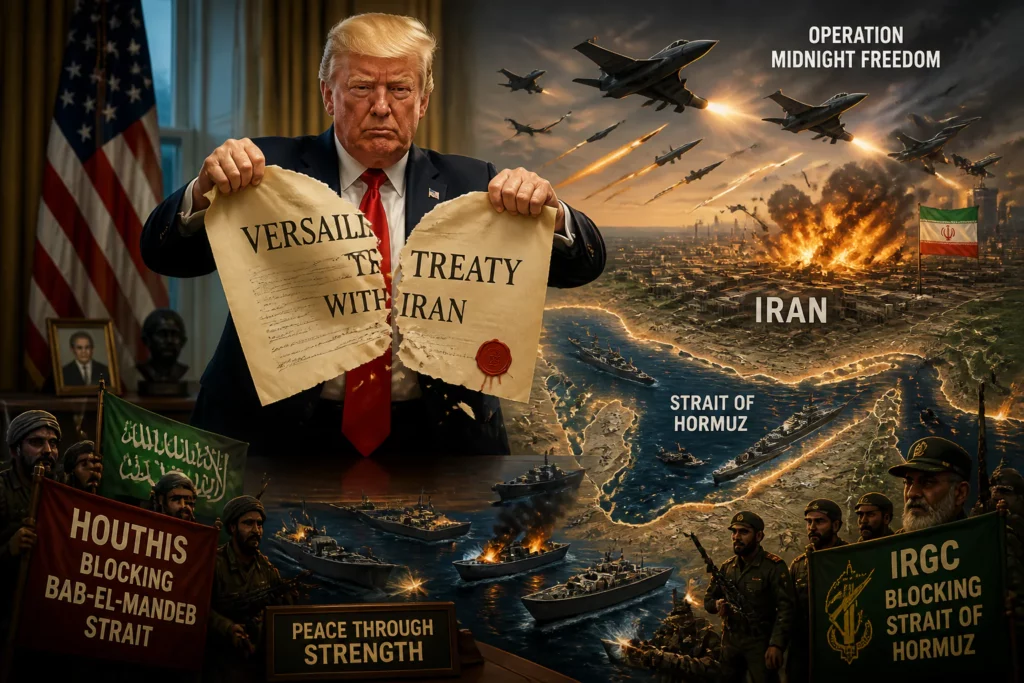
June 12, 2026 – On February 28, 2026, the United States launched Operation Epic Fury against Iran. A comparative analysis of the US intervention in the Ukraine crisis since 2022 and the “Midnight Hammer” precision strike against Iran in 2025 reveals new trajectories and characteristics of US military intervention. The intervention posture has shifted from behind-the-scenes manipulation to overt leadership; troop deployment has shifted from limited support to systemic application; intervention is more proactive, more precise, more systematic, and more assertive in its control.