Les trois Europe à une époque de danger maximal

Il appartient aux hommes et aux femmes de cette génération de revivre une fois de plus des temps dangereux. En réalité, l’exception est le contraire : la chance de connaître, au cours d’une seule vie, de longues années de paix relative, entrecoupées seulement de conflits locaux qui ne menacent pas l’existence même de la civilisation, voire de l’espèce.

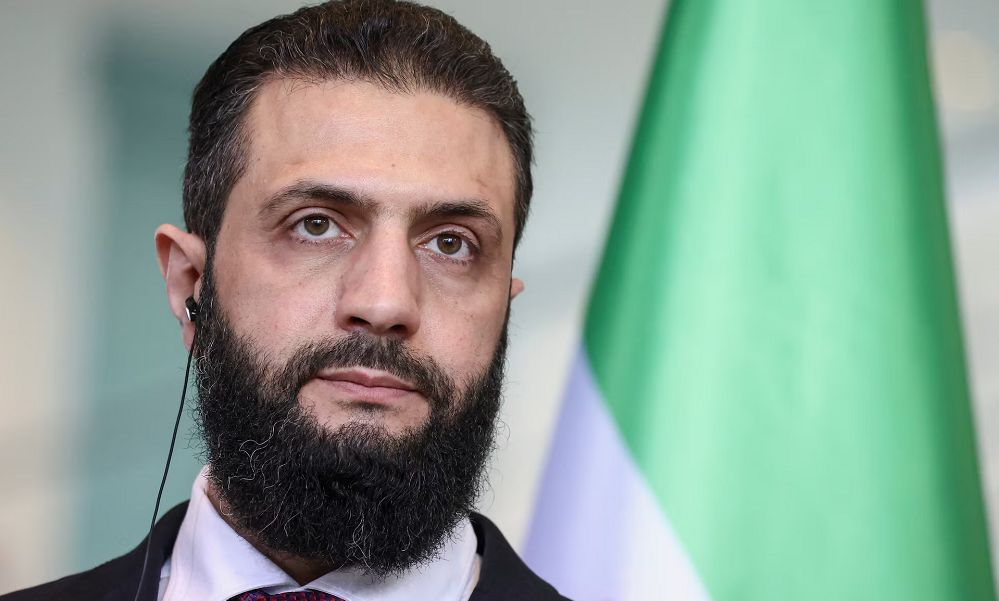
Idlib, Release of a Group of “Hizb ut Tahrir” Detainees

The Syrian government released a number of detainees affiliated with the Islamist-oriented Hizb ut-Tahrir party who had been imprisoned in Idlib (northwestern Syria) on Monday, February 16.

Abdo al-Dali, a member of the media office of Hizb ut-Tahrir, Wilayah Syria, confirmed to Enab Baladi that several party members detained in Idlib had been freed, most notably Ahmad Abdel Wahab, head of the party’s media office in Syria.

The growing Saudi-UAE power struggle in the Horn of Africa

The rift between Saudi Arabia and the United Arab Emirates (UAE) has erupted beyond subtle divergences into a more overt and consequential rivalry.

While it started with an emerging proxy war over southern Yemen, it has now shifted to the Horn of Africa. But while efforts to smooth their differences have recently pointed to a quiet compromise, their underlying competition may take longer to dissipate.

Iranian diplomats ferrying millions in cash to Hezbollah

Iran International has obtained information alleging that senior Iranian diplomats transported large amounts of cash to Beirut in recent months, using diplomatic passports to move funds to Lebanon’s Hezbollah.

The transfers involved at least six Iranian diplomats who carried suitcases filled with US dollars on commercial flights to Lebanon, according to the information.

The geopolitics of Balochistan’s hybrid insurgency

Recently, Pakistan was rocked by the Baloch Liberation Army’s “Herof Phase 2” offensive, a coordinated assault across nine districts that combined urban raids, rural guerrilla tactics, suicide missions, and psychological warfare. This was not simply an internal security lapse, it was a geopolitical tremor reverberating across South Asia.

The Beginning of the End for the Mullahs

For decades, Iranian leaders grew accustomed to Western caution, diplomatic hedging, and carefully measured statements designed to avoid escalation. They learned that repression at home would provoke criticism but rarely consequences. They learned that terrorism abroad would be condemned but tolerated. They learned that nuclear deception would lead to negotiations, not punishment.

Le Jeu du Nouvel Ordre Mondial

Depuis la nuit des temps, l’histoire de l’humanité est tissée de secrets, de prophéties et de pactes voilés qui semblent défier toute compréhension. Cette fascination pour l’occulte n’est pas un phénomène récent : sociétés initiatiques, codes cryptés et récits de pouvoirs occultes ont accompagné l’évolution des civilisations, alimentant à la fois la curiosité intellectuelle et la peur collective de ce qui échappe au contrôle public. C’est précisément à ce carrefour que nous nous sommes récemment plongés dans la série « La dynastie qui a changé le monde ». Cette série a démontré que les théories du complot ne sont pas des mythes, mais se nourrissent d’éléments réels qui prennent une ampleur inattendue. Et le sujet qui nous réunit aujourd’hui en est peut-être un autre exemple.

The Uncontrollable Spark: Examining Latent Escalation Parameters in Middle Eastern Conflicts

The Middle East, a region of profound historical depth and strategic significance, remains a geopolitical tinderbox characterized by intricate alliances, entrenched rivalries, and unresolved conflicts. While active hostilities are often contained within certain thresholds, a complex web of latent parameters exists beneath the surface. These factors possess the inherent potential to override existing controls, triggering a rapid and uncontrollable regional escalation with severe humanitarian, economic, and strategic consequences. This analysis seeks to identify these parameters from a neutral, analytical standpoint, focusing on the mechanisms that could transform a contained conflict into a widespread conflagration.

Taliban issue bachelor’s degrees to 325 madrassa graduates, including from Pakistan

The Taliban-run higher education ministry has begun issuing bachelor’s degrees to 325 madrassa graduates, including alumni of religious schools in Pakistan, according to a ministry statement and an official list.

The ministry said the process started on Thursday, Feb. 12. Among those set to receive degrees are 10 graduates of what it described as “jihadi” madrassas.