
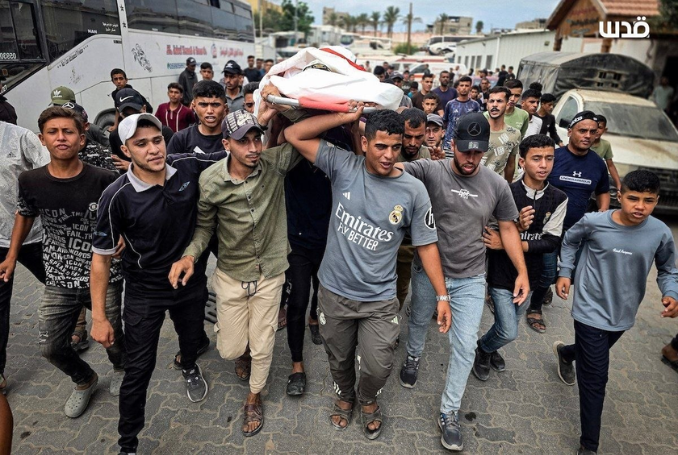
What kind of ceasefire allows bombing to resume without warning, vehicles carrying civilians to be struck, homes to collapse upon their inhabitants?
Let’s make something clear from the outset: the so-called Trump Gaza plan, announced on September 29, 2025, which led to the October ceasefire, sparked widespread hope that international diplomacy had finally prevailed to halt the violence.
Today, however, the reality on the ground tells a different story. Despite the overwhelming global support the plan received to end the conflict, the evidence suggests that Israel utilized the agreement to navigate its military challenges in Gaza while preserving much of its control over the besieged territory.
The plan did not return Gaza to the days before the genocide. The intermittent Israeli violence of the past has become daily killing, while the pre-genocide siege has tightened into a suffocating blockade imposed on a population barely surviving amid the ruins of its cities and refugee camps.
Genocide under the Guise of a Ceasefire
Since the ceasefire began on October 10, 2025, Israeli forces have killed at least 1,471 Palestinians and wounded another 5,189, according to Gaza’s Ministry of Health. These figures exclude those who have died from disease, lack of adequate medical care, and other consequences of the ongoing humanitarian catastrophe.
In almost any other conflict, such numbers would be described as evidence of a continuing war. Yet in Gaza, they are recorded under the reassuring language of a ceasefire. Even more heartbreaking is that the victims include at least 327 killed and 547 wounded children.
Not a single hospital in Gaza is fully functional, according to a joint statement issued by more than 100 humanitarian and human rights organizations. The morgues continue receiving new fatalities, alongside hundreds of bodies recovered from the rubble.
An estimated 10,000 Palestinians remain buried beneath destroyed buildings. What kind of ceasefire forces Gaza’s Ministry of Health to maintain separate records for those killed during the genocide and those killed since the supposed cessation of hostilities?
What kind of ceasefire allows bombing to resume without warning, vehicles carrying civilians to be struck, homes to collapse upon their inhabitants, and families to continue burying their children?
Unfulfilled Promises and Shrinking Spaces
Even the humanitarian provisions of the agreement have remained largely unfulfilled. The plan envisaged aid deliveries on a scale of approximately 600 trucks daily. Yet a UN assessment found that UN-coordinated humanitarian shipments averaged fewer than 100 trucks per day during the agreement’s first 172 days. Where is the heavy machinery needed to remove the rubble, recover the dead, and begin rebuilding what Israel has destroyed?
Speaking of rubble, Gaza now contains approximately 61 million tons of it—around 20 times the debris generated by all wars worldwide over the preceding 18 years, according to figures cited by humanitarian organizations. Even the ruins are closing in on Palestinians. Last month, 21 people, including 12 children, were killed when a damaged building collapsed in Gaza City.
Meanwhile, the space available for Palestinian life continues to shrink. Since the ceasefire began, Israeli military control has expanded from approximately 53 to 63 percent of Gaza (some estimates put the number at 70%), according to the UN Office for the Coordination of Humanitarian Affairs.
Despite the overwhelming international backing the plan received, its supposed guarantors have utterly failed to halt Israel’s ongoing oppression or enforce compliance with the agreement’s central provisions. Instead, much of the political discussion has focused on disarming Palestinian resistance, as though resistance itself were the original cause of colonialism, military occupation, siege, apartheid, and genocide.
While championed by the Trump administration and international partners as a definitive path to peace, the ceasefire in practice provided Israel with an opportunity to regroup and pursue objectives it had previously struggled to achieve. Under this arrangement, Palestinians are expected to refrain from armed resistance while Israeli military operations, territorial expansion, and restrictions on essential supplies continue.
The Danger of a New Status Quo
Without meaningful resistance to these policies—whether by Palestinians or through sustained international political and legal pressure—the danger is that Israel will escalate its push for the ethnic cleansing of Palestinians from Gaza. This is why Gaza must remain at the center of international attention. Public mobilization, political pressure, legal accountability, and solidarity cannot be suspended simply because an agreement has been labeled a ‘ceasefire’.
The international community must challenge the premise that the genocide has ended merely because the language used to describe Israel’s actions has changed. A ceasefire without enforcement, accountability, or an end to occupation cannot become a substitute for Palestinian freedom.