
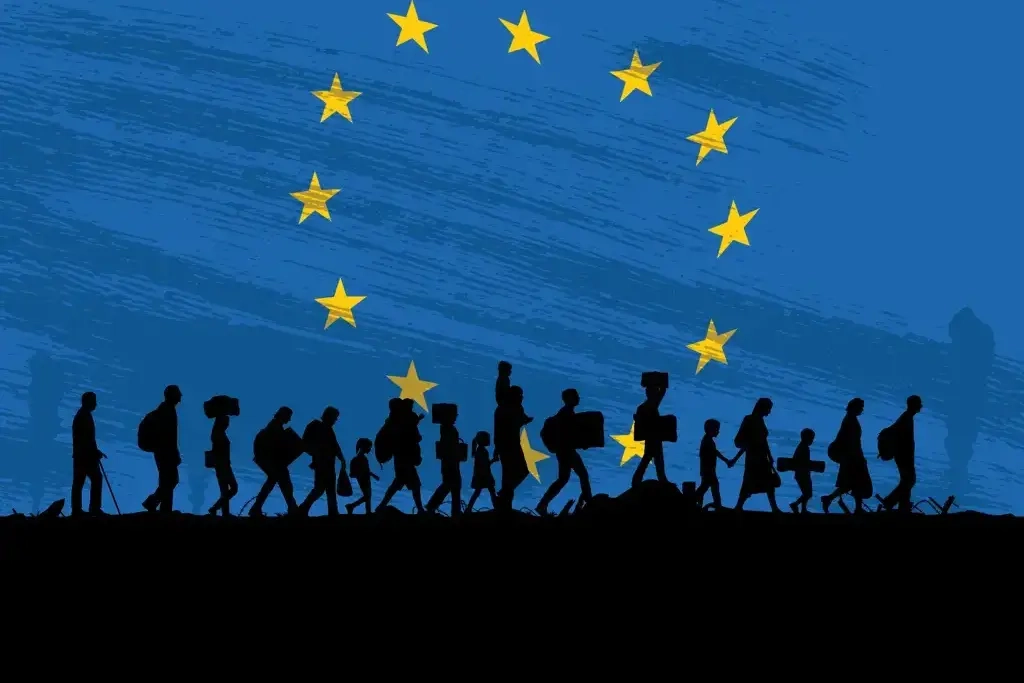
The number of migrants in the world has reached 300 million, and despite the growth of anti-migration sentiment and the coming to power of leaders promising to stop the influx of visitors, neither the United States nor Europe has been able to significantly reduce their number. Migration will grow because aging economies are increasingly lacking in the hands, and the main challenge for the authorities is not so much to stop the flow as to properly integrate migrants to avoid social conflicts and get economic benefits. World experience in this matter is different, but numerous studies show that migration policies have been more successful in countries where migrants have received equal access to the labour market and could participate in social processes. The higher the employment of immigrants and the fewer bureaucratic barriers, the lower the negative factors for which migration are criticized: crime and inclusion in the local society.
The success of the integration of migrants is determined not only by the scale of migration, but also by the way countries manage this process. In recent decades, almost all developed countries have been going through an acute demographic crisis associated with population ageing. This, combined with globalization, has led to an increase in the influx of migrants to these states. According to the UN, from 1990 to 2024, the number of migrants in the world doubled, reaching almost 300 million people, although in percentage terms the growth was much more modest – from 2.9% to 3.7% of the world’s population.
This growth provoked a general wave of anti-migration sentiment. However, even politicians coming to power at the expense of the appropriate rhetoric usually fail to stop the influx of migrants.
So, Donald Trump only slightly reduced the number of legal migrants arriving in the United States in its first term, reducing mainly the admission of refugees under the UN resettlement program.
During the time when the Italian government is headed by George Meloni, who also came to power in the wake of anti-migratory sentiment, the number of immigrants coming to the country has only increased. The country even remained the leader in the number of illegal immigrants passing through it.
Brexit, which occurred against the backdrop of dissatisfaction with the British migration, led to the fact that Europeans began to leave the country, but many more migrants from non-European countries came instead.
The Russian authorities, dispersing anti-immigration hysteria, are simply trying to replace visitors from neighboring countries with distant ones.
This is because migration has an objective stimulus: a growing need for workers. As long as this need persists, migration will also grow. According to the International Organization for Migration, by 2050 the number of migrants in the world will exceed 400 million people. Accordingly, it is necessary to understand how best to manage migration and integrate visitors.
By 2050, the number of migrants in the world will exceed 400 million peopleAs with measures designed to restrict entry, attempts to integrate migrants often yield results that are independent of the efforts of the authorities or even contradict them.
For example, Sweden is the most hospitable country in the world in relation to migrants, it has the highest Migrant Integration Policy Index (MIPEX). However, the results of integration there are significantly worse than in other countries. Migrants in Sweden are more likely to commit crimes than locals, earn less, pay less taxes, their children learn worse, and efforts to integrate them begin to pay off only decades later.
At the same time, in Spain, where the proportion of migrants in the population (a little more than 20%), MIPEX and spending on integration programs is lower. However, the gap between migrants and locals is also lower. In addition, migration has reduced the unemployment and crime rate in the country and increased GDP per capita.
And in extremely inhosim to the visitors of Russia, whose MIPEX is very low, migrants commit crimes one and a half times less often than locals with the same level of employment.
Studies show that the key role is played not by the costs of integration and not the rigidity of migration policy in itself, but by three factors: migrants’ access to the labor market, the composition of migration flows and the ability of institutions to prevent discrimination against visitors.
Access to the labour market
Employment – The main factor, which determines the tendency to commit crimes in any group of the population. Unemployed people are more likely to commit crimes for survival, which usually include thefts, Squatting or, for example, prostitution. They are also more often involved in criminal networks, which, in fact, are alternative forms of employment.
Even among employed people, the peaks of criminal activity fall on the periods when they are not occupied – holidays. However, in this case, the number of violent crimes is growing, which is mainly due to the influence of alcohol. At the same time, crime among the unemployed holidays have a much smaller effect.
About 60% of migrants in the world move for work. Since crime among migrant workers is usually lower than among the local population, their influx may even reduce the overall rate of per capita crime.
Crime among migrant workers is usually lower than among the local populationThis largely explains the paradoxically low level of crime among migrants in Russia – the country practically does not accept refugees, the absolute majority of visitors here are migrant workers. For Ukrainian refugees since 2014 (against the background of the occupation of Crimea and certain areas of the Donetsk and Luhansk regions of Ukraine), a preferential regime of stay was introduced, allowing them to immediately work, use public services and be unlimited in the country. Simplified citizenship was also provided, so they almost did not affect the official statistics of crimes as migrants.
There are quite a few examples of the fact that the opportunity to work legally improves the integration of migrants significantly. Indicative of the two immigrant waves in Britain. For example, in the late 1990’s – early 2000’s, asylum seekers arrived in the country, who did not have the right to work immediately, and this led to an increase in property crimes. And the wave of migration associated with the adoption of ten new countries in the European Union and, accordingly, consisted of people who immediately got the right to work, on the contrary, slightly reduced the level of crime.
A similar situation has developed in Italy after the accession of Bulgaria and Romania to the EU. Due to the fact that the citizens of these countries automatically received legal status, the level of “survival crimes” among them decreased by half. Moreover, this effect was mainly observed in the industrialized northern regions of the country, while in the south, where migrants were often informally employed in agriculture, legalization practically did not affect the crime rate.
This effect is also clearly visible in the contrast between the English-speaking countries (Great Britain, Canada, the USA, Australia, Ireland and New Zealand) and continental Europe. This is due to the fact that English-speaking countries are geographically removed from the main conflict zones. Refugees are not easy to get there: they are mainly resettled under the program of the Office of the United Nations High Commissioner for Refugees.
Accordingly, these people have already received the approval of their asylum applications and immediately receive the right to work upon arrival. As a result, in all of these countries, the proportion of migrants among prisoners меньшеis lower than their share in the total population, and their children demonstrate better test results than the children of local residents.
In continental Europe, refugees fall directly through land borders or by sea. Therefore, they do not immediately get the right to work. The report of the European Council for Refugees and Exiles notes that despite the fact that numerous European directives proclaim labor a fundamental human right and demand that refugees open access to the labor market as soon as possible (even at the stage of consideration of the application), many states in fact create various barriers.
In some countries, refugees are kept for a long time in camps located in regions with high unemployment or often move between detention centres, which prevents them from getting a permanent job. In others, they are either delayed by the issuance of documents, or employers themselves do not understand whether they have the right to hire asylum-seekers whose application has not yet been approved.
In many EU countries, migrants can only work in a limited number of sectors, mainly in low-skilled positions. In addition, in many places to work in high positions, a specialized diploma is required (and a certain level of local language proficiency), but the documents on education received in other countries are not recognized. Therefore, for example, in Italy, low-skilled migrants are employed more often than Italians with a similar level of qualification (65.0% against 53.2%), and highly qualified migrants are less likely (69.0% vs. 85.7%).
In Hungary, a temporary residence permit is issued for only three months, so refugee documents require constant confirmation in the workplace, which increases administrative costs for employers. In Greece, only 3% of refugees were able to open bank accounts to receive a salary. In the Netherlands, of the 26,520 people who applied in 2021, only 590 received the opportunity to work – the rest faced bureaucratic barriers.
Ireland is among the eight EU countries where non-EU migrants have a higher level of employment than local populations. A similar situation has developed in Poland and the Czech Republic, where many Ukrainians go, for whom there is a simplified regime for obtaining a work permit. In Portugal, a similar regime exists for natives of the former colonies. At the same time, almost throughout the EU, with the exception of the Netherlands, France, Greece, Latvia and Finland, the employment rate of migrants from other EU countries is higher than that of local residents.
In the US, migrants have traditionally shown lower crime rates, better health and school performance than local residents, and brought closer to them (or even surpassed) in economic performance to the third generation. Even in refugees, the level of employment was comparable to that of migrant workers.
However, in the 2010-ies from the southern border of the United States began an influx of asylum-seekers from Latin America, based mainly on four countries: Honduras, El Salvador, Guatemala and Venezuela. This influx was, on the one hand, the result of US interference in the policies of these states during the Cold War, as American interventions led to long-term destabilization. On the other hand, this instability was aggravated by the flow of weapons illegally falling into Latin America from the States themselves.
As refugees arrived in the U.S. directly rather than the UN resettlement program, they were restricted in the right to work until their asylum applications were approved. The results of their integration turned out to be, respectively, worse, so the authorities had to spend much more money on them.
Thus, the restriction on work for asylum seekers leads to long-term negative economic effects. Until it is withdrawn, refugees are forced to live exclusively at the expense of the state, becoming dependent on benefits. During this period, people do not integrate into society, as they do not participate in its economic life, and their professional skills are gradually lost. As a result, the probability of their employment after obtaining a work permit is reduced by 15%.
Restriction on work for asylum seekers leads to long-term negative economic effectsIn Germany, the court’s decision has reduced the duration of the expectation of a work permit for refugees. This experience showed that those who had to wait for a permit for seven months longer were employed with a probability of 20 percentage points lower than those who received this right earlier. This gap was covered only ten years later. According to researchers, the EU has lost 37.6 billion euros of GDP due to the fact that refugees who arrived during the migration crisis caused by the war in Syria were limited in employment.
What Migrants Come
In Sweden, however, refugees can work almost immediately after applying for asylum, albeit only in low-skilled positions. However, the results of integration in this country are among the worst of all developed countries.
The main impact here is what kind of migration flows to Sweden. For decades, the country has hosted a huge number of refugees, mostly from culturally distant countries in the Middle East. The three main countries of origin of migrants in Sweden are Syria, Iraq and Afghanistan. Sweden is now the country with the highest number of refugees per capita in Europe.
Such a policy was largely due to the fact that Sweden, despite the fact that its empire was built around the Baltic Sea, did not have successful overseas colonies. The country developed more as a continental empire, like Russia, the Ottoman Empire or Austria-Hungary. But the territories dependent on it (Finland, Norway, the Baltic countries, parts of Germany) are almost as developed as it is itself. Their residents have no incentive to move to Sweden, and they themselves face the same demographic problems. Therefore, the Swedish authorities had to look for another way to attract young people to correct the demographic imbalance and fill jobs that require manual labor.
However, refugees are a category of migrants that are the hardest to integrate. They adapt much more slowly than migrant workers and those who come to reunite the family. In studies, this is called the “benezhin gap” – a difference that manifests itself in the rate of integration of refugees and other categories of migrants.
Unlike economic migrants, who usually choose the country in advance, prepare for relocation, learn the language and often already have connections, in-demand skills or job offer, refugees leave their homes forcedly. They often lose property, documents, professional ties and the ability to use the accumulated human capital.
Refugees are a category of migrants that are the most difficult to integrateIf the relocation of labor migrants is determined by their skills and the needs of the market attracting them, then refugees go where they can find refuge. Their integration further complicates the experienced trauma, the long-term uncertainty of the legal status, restrictions on access to the labor market during the consideration of the application, as well as administrative resettlement in regions with limited economic opportunities and the absence of a diaspora. Finally, a serious barrier is created by cultural differences.
In Spain, the flow of humanitarian migration is now comparable to that in Sweden at the peak of refugee reception (although due to the fact that the country’s population is five times higher, as a percentage of it is much lower). At the same time, 47% of migrants in Spain are immigrants from Latin America with a common language and a similar culture. They have a visa-free regime with Spain, they can immediately work and after two years of life in the country have the right to obtain citizenship. Another 27% are natives of other European countries. Only 18% come from Africa and 6% come from Asia (in particular the Philippines, where Spain also had colonies).
Because of historical, cultural and linguistic ties, integration into Spanish society for most migrants is much easier than the integration of Middle Eastern migrants in Sweden, despite the lower costs of the state.
Russia also has significant cultural and linguistic influence in Central Asia and large diasporas from this region, so it is easier for migrants from Central Asian countries to integrate into Russian society.
Similarly, the United States has influenced Latin America for centuries and has large Latin American diasporas. Poland and the Czech Republic also show high results of the integration of migrants, because historically, Ukrainians close to culturally and linguistically visited, who could immediately get a job. Therefore, even when the flow of Ukrainian refugees poured there after the beginning of the war, they also relatively easily integrated.
However, cultural differences are not the whole gap. It is also important what quality of human capital attract countries. Thus, the United States is geographically removed from the main migration zones, which is why the very opportunity to get there requires large starting resources. Thanks to high salaries, the States attracts the most successful and educated people. Therefore, diaspora there favorably differ from European ones.
For example, migrants from the Middle East in the U.S. have a bachelor’s degree twice as likely to have a bachelor’s degree than Americans on average, and earn a little more. Wherein in Europe, where they came mainly as low-skilled guest workers, illegals or refugees, they represent the most problematic low-income and high crime rates.
Similarly, migrants from Pakistan to the U.S. have a higher level of income and education than locals, while in Britain they represent a group with one of the lowest employment rates in the country. It would seem that Britain is about as far from Pakistan as the United States, so the results should be similar. In this case, the colonial past is influenced: Britain itself massively imported peasants from the former colony in the 1950-1960s to work in factories, and they then transported their families.
However, much of the employment gap is also due to the fact that many Pakistani women, due to cultural traditions and discrimination, prefer not to work and to do household chores. This factor is relevant for many diasporas from Muslim countries in Europe.
The Influence of Discrimination
Finally, it is also important how the country’s institutions are ready to accept migrants. Even if a country attracts relatively safe flows and provides quick access to the labor market, this is not enough. It is important whether the institutions allow migrants to compete with local residents on equal terms.
The United States, Canada, Australia and New Zealand are countries built by migrants. They have historically accumulated experience and powerful diaspora that help in the process of assimilation. European countries only in the twentieth century turned from countries of emigration to countries of immigration. They are much more ethnically homogeneous, so they have less experience and practically no old structures for integration.
A meta-analysis of 97 experiments aimed at the study of discrimination in hiring in nine developed countries (USA, Canada, France, Belgium, Great Britain, Germany, the Netherlands, Norway and Sweden) showed that the highest level of discrimination in the initial selection of resumes of applicants with “migrant” names is observed in France and Sweden, and the lowest in Germany, Norway and the United States. Moreover, in Sweden and France, the largest level of discrimination faced those groups that make up a significant part of the migration flow: black and people from the Middle East.
In France and Sweden, the highest level of discrimination in the selection of resumes of applicants with “migrant” namesThat is, the weak results of integration policy in Sweden are also explained by informal practices. For example, the dropout of candidates with foreign names at the stage of consideration of the summary. Even with the high readiness of the state to finance social programs, migrants can face serious barriers already at the stage of finding the first job. This is just one type of discrimination. The authors of the study note: in Germany, they were able to build a system that limits bias when hiring, but when searching for housing, discrimination remains high.
Stimulating formal integration also has a positive impact on the rest of its aspects. The experience of Switzerland, where applications for naturalization were decided in a number of municipalities through referendums, showed that immigrants who won the vote and received citizenship thanks to this earned an average of $ 5 thousand per year more for the next 15 years than the same immigrants who lacked votes. And the effect was particularly strong for the most marginalized groups – immigrants from Turkey and the former Yugoslavia, as well as for low-wage workers.
Thus, institutions that not only allow migrants to the labor market, but also recognize them as equal members of the political community, create long-term economic benefits and increase the chances of successful integration.