
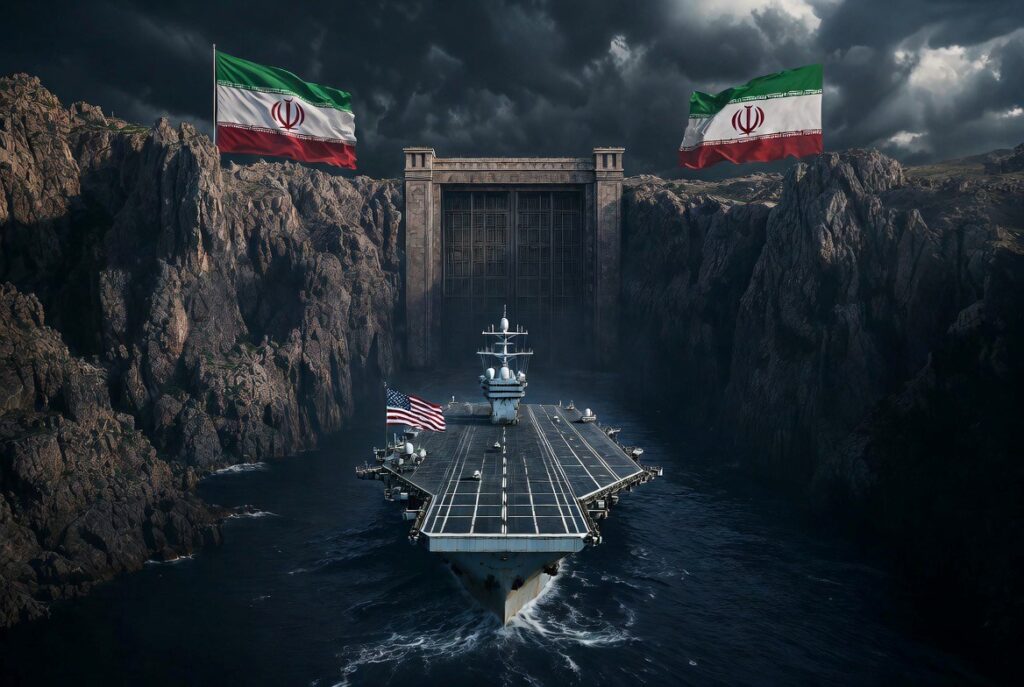
The US’s tactical military successes in the Strait of Hormuz do not solve the strategic problem, as Iran uses asymmetric tactics, turning US military dominance into an endless and costly conflict with no clear political outcome.
Every American strike around the Strait of Hormuz appears militarily successful. Precision weapons hit their targets. U.S. airstrikes on Iranian targets destroyed radar installations, missile batteries and drone facilities.The Pentagon declares another degradation of Iran’s capabilities. Yet every successful strike leaves the underlying strategic problem untouched. Iran still threatens the Strait. It still retains the ability to escalate at relatively low cost. And the United States still finds itself launching another round of strikes, without a clear endgame.
The latest escalation, which began on July 6 and intensified throughout the week, followed a familiar pattern. After Iranian forces were accused of attacking commercial vessels near the Strait, Washington launched a swift military response. President Donald Trump declared the June ceasefire “OVER” on July 10, yet simultaneously confirmed that US negotiators would continue talking to Tehran. Trump’s contradictory statements merely exposed a deeper structural problem: Washington increasingly relies on military signalling while simultaneously avoiding the political consequences of escalation.
The United States can bomb its way to another temporary ceasefire, but it cannot bomb its way to a stable regional order. Iran has adapted to this reality
Why Tactical Success Does Not Equal Strategic Victory
The gap between American capability and American outcomes has rarely been more visible. The United States can strike Iran almost at will, destroy infrastructure, and dominate the air. Yet none of these advantages answer the central strategic question raised by Hormuz: why does tactical success so consistently fail to produce strategic resolution?
Tehran understands that its objective is not to defeat the US Navy, but to transform American military superiority into an increasingly expensive political commitment. Iran does not need to win decisive battles. It only needs to sustain its ability to threaten the Strait. This requires far fewer resources than the American campaign to prevent it. A handful of fast boats, drones, and shore-based missiles can disrupt global shipping in ways that cost Washington billions in naval deployments, diplomatic pressure, and lost credibility.
The more successful the airstrikes become, the more they demonstrate that airpower alone cannot solve the problem. Each new strike resets the conflict to the same position. Iran remains capable of closing the Strait. The United States remains committed to keeping it open. And the cycle continues.
The Illusion of Deterrence
The theory of deterrence assumes that inflicting sufficient costs will modify an adversary’s behavior. Washington has been testing this assumption against Iran for decades. The results are not encouraging.
Deterrence is a transactional concept. It works when the opponent values what you threaten. Iran values its ability to threaten the Strait more than it fears the cost of losing another radar station. It has internalized sanctions, absorbed strikes, and weaponized its isolation. Its currency is not battlefield victory, but the ability to impose costs on a superior adversary over time.
This is not a failure of military capability. It is a failure of strategic design. The United States has entered another strategic confrontation it cannot decisively resolve. Not because Iran is stronger, but because the tools Washington relies on are ill-suited to the nature of the challenge. You cannot bomb a chokepoint into submission. You cannot drone strike your way to stability.
The New Logic of Conflict
Hormuz demonstrates something uncomfortable for every major military power. The cost of defending a chokepoint is often far greater than the cost of threatening it. Iran has structured its strategy around this asymmetry. It does not need to defeat the US Navy. It only needs to make American dominance progressively more expensive.
The attacker measures success by freedom of navigation. Iran measures success by forcing the attacker to keep paying for it. Each new round of strikes increases costs and risks for Washington while offering no path to a lasting solution. Iran absorbs the strikes, restores enough of its capabilities, and returns to the same strategic position. The Strait remains contested, the threat persists, and the United States is left with the same dilemma it faced before the first bomb was dropped.
The Broader Regional Impact
Gulf states are increasingly hedging their security relationships rather than relying exclusively on Washington. The message sent by repeated strikes, followed by repeated failures to secure the Strait, is clear: American power is formidable, but it is not decisive. The old assumption that the US could unilaterally guarantee Gulf energy routes has increasingly been replaced by a more cautious calculus.
For Russia and China, the situation offers a strategic dividend. Every additional American deployment in the Gulf is one less strategic resource available elsewhere. Moscow has attempted to present itself as a diplomatic alternative, even as its own regional interests remain closely tied to the outcome. Beijing watches as the United States becomes increasingly preoccupied with the Gulf, diverting attention from the Indo-Pacific.
Conclusion
The lesson of Hormuz is not that Iran has become stronger than the United States. It is that military superiority no longer guarantees political control. Washington can dominate the battlefield without controlling the conflict itself. In Hormuz, that distinction matters more than any number of successful airstrikes.
The real question for Washington is no longer if it can keep the Strait open, but at what strategic price. The United States can bomb its way to another temporary ceasefire, but it cannot bomb its way to a stable regional order. Iran has adapted to this reality. The United States has yet to fully resolve it. Hormuz is not a battlefield; it is a trap. And the more the United States tries to dominate it, the deeper it becomes entangled in its own military success.