
Irrespective of whether a deal is reached to end the ongoing U.S.-Israeli war against Iran, it seems likely that Tehran will continue to cultivate a network of proxy groups, including terrorist organizations, criminal entities, and so-called “disposable agents” both in the Middle East and abroad.
Iran views its use of proxy groups and violent non-state actors as a form of strategic depth, forming the cornerstone of Tehran’s hybrid warfare approach, a modus operandi which the Islamic Revolutionary Guard Corps (IRGC) believes has been effective in achieving Iranian objectives throughout the Middle East.
Western intelligence agencies and security services remain on high alert about the potential for groups like Hamas to spread their influence in Europe, while Iran-backed attack plots organized by groups like Kataib Hezbollah and Foxtrot continue to be identified in the U.S., Canada, and Europe.
For Iran, the use of proxies has become a form of its layered defense, a way to stretch the battlefield and attenuate the bandwidth of its adversaries.
As the Trump administration continues to bring the war with Iran to a close, Vice President JD Vance has been in Switzerland negotiating the details of a potential agreement with his Iranian counterparts. But even if a deal is reached—which many experts are skeptical of, given the current course of the negotiations and extent of concessions outlined for Iran — the geopolitical dynamics in the Middle East are permanently altered.
Iran now believes that it has the power to close down the Strait of Hormuz, essentially holding the global economy hostage, anytime a breakdown in relations with the United States occurs, or as a veto of Israeli involvement in Lebanon. As few overland and maritime alternatives to the Strait of Hormuz exist, this provides Iran with a powerful tool, placing a chokehold on international trade. Iran could also continue looking to intimidate its Gulf Arab neighbors, threatening energy infrastructure throughout the region. However, one of Iran’s most powerful tools in its toolbox is its proxy network—armed militias, terrorist organizations, and criminal syndicates that can perform operations on Iran’s behalf both in the region and across the international community. Instead of relying upon state agencies and resources, the use of Iran-aligned proxy networks creates intentional distance, blurring lines of accountability, while extending Iran’s reach beyond state and regional lines.
Just last week, the Jerusalem Post reported that the IRGC established new terror cells based in Iraq that Tehran would use to attack countries where American bases are located. Interestingly, the establishment of these cells, in an effort to remain undetected, bypassed traditional militia networks. IRGC cells have also been uncovered in Bahrain, the United Arab Emirates, and elsewhere throughout the region. So far, discussion of the future of Iran’s proxy network has not been a part of the negotiations, something the Iranians would resist even if it does become an issue in the talks if and when they advance further.
No matter the outcome of the current negotiations, it seems unlikely that Iran will distance itself from its proxy network, which the regime views as an extremely valuable form of strategic depth. Furthermore, the continued risk of direct U.S. and Israeli strikes that degrade the capabilities of Iranian state agencies further incentivizes Iran to rely on alternative actors that can carry out operations to counter its adversaries. Accordingly, Tehran may look not just to continue supporting a cadre of militant groups, but it could expand its support for terrorists, insurgents, militias, criminal networks, and a range of other violent non-state actors. In Europe, Iran has been operating through the use of so-called “disposable agents” — often young petty criminals — who have conducted a string of attacks across Belgium, the Netherlands, France, and the United Kingdom and are recruited under the umbrella of the front group Harakat Ashab al-Yamin al-Islamiya (HAYI). The use of expendable local actors is a tactic long employed by Russia in its hybrid operations against Europe. HAYI has targeted Jewish and Israeli interests throughout the West, not only in Europe, but also in North America, with reported plots against U.S. synagogues in Arizona, New York, and Los Angeles. Iran also operates as a puppet master for criminal groups in Europe, including the “Foxtrot” organized crime group in Sweden.
With a more hardline regime in place, the Islamic Revolutionary Guard Corps (IRGC) will continue Iran’s silencing of dissidents abroad, part of Tehran’s use of transnational repression. In the past, Iran has liaised with criminal networks to target regime opponents in the West. Notably, in 2024, an Iranian narcotics trafficker, Naji Ibrahim Sharifi-Zindashti, was sanctioned by the U.S., UK, Canada, and the EU for its recruitment of criminals within North America to murder two Iranian dissidents in Maryland. As the influence and operational capability of Iranian proxies in the West grow, so too will their capacity to expand these attacks.
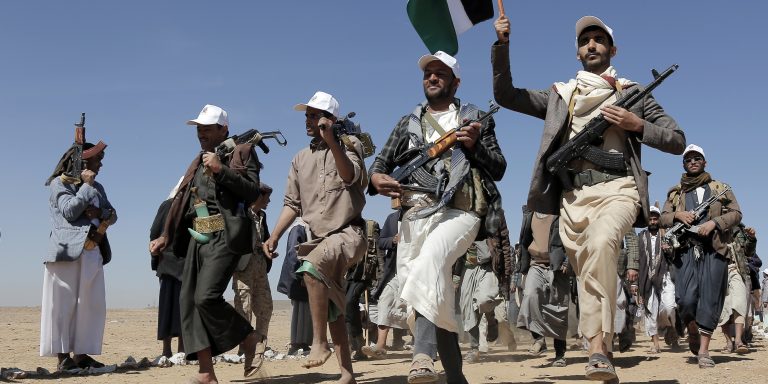
When it comes to Iran’s proxies and terrorist groups that it supports — Lebanese Hezbollah, the Houthis, Hamas, Iraqi Shia militias — there is widespread concern that any economic concessions Iran gains from the ongoing negotiations will be used to rebuild these groups after years of degradation from Israeli and U.S. strikes and maximum pressure campaigns in the Middle East. Given the potential for sanctions relief in the areas of oil, shipping, and construction, the IRGC stands to benefit financially. Western intelligence agencies and security services remain on high alert about the potential for groups like Hamas to spread their influence in Europe. Authorities have made arrests in Denmark, Sweden, Germany, and Italy, where Hamas financing and operational networks were uncovered, indicating geographic expansion of the group beyond the Middle East. Just last week, alleged Hamas members were detained in Greece, with links to a dismantled cell in Cyprus and recent experience acquiring explosive chemicals and training, as well as in Costa Rica. It remains entirely plausible that Tehran could attempt to help turn Hamas into a truly global network, much as it did with Lebanese Hezbollah.
For Iran, the use of proxies has become a form of its layered defense, a way to stretch the battlefield and attenuate the bandwidth of its adversaries. Moreover, as Iranian proxies like the Houthis continue to grow in size and sophistication, leveraging emerging technologies like drones, they become a force multiplier for Tehran. And with a hardline IRGC rump regime now in power, it is even more unlikely that Iran would abandon its allies. More likely, the Iranian regime will surreptitiously rebuild the arsenals of these groups and solidify command-and-control over the network of operational nodes stretching throughout the Middle East and beyond. The growing calls to disarm Lebanese Hezbollah will become louder, yet to date, no viable strategy has been advanced to achieve such an outcome. The disarmament of terrorist organizations and militia groups is notoriously difficult, even as it remains a worthwhile objective. But with a weak Lebanese Armed Forces (LAF), a lack of political will in Beirut, and an emboldened Iran, it remains unlikely, especially in the near term.