
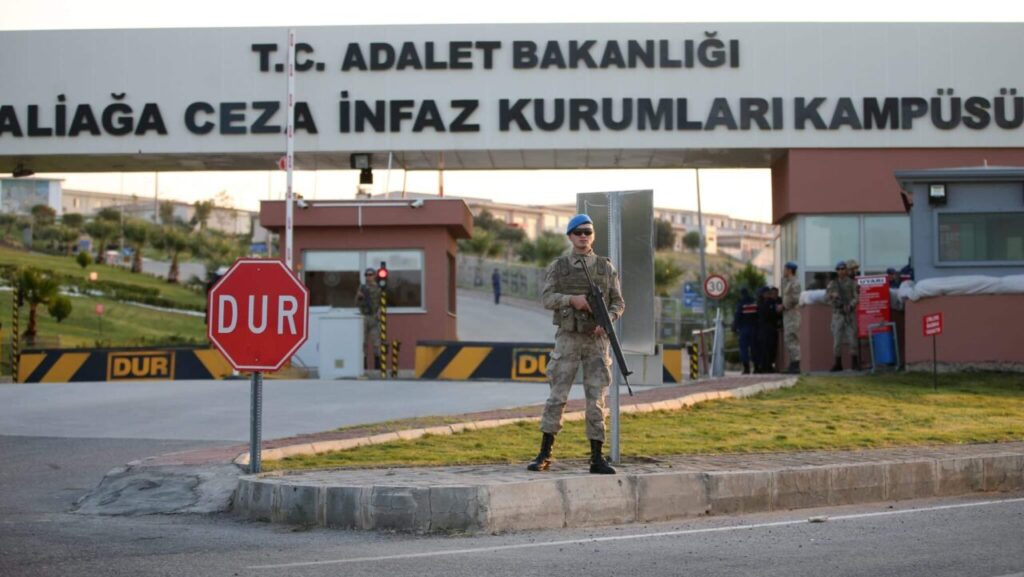
There are proven ways to address the widescale abuses enacted by Turkish authorities since a failed coup in July 2016. But all of them require political will and civic energy.
Ten years have passed since the failed coup of July 15, 2016, in Turkey. Authorities blamed an army faction loyal to the so-called Gulen Movement, branded the ‘Fetullahist Terrorist Organization’, FETO, and declared a threat to national security.
What began as an emergency response to this declared existential threat snowballed into a two-year state of emergency, known by the acronym OHAL, and a string of emergency decrees, or KHK.
The result has been one of the most extensive and enduring purges in modern Turkish history.
With the rule of law all but suspended, the purge extended well beyond alleged Gulenist networks to target Kurds, leftists, secularists, and government critics and paved the way for a broader pattern of authoritarian consolidation.
As we mark the 10th anniversary, Turkey’s mass FETO-related criminal investigations continue at pace.
Just days ago, the Turkish ministries of interior and justice announced a fresh operation targeting 968 suspects across all 81 provinces of the country. Over the past decade, more than 720,000 individuals have been prosecuted in connection with the Gulen movement. Of these, approximately 630,000 were detained, and more than 127,000 have been convicted of membership in a terrorist organisation or attempting to overthrow the constitutional order.
Given the unprecedented scale of this purge and the serious, systematic human rights violations it has involved, the KHK problem has evolved into a profound moral, social, and political test for Turkish democracy. Yet the way forward remains deeply contested.
This article looks at where we stand today and outlines potential pathways forward, as a call for a courageous and just resolution to one of the country’s most pressing challenges.
Decade of persistent human rights violations
The scale of the KHK measures is staggering. Between 2016 and 2018, the Turkish government issued 32 emergency decrees, targeting anyone considered a terrorist regardless of whether or not they have any connection to the failed coup.
Official figures indicate that the decree removed en masse more than 130,000 individuals from public service, including teachers, academics, judges, prosecutors, police officers, and military personnel. Broader estimates, accounting for subsequent administrative dismissals, exceed 250,000-300,000 people.
More than 3,000 institutions, including media outlets, schools, dormitories, associations and foundations, were disbanded and liquidated with immediate effect.
The OHAL Commission, set up in 2017 to review appeals against KHK dismissals, reinstated only a small fraction of those affected – around 20,000 individuals. Many reinstatements came with delays; some were never implemented. The Commission’s decisions often lacked transparency and individualised evidence of wrongdoing.
The administrative code 36/OHAL/KHK remains active in state databases. It continues to flag individuals during job applications, banking transactions, and other official procedures. Even those acquitted in criminal courts frequently face ongoing professional bans and social stigma.
Surveys of KHK victims consistently reveal widespread unemployment [over 65-70 per cent unable to secure formal employment], psychological trauma, family separations, suicides, and passport revocations that leave people in legal limbo.
Internationally, the European Court of Human Rights, ECtHR, has been inundated with challenges to OHAL practices, including that of citing a defendant’s use of the ByLock app as evidence of guilt. By July 2026, the ECtHR had found violations in a total of 111 applications in respect of 7,946 individuals.
Among them, two cases – Yalcinkaya v. Turkey and Yasak v. Turkey – stand out.
The Yalcinkaya v. Turkey judgment established systemic violations regarding the use of ByLock and similar evidence without individualised proof. This was reinforced by the subsequent Yasak v. Turkey decision, which further highlighted the Court’s criticism of collective and presumption-based punishments.
Importantly, the Yalcinkaya and Yasak decisions have effectively condemned these societal practices of collective punishment and guilt by association, demonstrating that mass, presumption-based sanctions cannot be sustained under the European Convention of Human Rights.
Similarly, the UN Human Rights Committee, the UN Working Group on Arbitrary Detention, WGAD, and the UN Committee Against Torture issued around 35 decisions and opinions and found a clear and collective pattern of disregarding legal guarantees en masse.
In particular, the WGAD has consistently condemned discriminatory targeting of alleged Gulenists and warned that such systematic imprisonment may amount to crimes against humanity.
Despite these important pronouncements by the ECtHR and UN bodies, implementation remains patchy. Domestic courts have most often resisted, and political will for general and structural remedies has been absent.
Moving forward: collective action
Despite this politico-legal impasse, a profound shift is taking place in Turkish society.
Since 2017, in major cities, those dismissed by KHKs have come together to form platforms in order to organise joint actions and awareness-raising activities.
In 2020, an umbrella organisation was founded under the title Union of KHK Platforms. A YouTube news channel named KHK TV was founded in August 2019 and has since been producing content on the KHK issue and the general human rights situation in Turkey.
At the same time, opposition parties, civil society organisations and trade unions have increasingly joined the persistent calls of KHK victims and organised several high-level events to highlight the ongoing injustices.
As a result, public awareness of KHK injustices has grown markedly in recent years. In a recent public survey, only 18 per cent of respondents said they consider the KHK measures fair.
The majority of the Turkish people recognise the human tragedy behind the numbers and demands collective, structural solutions through political reconciliation and/or comprehensive legal reform. This moral reckoning is now irreversible.
Three possible pathways
Several potential solutions present themselves, each with distinct strengths, rationales, and degrees of feasibility.
At the ideal end of the spectrum lies the establishment of a transitional justice mechanism, drawing on the power-sharing and truth-recovery models from the Northern Ireland peace process, South Africa’s Truth and Reconciliation Commission, and Colombia’s special jurisdiction for accountability for the FARC peace negotiations.
Such a mechanism could take the form of a Parliamentary Commission, guided by post-2016 ECtHR and UN decisions, and supported by genuine political dialogue.
This approach would go beyond technical solutions by providing public acknowledgment of harms, victim participation, reparations, and recommendations for institutional reform. Though politically challenging and time-consuming, it represents the most morally sound and socially sustainable path forward.
In this context, Turkey’s Terror-Free Turkey initiative, launched in 2024, presents a significant and timely opportunity.
Designed to disarm the militant Kurdistan Workers’ Party, PKK, and facilitate the reintegration of its members into society, the process aims to advance normalisation efforts in the 40-year long Kurdish problem in the country.
Just as post-coup emergency measures once grouped disparate threats under a single terrorism banner, the KHK problem should now be integrated into this same holistic framework of transitional justice, de-securitisation, and social healing.
A highly effective middle path involves several legislative acts drawing on models of comprehensive reparation, rehabilitation, and retrial without entering a full-scale transitional justice process.
The Turkish Parliament could, for example, enact a dedicated law that retroactively annuls the most egregious KHK measures in cases lacking any evidence of violent crime, while mandating automatic reinstatement for those acquitted or never charged.
Such judicial rehabilitation models have been successfully implemented in post-communist transitions in countries like Germany, Czechia, and Poland, where victims of politically motivated persecution received annulment of unjust decisions, reinstatement, and various forms of compensation.
An effective but not ideal option would be the enactment of an amnesty law. Amnesty is one of the most frequently used tools in transitional and post-conflict settings both in Turkey and worldwide. While highly effective in ending immediate suffering and annulling the legal and administrative consequences of KHK dismissals for large numbers of people, reducing social tension, this approach falls short of the ideal because it may bypass full truth-telling, victim acknowledgment, and institutional accountability.
Ultimately, bridging the gap between documented violations and effective remedies will require genuine political will and only a comprehensive and courageous response can close this painful chapter and rebuild trust in Turkish democracy.
A decade on, the KHK chapter reveals both the fragility and potential of Turkish institutions.
The violations are well documented, the human suffering is real and the moral consensus in society is ripening. What’s needed now is political will and civic energy to close this wound.
Potential solutions exist. The question now is whether the necessary courage and determination will emerge before another decade passes.
History will judge not just the emergency decrees of 2016, but the choices made in 2026 and beyond.