
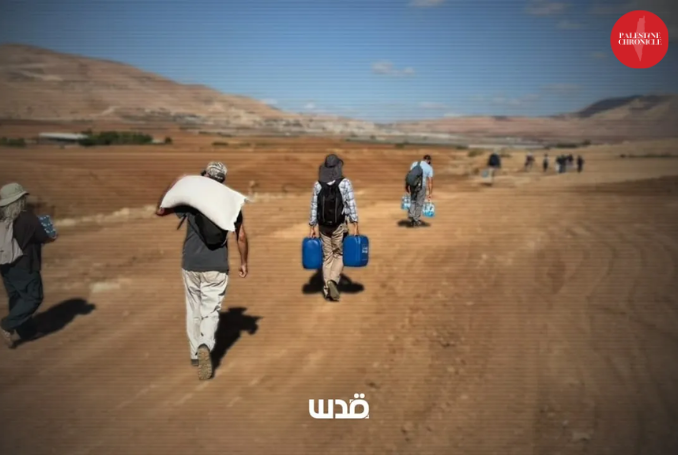
An Israeli military trench has blocked the last route into al-Ras al-Ahmar, disrupting water deliveries, food supplies and children’s schooling.
Key Developments
Residents said an Israeli army trench had blocked the last remaining route into the northern Jordan Valley community for seven days.
Residents could not reliably receive water and animal feed, while children missed school and patients struggled to access medical care.
A local herder warned that restrictions on grazing land and supplies threatened approximately 15,000 sheep in the area.
An Israeli military trench has blocked the last route into al-Ras al-Ahmar, disrupting water deliveries, food supplies and children’s schooling.
Residents of Khirbet al-Ras al-Ahmar in the northern Jordan Valley said they had been effectively isolated for seven days after the Israeli army dug a trench across the last remaining route into their community.
Access to the area had grown more difficult over the previous three months, according to a report by Quds News Network. The trench, dug a week ago, closed the final route residents had used to leave and bring in essential supplies.
The closure has affected households, farms and livestock. Residents said vehicles could no longer enter as before, making it difficult to obtain drinking water, food and animal feed or reach neighboring communities.
Families Cut Off
“We are living under a suffocating siege, with no entry or exit,” resident and livestock breeder Lutfi Bani Odeh told QNN.
“Our water has been cut off, feed is not reaching the sheep, and our children have not been able to go to school.”
Bani Odeh said families were also struggling to bring in food. Children could not reach their schools, while patients requiring a clinic or hospital faced the closed route. Veterinary care was likewise unable to reach livestock owners.
He appealed to humanitarian and rights organizations to intervene, particularly to secure drinking water, water and feed for animals, and safe passage for children, patients and essential supplies.
Livestock at Risk
Bani Odeh estimated that approximately 15,000 sheep in al-Ras al-Ahmar were affected by the shortage of water and difficulty bringing in feed.
The closure has compounded restrictions on grazing. Local figures cited by QNN indicated that herders had previously used approximately 360,000 dunams of grazing land in the wider area, but access to about 90% of it was now prohibited or impractical.
As grazing land became inaccessible, herders needed more purchased feed—precisely when the blocked route made deliveries more difficult.
Bani Odeh also reported health problems among some newborn lambs. Their owners could not bring in a veterinarian to examine them, he said.
For families whose income depends on livestock, the combined loss of pasture and access to feed threatens their livelihood as well as the animals’ health.
Water Shortages
Farmers were also reporting losses as water shortages affected crops, including grapes, tomatoes and peppers, according to Bani Odeh.
He warned that continued restrictions could cause longer-term damage to both agriculture and livestock breeding in the area.
Without access to their land or reliable deliveries of water and supplies, residents faced growing difficulty sustaining the activities on which their households depended.
The immediate request from al-Ras al-Ahmar’s residents was to reopen the route so water, food, medical care and other essential supplies could reach the community.