Russian Offensive Campaign Assessment, November 14, 2025

Toplines

The Russian military command appears to be prioritizing the seizure of Pokrovsk over efforts to close the wider Ukrainian pocket in the Pokrovsk-Myrnohrad area. Russian advances in and around Pokrovsk over the last several days suggest that Russian forces in Pokrovsk are prioritizing the seizure of the settlement itself. They do not appear to be focused on supporting efforts by the 51st Combined Arms Army (CAA, formerly the 1st Donetsk People’s Republic Army Corps [DNR AC], Southern Military District [SMD]) to close the pocket from the north and northeast with a complementary attack from the south at this time.[1] Russian forces may be prioritizing the seizure of Pokrovsk for a number of reasons. Russian leadership may seek to exploit the informational effects that the town’s seizure will likely generate, or may hope that the seizure of Pokrovsk will facilitate a subsequent effort to close the pocket. Ukrainian counterattacks on the northern shoulder of the pocket and a continued Ukrainian presence within Pokrovsk are complicating Russian advances and Russia’s ability to close the pocket, but that fact should not be enough in itself to cause the Russian command to be distracted from the effort from the south. The 51st CAA has also been struggling to advance from the northeast, moving more slowly than the 2nd CAA (Central Military District [CMD]) is moving within Pokrovsk and on the western flank of the pocket.[2] The 51st CAA’s slower tempo could also be contributing to Russia’s apparent and possibly temporary prioritization of the seizure of Pokrovsk. The Russian military command is notably not pursuing the standard measures one would expect in such a battlefield configuration, namely focusing forces and means on completing the encirclement, which would normally be the fastest and least costly way to seize the entire area. The Russian military command can change its focus at any time, however.

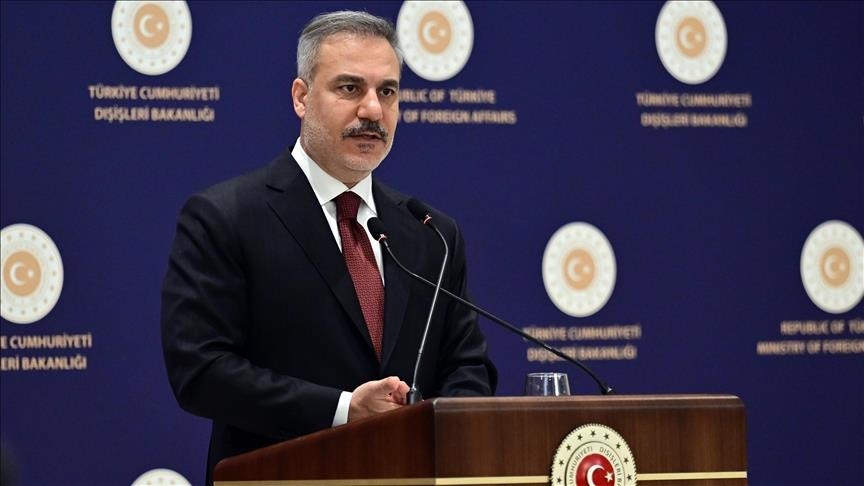
Turkey’s Fidan joins Trump–Sharaa talks at White House

Turkish Foreign Minister Hakan Fidan gestures as he speaks during a press conference after a meeting with his counterparts from Saudi Arabia, Qatar, the United Arab Emirates, Jordan, Pakistan and Indonesia in Istanbul on November 3, 2025. Turkey on November 3, 2025, hosts a string of top diplomats from the Islamic world to bring their influence to bear on the future of Gaza, as fears grow for the increasingly fragile truce. The October 10 ceasefire in the two-year-long Israel-Hamas war, brokered by US President Donald Trump, has been sorely tested by continued Israeli strikes and claims of Palestinian attacks on Israeli soldiers. (Photo by Ozan KOSE / AFP) (Photo by OZAN KOSE/AFP via Getty Images)

Pakistan arrests four suspects linked to Islamabad court bombing

Pakistani authorities said Friday they had arrested four suspected militants allegedly involved in a deadly suicide bombing outside a district court in Islamabad earlier this week, a rare attack in the capital that killed 12 people and wounded 28 others.

The suspects are believed to be members of Tehrik-e-Taliban Pakistan, or TTP. In a statement posted on social media, the government identified one of the suspects, Sajid Ullah, as the individual who handled the explosives used in Tuesday’s attack.

PATRICK LAWRENCE : Al-Qaïda arrive à Washington

La visite d’Al-Sharaa à la Maison Blanche nous rappelle l’aversion de longue date de Washington pour les processus démocratiques et pour quiconque – au-delà des frontières de l’Occident et parfois même à l’intérieur de celui-ci – qui les défend.

Menace terroriste en France : sur TikTok, une propagande djihadiste à portée des jeunes

Dix ans après les attentats de 2015, la menace terroriste, toujours vive, s’est transformée : elle émane d’individus de plus en plus jeunes, présents sur le territoire français, sans lien avec des organisations structurées. La propagande djihadiste sur les réseaux sociaux, très facile d’accès, permettrait un « auto-endoctrinement » rapide. Entretien avec Laurène Renaut, spécialiste des cercles djihadistes en ligne.

How logistics and lies obscure Israel’s responsibility for Gaza’s humanitarian crisis

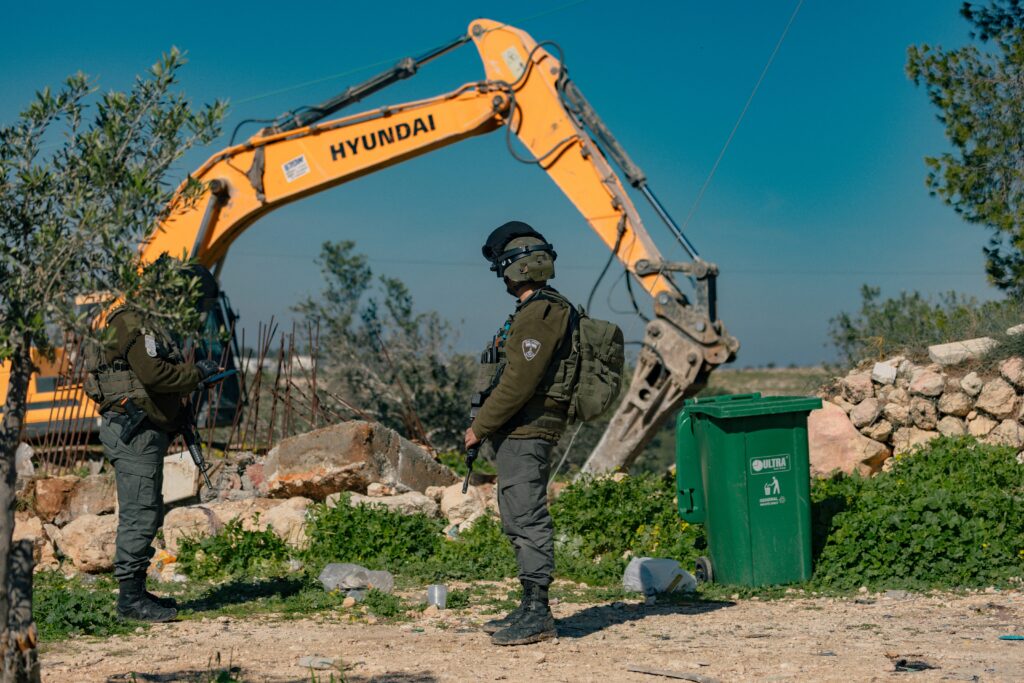
Since the start of Israel’s ongoing Rafah invasion in early May, humanitarian workers have been displaced alongside over one million Palestinians, with movement within the Gaza Strip virtually impossible.

Telecommunications are frequently down, and many humanitarian activities have been halted. Aid organisations are reporting that most Gazans are unsure where their next meal will come from and that conditions in new displacement sites are worse than ever.