
Dr. Youssef Ibrahim Saloum, an expert on jihadist groups, told TML that many Iraqis may see the move as shifting a security burden from one arena to another without addressing its root causes
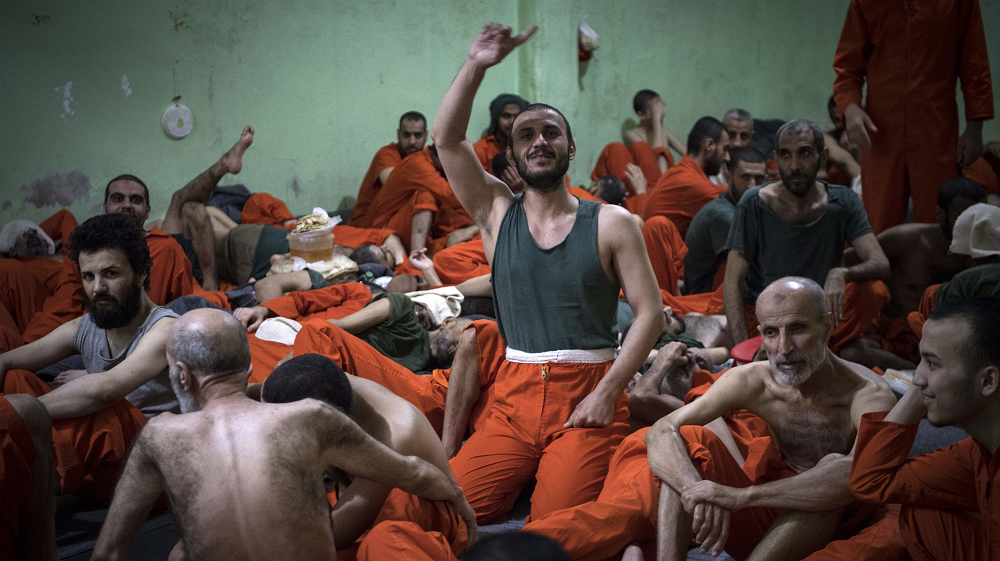
US Central Command (CENTCOM) announced Wednesday the launch of an operation to transfer thousands of detainees affiliated with the Islamic State group (ISIS) from northeastern Syria to Iraq, aiming to strengthen detention security and prevent potential escape attempts.
According to information obtained by The Media Line, the operation comes within the framework of a new mission to ensure that ISIS terrorists remain in secure detention facilities.
Syrian security sources told The Media Line that the first phase of the transfer included the relocation by US forces of 150 ISIS members from a detention facility in Syria’s Al-Hasakah province to a secure site in Iraq. The sources added that the total number of detainees expected to be transferred could reach about 7,000.
Meanwhile, CENTCOM commander Adm. Brad Cooper said in a statement that the operation is being conducted in close coordination with regional partners, especially the Iraqi government, and stressed the need for an “organized and secure” transfer to prevent any escapes that could threaten US and regional security.
The US move comes amid growing security concerns surrounding ISIS detention centers in northeastern Syria, along with warnings that the fragile security situation could allow the group to exploit any vacuum and regroup.
Political activist Kenadi Khalaf Al-Kurdi told The Media Line that transferring the detainees to Iraq “reflects a growing American awareness that the continued detention of ISIS members inside Syria has become a security risk, not only to the region but to international security as well.”
She added that “the step could help reduce the group’s ability to carry out escape operations or uprisings inside Syrian prisons, but at the same time it places significant challenges on Iraq related to detention capacity, judicial procedures, and ensuring that detention centers do not turn into security flashpoints.”
On the other hand, a senior Syrian government source told The Media Line that Damascus is following developments related to the transfer of ISIS detainees, but declined to provide any official comment, without clarifying the reasons.
Observers say the silence may reflect the issue’s sensitivity, given the complexities of Syrian sovereignty and the involvement of multiple international and regional actors in handling ISIS detainees inside Syria.
Analysts indicate that the success of the transfer operation could help reduce the risks of a resurgence of ISIS activity inside Syria, but at the same time shifts the security center of gravity to Iraq, requiring sustained security and intelligence coordination among Baghdad, Washington, and their regional partners to avoid any negative repercussions on internal stability.
Dr. Youssef Ibrahim Saloum, an expert on jihadist groups, told The Media Line that the United States’ transfer of a number of ISIS detainees from northeastern Syria to Iraq reflects an important shift in the management of the group, but at the same time, opens a wide door to security and political challenges in the region.
He added that, from a security perspective, the step can be understood as an American attempt to avoid the scenario of prison collapse or detainee escape, especially given the fragility of the situation in northern Syria and the declining ability of local authorities to manage this highly sensitive issue.
However, transferring the detainees to Iraq does not necessarily mean solving the problem; rather, it may lead to the recycling of the threat within an environment that still contends with dormant ISIS cells.
Saloum said the step presents a difficult test for the Iraqi government, as accommodating this number of ISIS detainees requires a judicial and security framework capable of ensuring accountability and long-term detention, which has yet to be established. He added that many Iraqis may see the move as shifting a security burden from one arena to another without addressing its root causes.
At the same time, he warned that repeatedly transferring prisoners and addressing the ISIS issue solely through a security lens—without a clear international judicial process, rehabilitation efforts, or separation between leaders and lower-level members—could create conditions that allow extremism to take root inside the prisons themselves.
Northeastern Syria hosts one of the world’s largest ISIS detainee populations. The Syrian Democratic Forces, with support from the international coalition, have been holding an estimated 10,000 ISIS fighters in prisons and detention centers across the region—most of them Syrians and Iraqis, along with hundreds of foreign fighters of various nationalities.
At the same time, tens of thousands of women and children from the families of ISIS fighters live in camps, most notably al-Hol camp, which the Syrian government took control of on Tuesday following the SDF’s withdrawal, as well as Roj camp.
The camps are estimated to hold between 35,000 and 40,000 people, the overwhelming majority women and children. They house Syrians and Iraqis along with thousands of foreigners under complex humanitarian and security conditions, making the issue of ISIS detainees and their families one of the most sensitive and challenging at both the regional and international levels.