
Protesters who took to the streets in Iran say the media is wrongly portraying monarchists as leading the uprising.
A week after Iranian security forces violently crushed the latest anti-regime protests, the streets are quiet for now, but a battle over who speaks for the uprising has erupted.
With Iran under an internet blackout since 8 January, many inside the country have had to rely on foreign Persian-language satellite TV channels such as BBC Persian, Voice of America, and Iran International to learn about the protests. What they heard often did not match what they claimed to have witnessed.
These outlets have largely portrayed Reza Pahlavi, the son of the toppled Shah, as the movement’s leader. Many protesters told The New Arab they were surprised to see their voices pushed aside, and a nationwide protest was reduced to the agenda of monarchists abroad.
Hamid*, a Tehran resident who was shot with a metal pellet in the leg during the 9 January protests, says he fears the demands of protesters inside Iran are not being heard.
“When I watch foreign channels, I only see videos of people chanting for the monarchy. I was at the protests, and we chanted ‘Death to the dictator’ and ‘We don’t want a king, we don’t want a mullah.’ Why don’t we see those in the news?” he said.
Hamid, who also had joined the 2022 protests after the killing of Mahsa Amini in police custody, says monarchists’ slogans were louder this time. But he insists: “Calling Pahlavi the leader of the people inside Iran betrays the blood of those killed in these protests, who had no interest in Pahlavi.”
A movement, misrepresented
Human rights groups HRANA and the Iran Human Rights Organisation say more than 3,400 people were killed in the protests. Both warn that the real number is likely higher because access to information inside Iran is so limited.
Old fears from the 1979 revolution
Roya, 72, a Tehran resident who was active in the fight against the Shah’s dictatorship during the 1979 revolution, draws parallels between then and now. “During the revolution, BBC Persian Radio glorified a fascist like [Ayatollah Ruhollah] Khomeini, even though nationalist and leftist groups had been fighting for years and had lost hundreds of people,” she said.
“That kind of media-made leadership shaped how people inside Iran saw events, and it also influenced powerful countries’ support for Khomeini. Now we see the same thing, when foreign journalists tell Pahlavi at a press conference that people in Iran are calling his name,” Roya remarked.
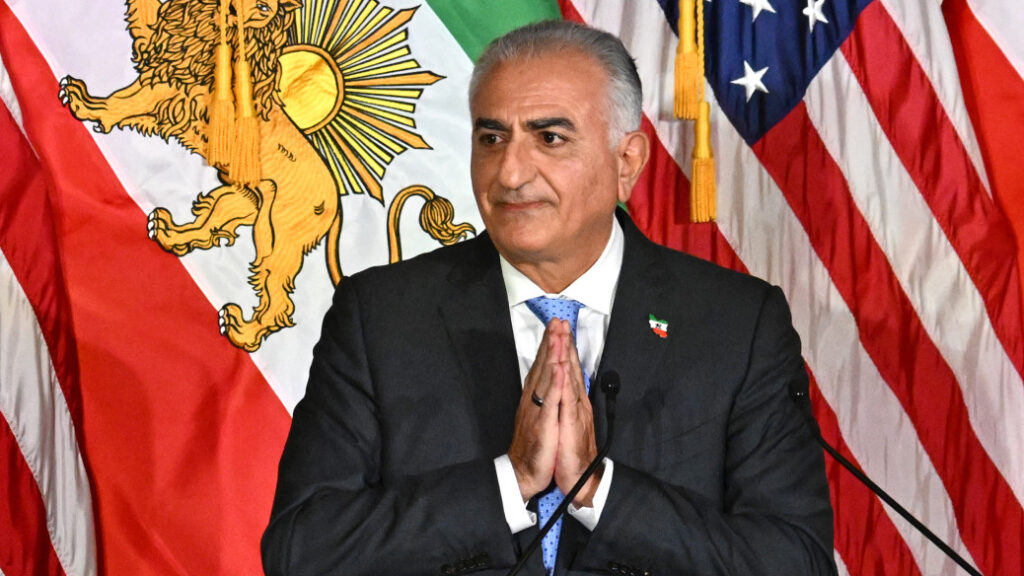
She is referring to a press conference Pahlavi held in Washington on 17 January, where he again urged US President Donald Trump to attack Iran and said he was ready to return and lead the country after the Islamic Republic.
Roya said she found it striking that at the start of the press conference, which was broadcast live by a Persian-language satellite channel, Pahlavi addressed Iranians in English. “It was as if he was talking to someone other than the Iranian people,” she said.
Farhad, 28, who was on the streets during the protests in Tehran, said monarchist groups were present and chanted slogans, but added Pahlavi had no role in leading the protests.
“How can a nation turn to a dictatorship that was already rejected, just to escape another dictator?” he said. “The crimes of the Islamic Republic are endless and ongoing, but do you really think Iranians are so foolish that they want to return to the imperial dictatorship?”
While foreign coverage of the protests has been shaped by this media battle, Reza Pahlavi has continued his push to convince the US government to take military action against Iran. He backed Israel during the 12-day war in June 2025 and welcomed its attack on Iran. Now, many Iranians fear the consequences of his new campaign, calling for another strike.
Shafi, 32, who joined protests in a Kurdish city in western Iran, says the mood in Kurdish areas was very different from what was shown on Persian-language satellite channels. “I don’t know what happened in Tehran or other big cities, but we don’t have Shah supporters here,” he said. “I’m not saying they don’t exist, but they’re really not visible.”
He says the way foreign media covered the events leading up to the 8–9 January killings felt like a propaganda push for the Pahlavi camp.
“These channels report it as if Pahlavi called for protests and then people went to the streets. In reality, it was the exact opposite. People were already out there, and then Pahlavi said something,” he told TNA.
The latest anti-regime protests began on 28 December in Tehran’s Grand Bazaar after a sharp drop in the value of the national currency. The unrest quickly spread to other cities, and deadly clashes broke out in Azna, Fasa, Arak, Kuhdasht, and Mallard.
In response to the violent crackdown, Kurdish parties called for a strike, and cities in western Iran saw widespread shutdowns.
“This wasn’t the first time Kurdistan saw a strike. During the Jina movement, Kurds also organised large strikes, but back then, just like now, our protests were not covered,” said Shafi, referring to the 2022 nationwide demonstrations.