
If the agreement collapses, violence may be imminent. The Kurdish-led Syrian Democratic Forces (SDF) have spent months negotiating with the government in Damascus how to implement their March agreement for the SDF to merge with the national armed forces. Mistrust of government centralization and recent sectarian massacres have shaken the SDF’s confidence in Damascus’s ability to protect minorities, including the Kurds.
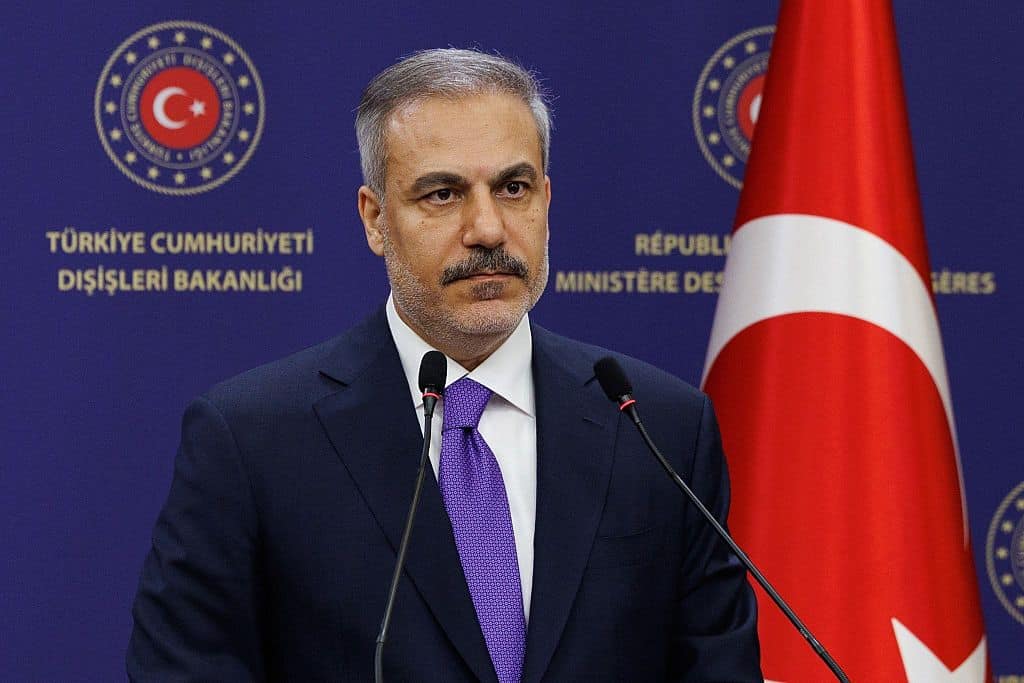
And Turkey is making a bad situation worse, at least in part because Ankara views the SDF’s primary component, the People’s Defense Units (YPG), as an extension of the Kurdistan Workers Party (PKK). Turkey sees the PKK as a terrorist organization (as does the United States) and says it will not tolerate the group’s continued presence along its border. On December 7, Turkish Foreign Minister Hakan Fidan said that the SDF shows “no intention” of adhering to the March integration agreement that serves as the framework for SDF negotiations with Damascus.
Turkish security officials have said they cannot accept the appointment of YPG commanders as Syrian army officers. Ankara also demands that SDF troops join the Syrian military as individuals rather than forming distinct units, as the SDF demands.
Turkey Sends Reinforcements to Northern Syria
Meanwhile, a Turkish press report states that if the SDF does not integrate into the national military before the end of the year, then “Damascus will carry out an operation and [Turkey] will support it.” The report adds that “Ankara will provide the necessary support to the Damascus government if the latter is compelled to launch a military operation.”
At the same time, footage from Syria showed the Turkish army sending large, armored convoys and hundreds of troops into northern Syria from Afrin, Ras al-Ayn, and northern Aleppo. These areas, while technically inside Syria, are currently controlled by Turkey and Turkey-backed groups such as the Syrian National Army (SNA), which have formally become part of the Syrian Armed Forces — although their readiness to obey orders from Damascus is questionable. Local sources confirmed to North Press Agency Syria the entry of a Turkish convoy composed of more than 20 heavy and medium military vehicles into the region. This convoy is likely for posturing, and not a signal of an imminent Turkish attack.
Turkey Presents Damascus With Unenviable Choices
Turkey wields considerable influence in Damascus and maintains proxies like the SNA within the Syrian army, leaving the new Syrian government little room for negotiation. But if Damascus refuses to offer any concessions to the SDF, it may put them on a collision course. Still, neither side has openly threatened a broader military campaign, despite several clashes since August.
If Turkey were truly to intervene militarily, it would likely do so through its SNA proxy units embedded within the Syrian army that are affiliated with the SNA, not directly. In that scenario, the Syrian government would be forced to choose between joining the SNA’s actions or disavowing them. Supporting the SNA would risk triggering a wider escalation that could spiral into a major conflict, undermining Syria’s stability. Refusing to join, however, would risk antagonizing Ankara and could deepen divisions within the Syrian army itself.
The United States Can Deter Turkish Intervention in Syria
The United States has served as the primary mediator between the SDF and Damascus in efforts to implement the March agreement. As the main ground force in the anti-Islamic State campaign, the SDF continues to work closely with Washington on counterterrorism, making it a U.S. interest to prevent the group from coming under attack.
In 2019, the first Trump administration sanctioned Turkish officials for conducting military operations in Syria, pursuant to Executive Order 13894, which targets “actions or policies that further threaten the peace, security, stability, or territorial integrity of Syria.” Although most Syria-related sanctions have since been repealed, this executive order remains in place. The White House can therefore invoke its existing authority to sanction individuals or entities that seek to carry out military interventions in Syria, including Turkey.