
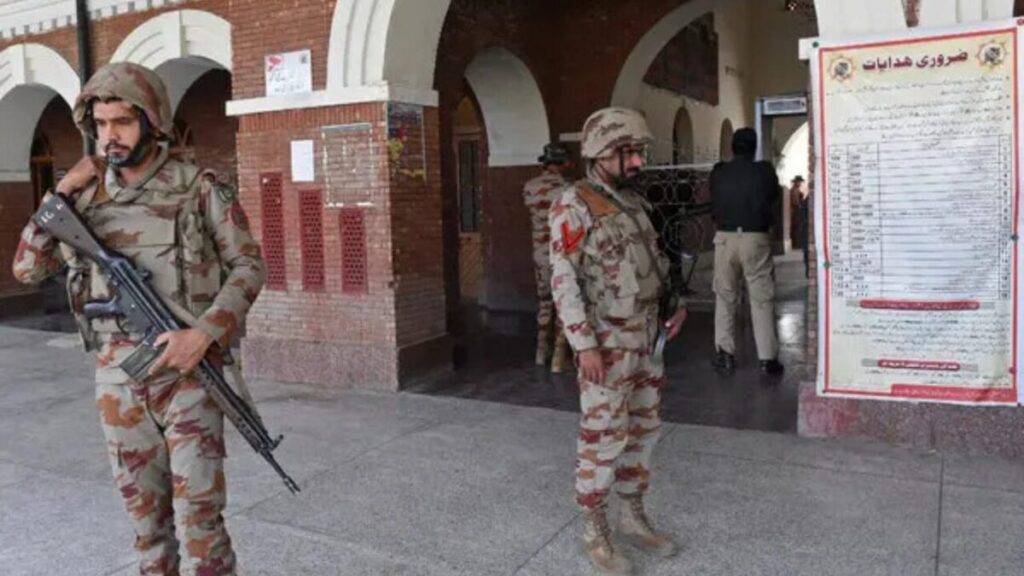
Recently, Pakistan was rocked by the Baloch Liberation Army’s “Herof Phase 2” offensive, a coordinated assault across nine districts that combined urban raids, rural guerrilla tactics, suicide missions, and psychological warfare. This was not simply an internal security lapse, it was a geopolitical tremor reverberating across South Asia.
Pakistan’s reflex of blame and the India factor
True to form, Pakistan’s military establishment immediately pointed the finger at India’s intelligence agency, RAW. This reflex of externalizing blame has become a predictable feature of Islamabad’s crisis management. Yet the credibility of such claims collapses under scrutiny. Pakistan’s own long-documented sponsorship of proxy warfare in Kashmir undermines its moral standing when it accuses others of similar behavior without evidence.
This double standard is not just a domestic distraction, it corrodes regional trust. At a time when South Asia faces overlapping crises of militancy, economic fragility, and great-power competition, Pakistan’s refusal to confront its internal weaknesses risks destabilizing the broader neighborhood.
Cross-border depth: Afghanistan’s shadow
The BLA’s entrenched presence in Nimroz, Helmand, and Kandahar underscores the regional dimension of the insurgency. Specialized units—the Majeed Brigade, Fateh Squad, Zirab Intelligence Branch, and STOS, operate training hubs across the Afghan frontier. This operational depth ensures that Pakistan’s counterinsurgency challenge is not confined to Balochistan but embedded within the wider Afghan theater.
For Kabul, this raises uncomfortable questions: how will Afghanistan’s fragile security architecture manage militant groups that exploit its territory for regional operations? For Islamabad, it means the insurgency is no longer a purely domestic affair. It is a transnational threat.
Iran and China: The strategic stakes
The insurgency’s geography also touches Iran, where cross-border ethnic and tribal linkages complicate Tehran’s own security calculus. Meanwhile, China’s flagship Belt and Road investment, the China–Pakistan Economic Corridor (CPEC) runs directly through Balochistan. Repeated insurgent attacks on CPEC infrastructure highlight the vulnerability of Beijing’s strategic ambitions.
For China, the January 31 offensive is a reminder that its economic corridors are hostage to local grievances and insurgent violence. For Iran, it is a warning that instability in Balochistan can spill across porous borders. For Pakistan, it is a geopolitical nightmare: the insurgency threatens not only domestic order but also its most prized external partnerships.
Local support and the symbolism of women
The insurgents’ ability to strike in districts once considered secure, such as Lasbela and Musakhel, signals expanding local support networks. Political deprivation, economic marginalization, and resentment against security agencies are fueling legitimacy for armed groups. The involvement of women in suicide operations adds a symbolic dimension, reshaping the narrative of resistance and challenging Pakistan’s counterterrorism profiling.
A conflict entering a geopolitical phase
The January 31 attacks were not an isolated eruption. They represent a structural warning sign: insurgency in Balochistan has matured into a hybrid threat with cross-border depth, local legitimacy, and strategic intent. The implications extend far beyond Pakistan’s borders, touching Afghanistan’s fragile security, Iran’s borderlands, and China’s economic ambitions.
Pakistan’s reflex of blaming India obscures this reality. The insurgency thrives not because of external conspiracies but because of internal failures, failures that now carry geopolitical consequences. Unless Islamabad confronts its fractured intelligence system, its reliance on proxy warfare, and its neglect of marginalized communities, the flames in the house of Pakistan will continue to burn, with regional powers increasingly drawn into the fire.