Caught between economic pragmatism and moral outrage, Cairo struggles to justify deal seen by critics as aiding pariah state
When Israeli Prime Minister Benjamin Netanyahu appeared on television to announce his government had approved the country’s largest export agreement, he cast it as a triumph of pragmatism and peace.
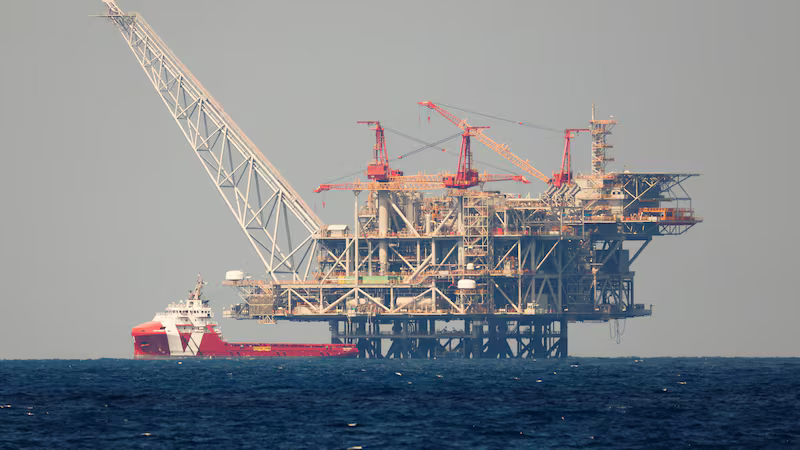
Under the deal – worth up to $35 billion and stretching to 2040 – gas from Israel’s Leviathan field will be piped to Egypt, to help to “secure stability in our region”, Mr Netanyahu said.
To his government, it was a victory narrative: Israel as an energy power, the US as a reliable ally and Egypt as proof that coexistence and co-operation with the Israelis brings prosperity. Yet within hours, that same narrative became Cairo’s problem to manage.
Across Egyptian media and social platforms, the announcement drew a wave of discomfort and sharp rebuke.
The Gaza war, which killed more than 70,000 Palestinians, has left Egypt’s public acutely sensitive to any sign of warmth towards Israel, whose assault on Gaza has been described as genocidal by UN experts and at the International Court of Justice.
For Egyptians who see themselves as guardians of the Palestinian cause, hearing Mr Netanyahu speak of regional stability while bombs continued to fall across the border, despite a ceasefire, was jarring.
Egypt’s State Information Service moved quickly. On Thursday, its chairman Diaa Rashwan issued a statement declaring the gas agreement was “purely commercial”, based on “economic and investment considerations” with “no political dimensions or understandings whatsoever”.
Mr Rashwan also denied reports of a meeting between Egyptian President Abdel Fattah El Sisi and Mr Netanyahu was being organised by Mr Trump at Mar-a-Lago, Florida.
Over a weekend of televised interviews, Mr Rashwan became the face of crisis containment, urging audiences to see the gas deal through the lens of national interest, not moral compromise.
He described the sale as part of Egypt’s ambition to remain “the sole regional hub for gas trading in the Eastern Mediterranean”, stressing that every dollar Egypt pays would go to Chevron, the US company operating Leviathan, “not to Israel”.
Many critics have expressed concern that Israel’s revenue under the deal will be used to fund more killing of Palestinians. But gas exports, the Egyptian spokesman argued, represent less than 0.6 per cent of Israel’s GDP, so the deal could not alter its economy in any meaningful way.
Egypt’s own liquefaction capacity is “many times larger” than what flows from Israel’s fields, he said.
The message was steady throughout one media appearance after another: that this was business, not diplomacy.
However, with mounting criticism not abating, Mr Rashwan’s defence also grew in vehemence.
He reminded viewers of a Saturday night state television talk show on which Mr Netanyahu threatened to cancel the deal – which itself was a renewal of an agreement from 2019 – when talks began months ago.
He described Mr Netanyahu’s threats as political posturing and said Israel needed the deal more than Egypt. He vowed it would not grant Israel the ability to threaten Egypt’s energy security in any way.
He said nobody had pressured Cairo into accepting the deal, which he argued should be weighed against the “great prices” Egypt had already paid for maintaining its pro-Palestinian position since October 7, 2023.
These heavy costs included pressure from allies, domestic strain and the demands of mediation, Mr Rashwan said.
International criticism
Still, the government’s insistence on separating economics from politics did not blunt international criticism either.
From Geneva, Francesca Albanese, a UN special rapporteur on Palestine who has become a face of pro-Gaza activism, posted her own assessment on X: “Egypt can say what it wants but purchasing $35 billion of gas from Israel violates international law … [and is] an incredible sign of support to Israel during the genocide of the Palestinians. States must stop placing profits above humanity.”
Her statement, widely shared by critics of the deal, invoked legal and ethical arguments. Citing the continuing siege and casualty toll in Gaza, tens of thousands dead and many more injured, Ms Albanese positioned the deal as emblematic of an international failure to hold Israel accountable for its actions in Gaza.
International condemnation of Israel has often been cited as the reason why Mr El Sisi and Mr Netanyahu have not yet met to discuss the future of their relations post-Gaza. For many observers, the denial of a Trump-brokered meeting underscores how cautious Cairo must be.
However profitable, any sign of political intimacy with Israel, especially now, remains deeply unpopular at home and fraught abroad.
From Israel’s perspective, the export contract reinforces its claim to normality amid undeniable international isolation. From Egypt’s, it delivers guaranteed supply and a share of transport and processing revenue, but at the cost of political exposure.
Both governments have a claim to be telling the truth but to critics, choosing to “stay commercial” with a belligerent power is itself a political act.
The formulation of “purely commercial” on which Mr Rashwan settled may succeed in defusing domestic outrage, especially if economic relief follows. It is a balancing act Cairo has practised for decades but rarely under scrutiny as intense as this.