
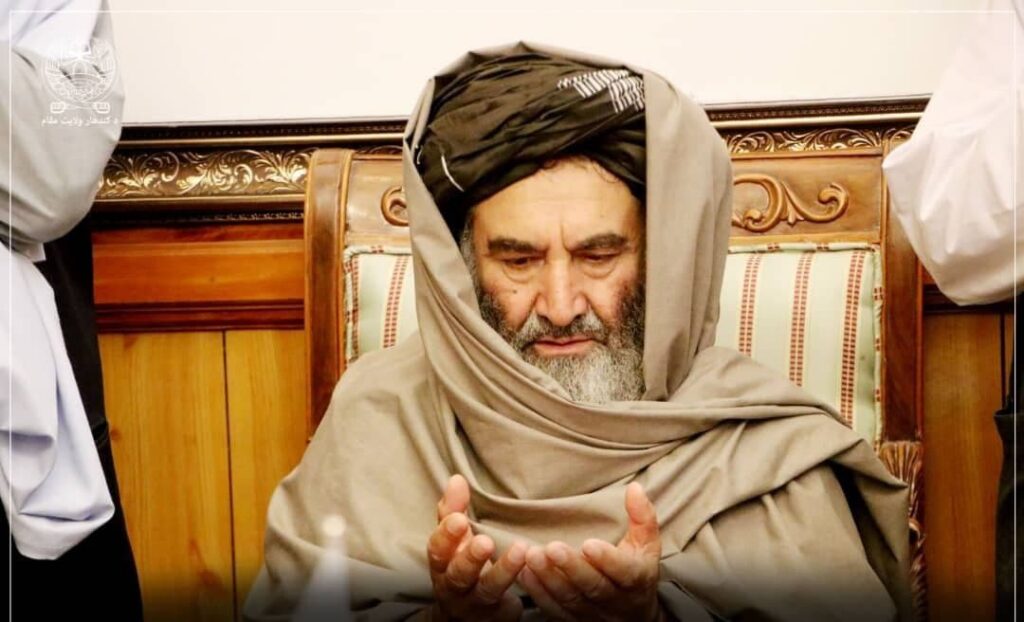
Mullah Shirin, the Taliban governor of Kandahar, has become one of the most powerful figures within the Taliban, wielding influence that in some cases surpasses the authority of their chief minister, multiple sources told Amu TV.
Six sources familiar with the matter said Shirin plays a central role in major decisions, often recommending ministerial appointments before they are formally considered by the Taliban chief minister Hassan Akhund’s office. They added that he manages much of the day-to-day affairs of Taliban leader Hibatullah Akhundzada’s office, making him the closest aide to the reclusive supreme leader.
According to the sources, Taliban ministers must first coordinate with Shirin before seeking an audience with Akhundzada. All six confirmed that Shirin is brother-in-law of the late Taliban founder Mullah Mohammad Omar.
Rise through the ranks
Shirin’s ascent within the Taliban began as Omar’s chief of security during the group’s first regime in the 1990s. After the Taliban were ousted in 2001, Shirin became a key member of the Quetta Shura, the leadership council based in Pakistan. Following the Taliban’s return to power in 2021, he was first appointed deputy head of intelligence in the Taliban Defense Ministry before being named governor of Kandahar.
Originally from Khakrez district in Kandahar and belonging to the Alizai tribe, Shirin rarely appears in public. However, his appointment as governor signaled Kandahar’s emergence as the Taliban’s undisputed center of power.
Expanding influence
Sources said Shirin now plays a decisive role in cabinet meetings, closely monitoring the enforcement of the Taliban’s morality law. He is described as one of the strongest supporters of restrictions on women and girls, including bans on education, employment and public freedoms.
Three sources said that before ministers can meet Akhundzada, they must secure Shirin’s approval. “He oversees most of the leader’s office,” one source said. “Nothing reaches Hibatullah without passing through him.”
Two sources added that Shirin personally supervises the enforcement of Taliban edicts on morality policing and ensures officials comply with Akhundzada’s directives.
Regional ties and secret diplomacy
The sources also said Shirin has cultivated strong ties with Russia, Iran and Pakistan, conducting several unpublicized visits abroad. He also meets high-level guests, including foreign officials, who come to see Akhundzada in Kandahar.
“Shirin is essentially the gatekeeper for anyone who wants to meet the Taliban leader,” three sources said.
Opponent of freedoms
Shirin’s influence has drawn criticism from Afghans who say he has blocked all direct communication channels between ordinary people and Akhundzada. Sources said he prevents public grievances from reaching the Taliban leader, further insulating him from criticism.
He is also regarded as a staunch opponent of freedom of expression and civil liberties, with residents and rights groups accusing him of shaping some of the Taliban’s most restrictive policies.
Analysts say Shirin’s growing authority underscores the concentration of power in Kandahar, where Akhundzada and his closest allies remain isolated but firmly in control of the Taliban movement.