BNPT: Internet Tantangan Penanganan Terorisme Saat Pandemi
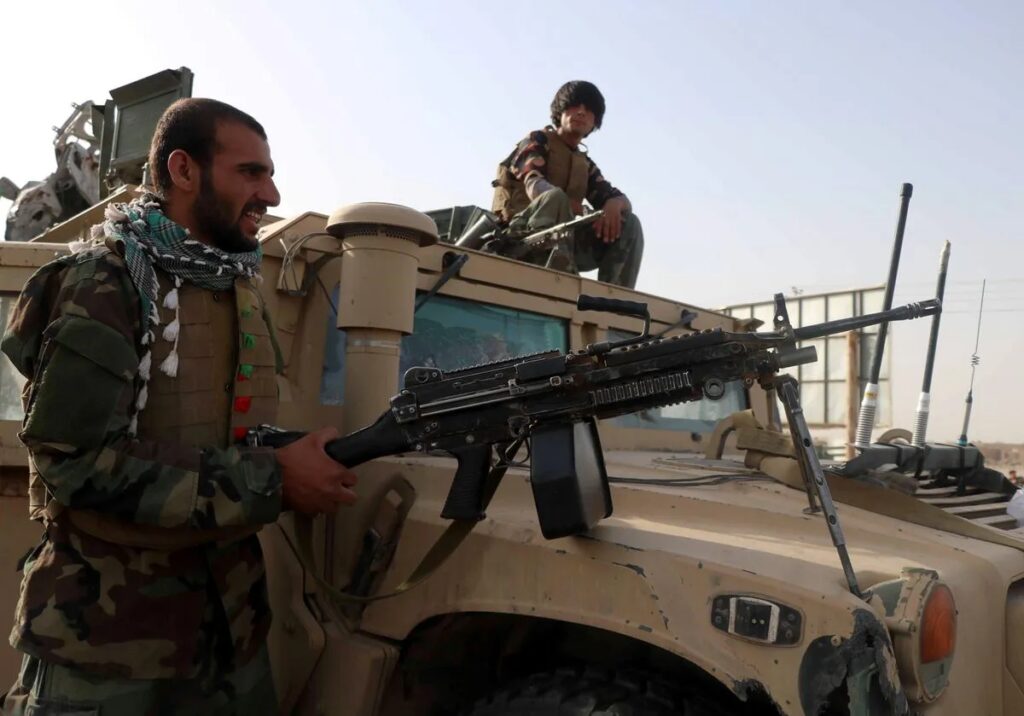
Kepala Badan Nasional Penanggulangan Terorisme (BNPT) Komjen Pol Boy Rafli Amar mengungkapkan tantangan utama penanggulangan terorisme di masa pandemi Covid-19 kini muncul di media internet.

The COVID-19 pandemic is still surging in many parts of the world, due primarily to slow vaccination rates and the spread of virulent variants.
Espionage, particularly human intelligence (HUMINT), has been forced to adapt to a host of significant changes induced by the pandemic.

The 1697 Treaty of Ryswick legalized French control over the western third of the island of Hispaniola – a Spanish asset – under the name of Saint-Domingue. The colony proved to be a valuable spigot of wealth. In 1789, Saint-Domingue supplied two-thirds of the overseas trade of France and was the greatest individual market for the European slave trade. It was a bigger source of income for its owners than the whole of Britain’s 13 North American colonies combined. The labour of half-a-million slaves propped up the dazzling opulence of the French commercial bourgeoisie, and formed the hidden foundations of cities like Bordeaux, Nantes and Marseille. In August 1791, after two years of the French Revolution and its ripple effects in Saint-Domingue, the slaves revolted.
Des comptes clients vides et jusqu’à 3,6 milliards de dollars volatilisés, des milliers de clients touchés et deux adolescents dans le collimateur de la justice.
Ameer et Raees Cajee, âgés respectivement de 18 et 20 ans, ont fondé la plateforme de crypto-monnaies Africrypt, qui a commencé à fonctionner depuis l’Afrique du Sud en 2019.
Nu am visat niciodată că trebuie să mă confrunt cu perspective a nu trăi în Statele Unite ale Americii, cel puțin nu pe cea pe care am cunoscut-o toată viața. Nu mi-am dorit niciodată să trăiesc altundeva.
Around the world, this city of great, if often ramshackle, charm has become Exhibit A in the case against immigration, particularly when it involves large numbers of Muslims.
Donald J. Trump called the Belgian capital “a hellhole,” while Lubomir Zaoralek, the foreign minister of the Czech Republic, recently cited the city to explain why his and other Eastern European countries had steadfastly resisted a plan by the European Union to spread Syrian and other Muslim refugees around the Continent under a quota system.
Amid Europe’s turbulent political landscape, a party – whose aim is to create an Islamic State – is hoping to win seats in Belgium’s October municipal elections.
The Islam Party got two members elected in 2012, including one in the Molenbeek area of Brussels.
The story of this district in Brussels, hideout for some of the terrorists of the 2015 Paris attacks, demonstrates that in the fight against radicalism new socio-political configurations and a mature and courageous Islamic leadership are needed
Many of the terrorists involved in the Paris attacks occurring on 13 November 2015 came from Molenbeek-Saint-Jean, a neighbourhood in Brussels that has since become the butt of aggressive discourse in France, Italy, the United States and elsewhere. Linked to Belgian jihadists who left to fight amongst Islamic State’s ranks in Syria during the period 2013-2014, this network continued its works with the attacks on Brussels airport and the “Maalbeek” underground station in Brussels on 22 March 2016. In the light of these events, one can justifiably ask whether there exists a “Molenbeek effect” on Islamic radicalism and what lessons may be learned from this case.
Planul președintelui american Joe Biden de a externaliza stabilitatea Europei către Berlin și Paris ar putea deveni extrem de păgubos. Colaborarea dintre Washington și Berlin riscă să devină mult mai anevoioasă după alegerile din Germania.
Overview
The Eastern Mediterranean has always been an area of important political and cultural developments, dense migration, but also a hotspot of international tensions. The past decades have been no different: the region remains a bridge for trade between Europe and Asia, whereas geopolitics have divided the island of Cyprus, and more migrants crossed the waters to escape hardship.