Sunday’s vote in Iraq clouded by a disillusioned electorate

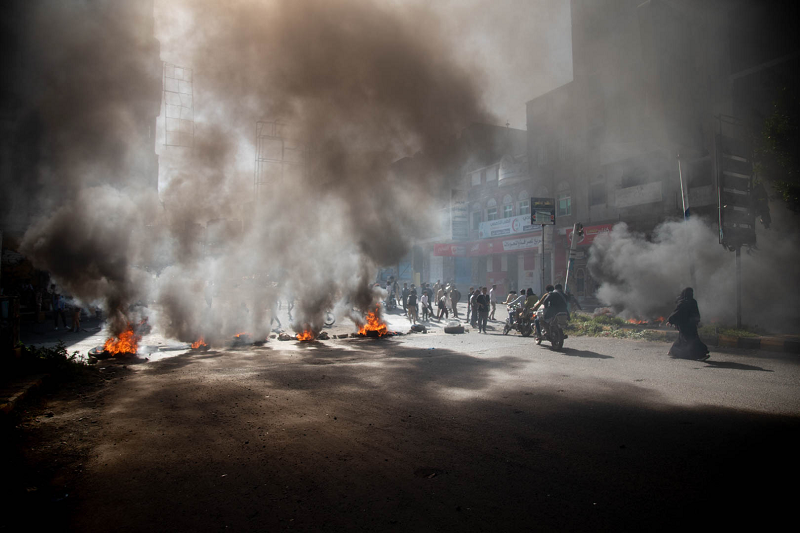
Blinking under the garish lights of a hotel ballroom in southern Iraq, Wael Makhsusi argued his case to a young audience.

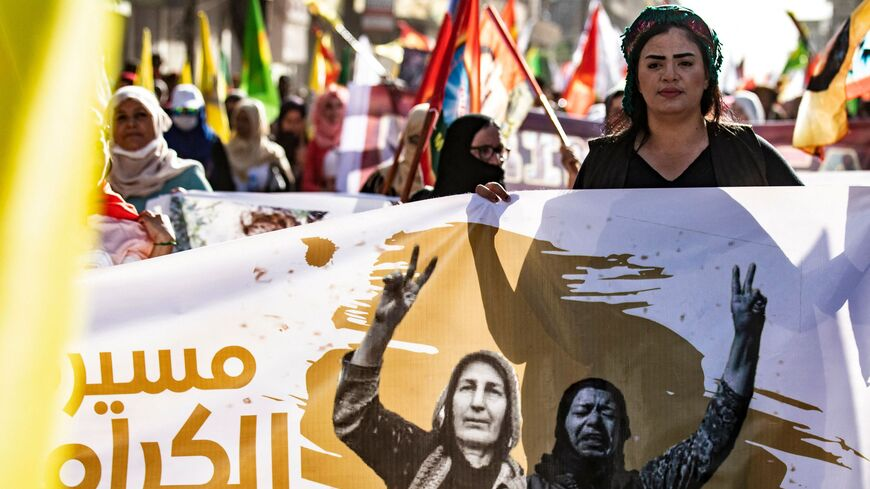
Microphone in hand, the engineer in his 30s stood onstage in Basra with other novice candidates in Sunday’s parliamentary election. Among them were independents and hopefuls drawn from the protests that filled the streets two years ago with demonstrators angry about high unemployment, government corruption and lack of basic services like electricity and water.

Russian Commentators Believe That Erdogan Met Putin At The Sochi Summit With A Weak Hand

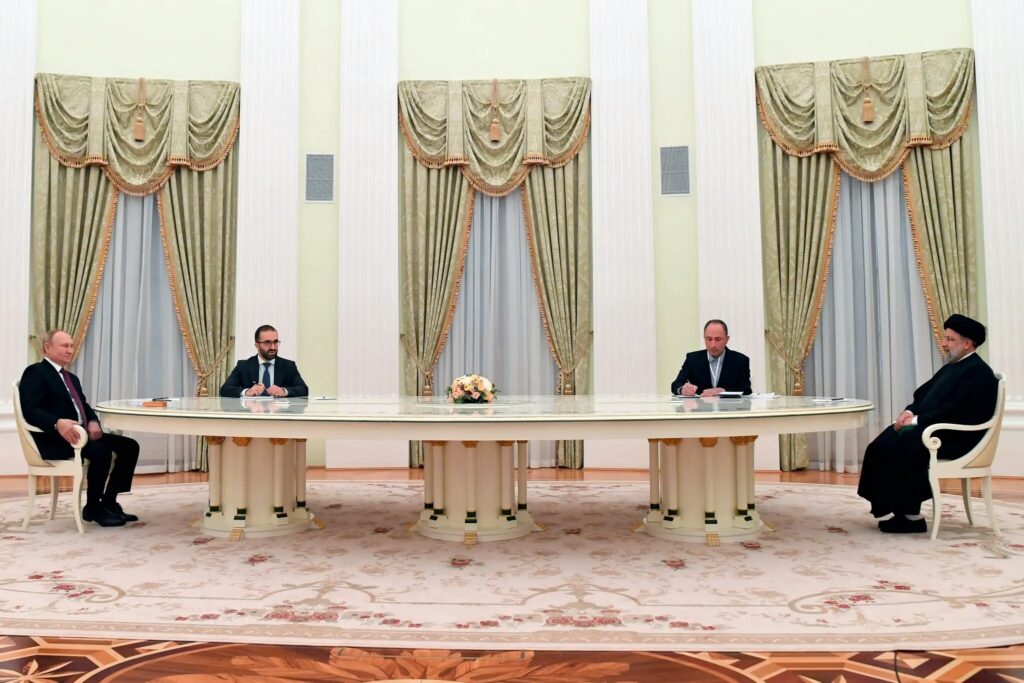
If Russia has recently regarded Turkey warily as a result of Turkey’s successful backing of Azerbaijan in its recent war with Armenia over Nagorno Karabakh, being on opposite sides in Syria and Libya, Turkey’s supply of arms to Ukraine, and Turkey’s refusal to recognize Russia’s annexation of Crimea, in the run up to the Putin-Erdogan summit in Sochi on September 29, 2021 and in its aftermath, the music changed. Professor Alexander Dugin, a Putin advisor and a leading light of the Eurasian school attached historical significance to the meeting: “At this summit, the heads of the two states drew their red lines and a roadmap for the new world. From now on, Turkey and Russia have embarked on a new path, and this will affect both regional dynamics and the whole world. “[1] The pro-Kremlin television commentator and presenter Dmitry Kiselyov pronounced that Erdogan and Putin had achieved unity on almost all issues.[2] During the summit Putin emphasized the quest for compromises, but Russian commentators believe that Erdogan generally acceded to Putin, and drew encouragement from a Turkish military withdrawal from Idlib in Syria. In seeking to explain the more accommodating policy of Erdogan, Russian commentators concentrated on Turkey’s economic and political vulnerability. The latter was the result of a chill between Erdogan and the Biden administration that deprived Erdogan of the option to play both sides.

Will Iraq’s Early Elections Solve Its Legitimacy Crisis?

What’s at stake in Iraq’s elections on 10 October?

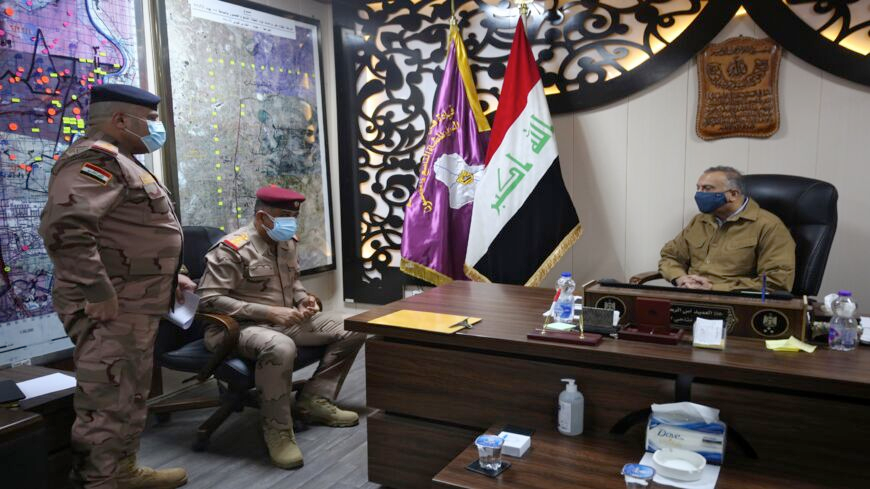
These elections are the first test of Iraq’s political institutions since countrywide protests paralysed the country in 2019-2020. Those protests forced the government elected in 2018 to step down and pass a new elections law, which brought the polls originally planned for 2022 forward by six months. The so-called Tishreen (October) protests were a serious warning that the ruling parties and political system face a growing legitimacy crisis. If the balloting unfolds in a free and fair manner, without major violence, it may restore a degree of confidence in electoral democracy. Ideally, the vote would produce a new government empowered to tackle the country’s enormous socio-economic challenges head on, but that outcome is unlikely.

Syrian rebels face intense bombing, still vow to break siege of Aleppo

Rebels tell MEE ‘warplanes have never stopped’ since they launched their counter-offensive against government siege

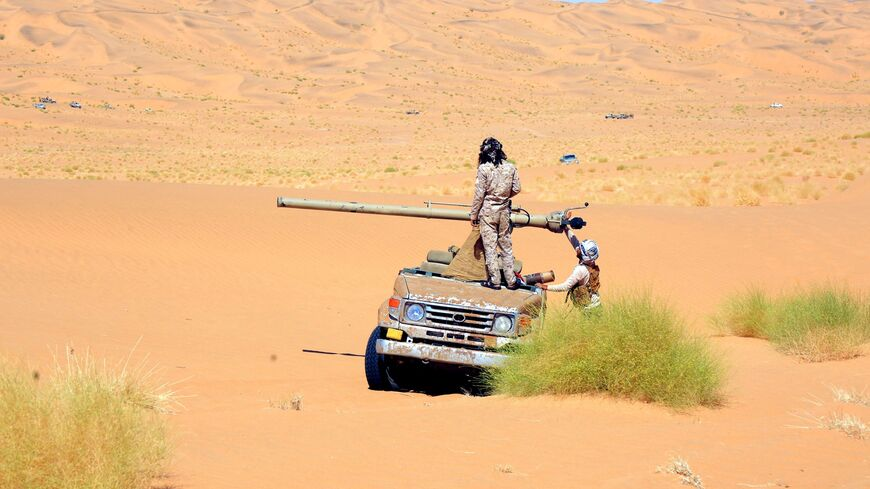
Rebel fighters in Aleppo say they have faced an unprecedented bombing campaign as they try to turn the tables on pro-government forces in a counter-offensive to break out of the besieged eastern parts of the city.

Rebel groups told Middle East Eye on Thursday they can break the siege in spite of a renewed government offensive that aims to recapture lost ground.

The sham rebrand of al-Qaeda’s Nusra Front

Nusra Front’s apparent split from al-Qaeda is merely an attempt to keep the US away from a Russian alliance that would rain bombs on them

The Nusra Front’s adoption of the new name Jabhat Fateh al-Sham and claim that it has separated itself from al-Qaeda was designed to influence US policy, not to make the group any more independent of al-Qaeda.

Syria war: Inside the world of HTS leader Abu Mohammad al-Jolani

After years of speculation and debate, we can now trace the roots of Jolani’s jihadist ideology

The identity of the leader of Hayat Tahrir al-Sham (HTS), formerly the Nusra Front, is no longer a secret. Last year, Abu Mohammad al-Jolani revealed his real name, and in a recent Frontline interview, he delved deeper into his family background.

After years of speculation and debate, and bolstered by our own extensive research and interviews, we can now trace how his social upbringing and the broader sociopolitical context shaped his jihadist ideology.

The charismatic leadership of Jolani, who could potentially impact US-Turkish coordination in Syria by playing a key role in deciding the fate of Idlib, has been an essential mechanism of change within Nusra Front and subsequently HTS.

Syria’s foreign fighters are told, ‘Go home or join HTS’

Hundreds of frontline foreign fighters have been told to fall under the direct control of the main rebel group leading the Syrian civil war in the Idlib region or get out of the country. The blunt order was issued by Hay’at Tahrir Al-Sham (HTS) amid some of the heaviest Russian bombardment seen in north-west Syria.

The timing of the directive has bewildered Middle East observers. There are fears of an internal backlash among the foreign fighters who simply have nowhere else to go, having been forced to abandon or relinquish their citizenship of their native countries.

How Syria’s Jolani is trying to rebrand himself as a peacemaker

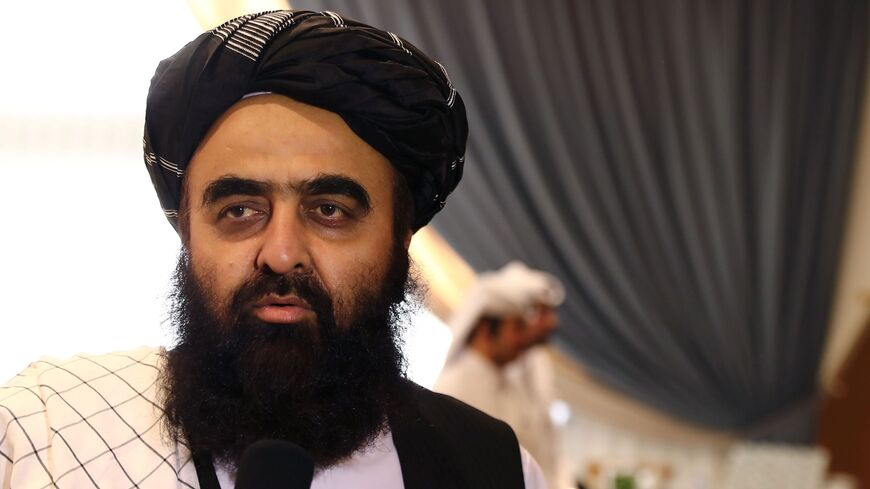
Once pledging allegiance to al Qaeda, the HTS’s Mohammed al Jolani is rolling up his sleeves to fight his past and convince the world that he’s the man who can save Syria’s Idlib.

A military jacket coupled with a turban isn’t Abu Mohammed al Jolani’s primary choice of clothing anymore. Over the last five years, the Hayat Tahrir al Sham leader’s sartorial choices have gone through multiple updates. First, it went from business-casual with neutral-coloured plain sweaters or buttoned shirts with rolled-up sleeves and a skullcap, to a straight formal Western style look. Nowadays, you might catch him in a suit with no tie or head covering – and definitely no rifle in sight.

Turkey’s Idlib Incursion and the HTS Question: Understanding the Long Game in Syria

After several days of speculation surrounding a possible Turkish intervention, on Oct. 8 Turkish reconnaissance troops crossed into Syria’s northwestern province of Idlib to scope out a first phase “de-escalation” deployment. Turkey’s move came within the broader context of a Russian-led initiative to de-escalate the conflict in Syria by focusing on specific geographic zones, of which Idlib was the fourth. In the days that followed the Oct. 8 deployment, limited numbers of Turkish troops used small country roads to establish thin lines of control spanning between the Idlib border town of Atmeh, east through Darat Izza and into Anadan in Aleppo’s western countryside. Two much larger convoys of at least 50-100 armored vehicles crossed at night on Oct. 23 and late on Oct. 24, effectively completing Turkey’s initial objectives.

The loose buffer zone that resulted serves primarily to place Turkish troops in a prime position to monitor and contain the Kurdish People’s Protection Units (YPG) in their stronghold of Afrin, 30km north of Darat Izza. It was from Afrin that YPG militiamen and women had launched repeated attacks on Syrian opposition positions in northern Idlib, indicating the Kurdish group’s likely intent to expand aggressively southward. The YPG’s stronghold in Afrin also gave it the means to defend against any future attempt by Turkish-backed opposition forces to retake YPG-occupied towns like Tel Rifaat. Turkey saw these strategic realities as security threats, given the YPG’s structural and ideological affinity with the Kurdistan Workers Party (PKK), a designated terrorist organization that has fought a deadly insurgency against the Turkish state for more than 30 years.

Notwithstanding the significance of a Turkish intervention in Idlib, the development raised eyebrows for another reason: Turkey’s soldiers had been provided an armed escort into Idlib by none other than the jihadist group Hayat Tahrir al-Sham (HTS). Therein followed a flurry of accusations of Turkish collusion with al-Qaeda that although understandable, largely missed the potential significance of developments up to that point. I was in Turkey in the days leading up to the operation and was near the border as it began, meeting with a broad range of Syrian opposition groups and figures.