Trends In Terrorism: What’s On The Horizon In 2022? – Analysis

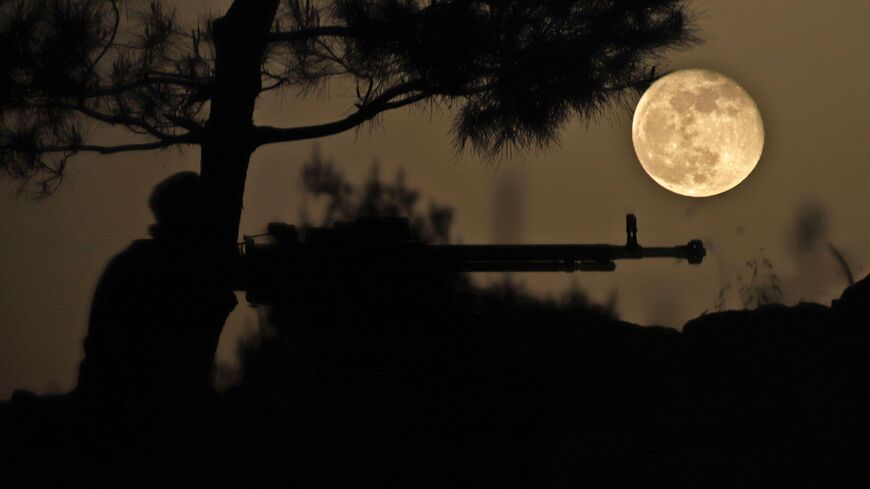
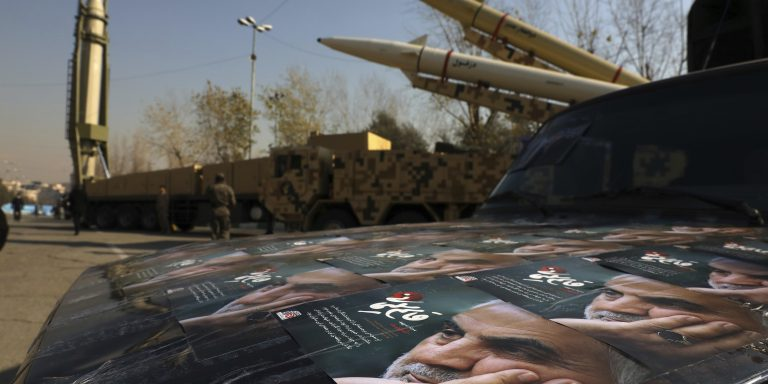
With the world still reeling from the global COVID-19 pandemic, nearly two years in the making, few know what to expect terrorism trends to look like heading into 2022. However, certain trends from previous years seem likely to continue and may grow more severe. The terrorist threat is arguably more diverse than at any point in recent memory, with the threat posed by far-right extremists and jihadists joined by a growing roster of political and socio-cultural motivations, including ‘technophobia’ or neo-Luddite terrorism, violent anarchists, and extreme misogynists, especially those following the so-called ‘Incel’ ideology. ‘Salad bar’ ideologies, those that combine a sampling of different ideologies, sometimes diametrically opposed to one another, are also on the rise and are best exemplified by neo-Nazis growing fetishization of jihadist ideology. And while the most lethal terrorist threats are likely to remain jihadism and far-right extremism, it is important to think about how recent developments could shape patterns of terrorism over the coming year.

US officials say humanitarian effort in Syria is another means to counter ISIS

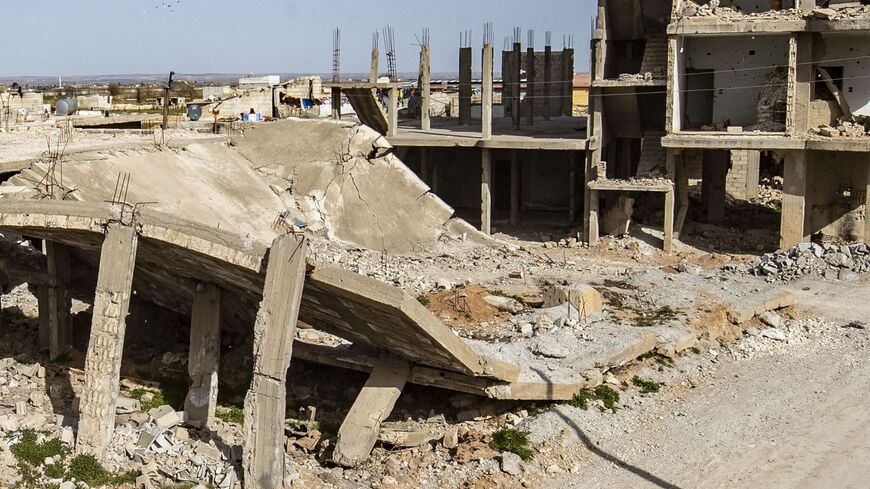
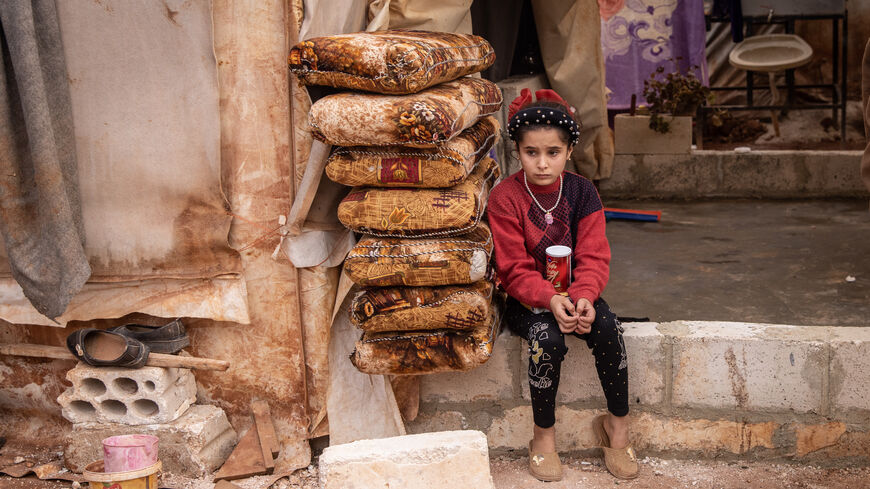
United States special operations forces in northeastern Syria have been quietly visiting local villages to help provide medical care to communities which have seen little health care in the wake of years of war.

The visits are done in partnership with the Syrian Defense Forces, (SDF) which operate in the region alongside the US in a years-long effort to root out any ISIS fighters.

Kosovo man charged with joining extremist group in Syria

Prosecutors brought terror charges Friday against an ethnic Albanian man from Kosovo who allegedly joined an extremist group in Syria and brought his family there.

A statement from the prosecutor’s office in Kosovo said the suspect, identified only as N. L., joined the Jabhat al-Nusra group along his son. Authorities allege he trained as a fighter and participated in attacks in Syria.

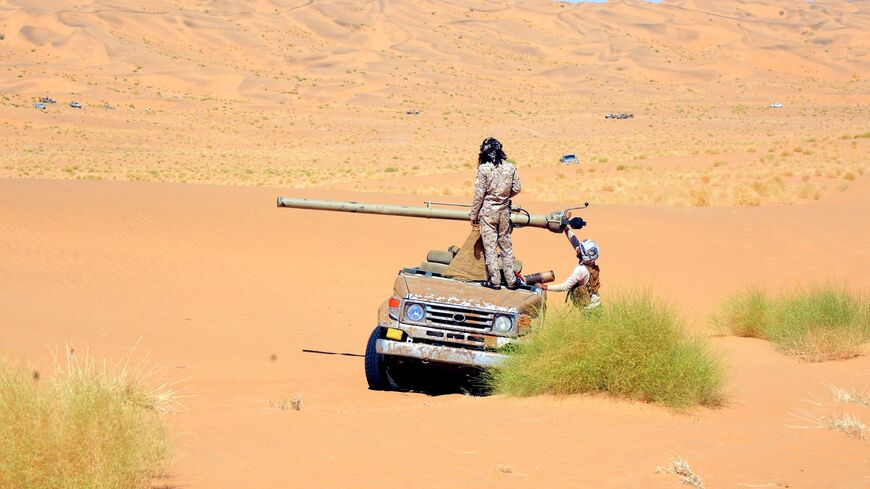
Islamic State targets peshmerga in Iraq’s disputed Diyala and Makhmour

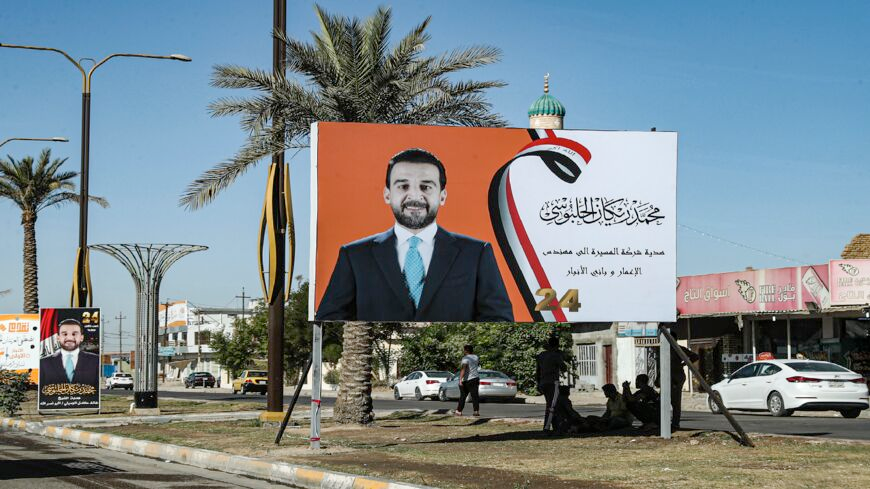
A recent string of attacks on Iraq’s Kurdistan Region peshmerga forces have raised concern over how effective long-discussed coordination with the central government is in the country’s flashpoint disputed territories.

Peshmerga forces operating in territory disputed between the central government and the Kurdistan Region of Iraq (KRI) have in recent days incurred multiple casualties in a number of attacks attributed to Islamic State (IS) cells.

Can Turkey help in Ukraine crisis?

Moscow is likely to welcome a Turkish mediation effort if it serves to restrain Ukraine from a military adventure.

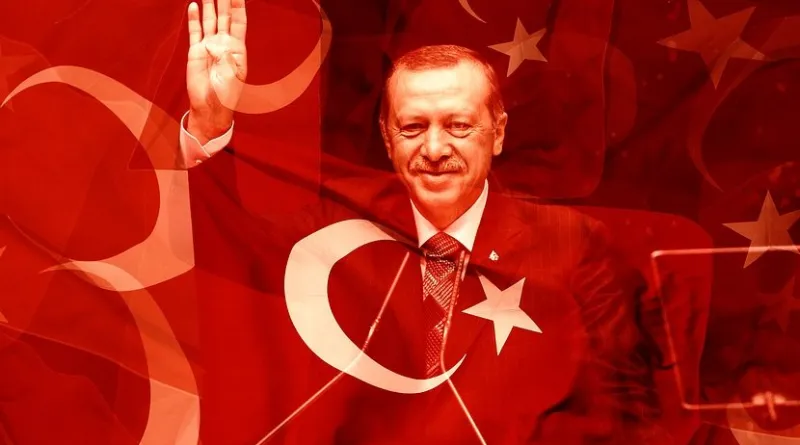
Turkey has offered to mediate in the Ukraine crisis as tensions between NATO and Russia escalate, with fears that Russia might be gearing up to invade eastern Ukraine. The proposal from President Recep Tayyip Erdogan, who has previously passed messages between the Russian and Ukrainian leaders, seems to have generated little enthusiasm in Moscow and Kyiv.

For Palestinians, terror label takes a toll on humanitarian work

Humanitarian aid groups are often targets in politically charged areas. As pressures mount in the West Bank, they are posing a real threat to those who are trying to help – and to accountability.

The Israeli military’s designation in October of six Palestinian NGOs as terrorist organizations has dramatically escalated the politicization of humanitarian work in the West Bank, turning their work into a battleground.

All Against All

The Sectarian Resurgence in the Post-American Middle East

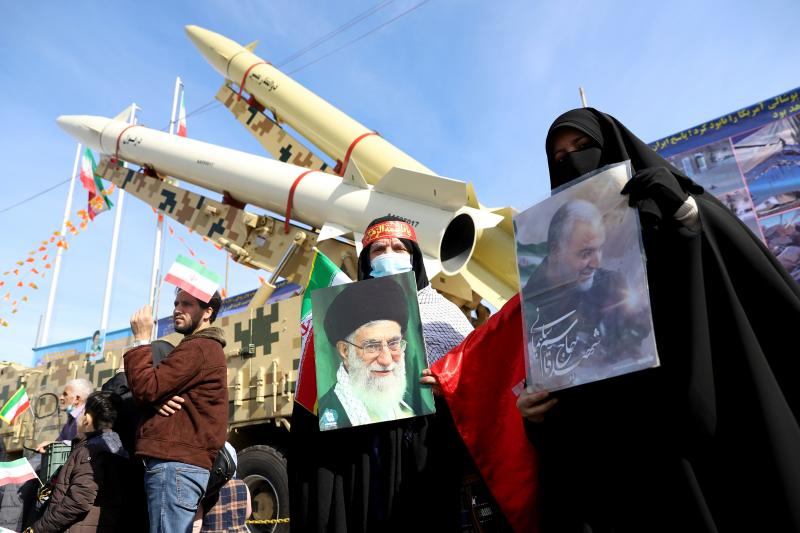
The Biden administration’s mantra for the Middle East is simple: “end the ‘forever wars.’” The White House is preoccupied with managing the challenge posed by China and aims to disentangle the United States from the Middle East’s seemingly endless and unwinnable conflicts. But the United States’ disengagement threatens to leave a political vacuum that will be filled by sectarian rivalries, paving the way for a more violent and unstable region.

Russian Commentator Akopov To Erdogan: Don’t Butt In On Ukraine Just Like Russia Doesn’t Butt In On Kurdish Issue

Turkey’s President Recep Tayip Erdogan offered to mediate between Russia and Ukraine. The senior Ria Novosti commentator Petr Akopov poured water on the idea. Ukraine has become a Western puppet and since Turkey is still a NATO member, Ankara cannot be regarded as an even-handed mediator. In words ominous for Ukraine, Akopov emphasized that Ukraine’s independence is accidental and Kiev is part of the “Russian world”. Ukraine’s existence is ephemeral, and does not resemble Turkey and Russia’s long-lasting proximity to each other. Turkey has no business projecting itself into the dispute between Russia and Ukraine in the same way that Russia would never think of injecting itself into the Kurdish question.

Who Are the Extremist ‘Grey Wolves’?

In reality, the Grey Wolves movement very much does exist. It has a long history of bloodbaths across Turkey and is now a growing movement across Europe as well as the South Caucasus.

This ideology [Turanism, or the Greater Turkish homeland] believes in the superiority of a supposed Turkish race and wants to unite all Turks under one country, “Turan”, from Europe to the Pacific. These ideas have greatly influenced the Grey Wolves organization and its actions.