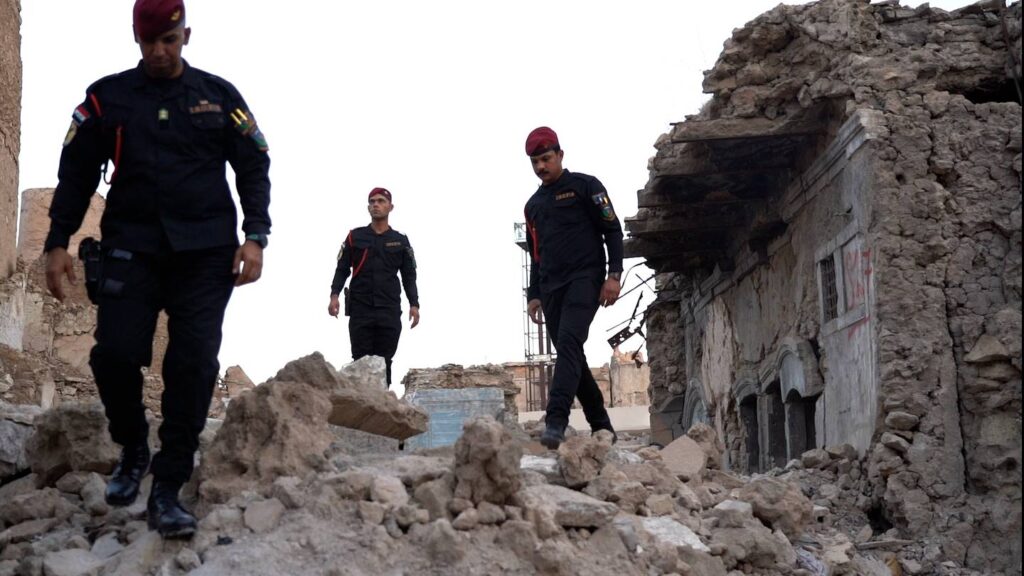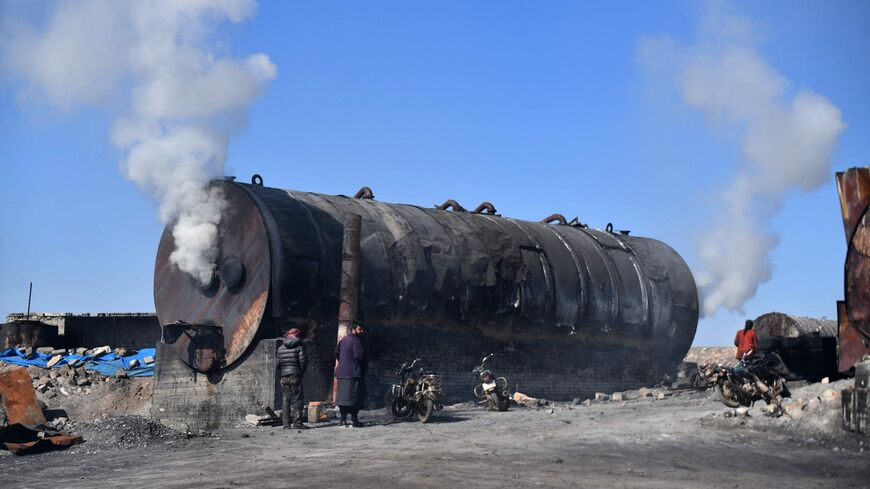
Iraq’s federal court has ordered the Iraqi Kurdistan government to deliver all of the oil it produces to Baghdad, dismissing an oil and gas law regulating the oil industry in the autonomous region as unconstitutional.
I’ve previously written concerning [Yemen, The War That Should Have Never Been And How To Achieve Peace: Countercurrents: 13/02/2022] the fact the War in Yemen should never have occurred in the first place and the what and how required to achieve peace; either by dividing Yemen in two, North and South Yemen as per the pre-1990 borders, or under a Unity Government. However, seeing as that even today, this idea of peace is fleeting away due to the unwarranted missile and bomb strikes upon Houthis in North Yemen, specifically the continual destruction of civilian targets and assets by the Saudi and UAE military.
Turkey and Israel are not only seeking to repair their fractured bilateral relations, but see cooperation opportunities in Central Asia, said James M. Dorsey, a senior fellow at the S. Rajaratnam School of International Studies and Middle East Institute in Singapore.
Turkish President Recep Tayyip Erdoğan is still insisting on false economic premises, including a theory that higher interest rates cause inflation; a policy stance that has led to sharp losses for the lira, said Güven Sak, a former member of the Monetary Policy Council of the Central Bank of Turkey.
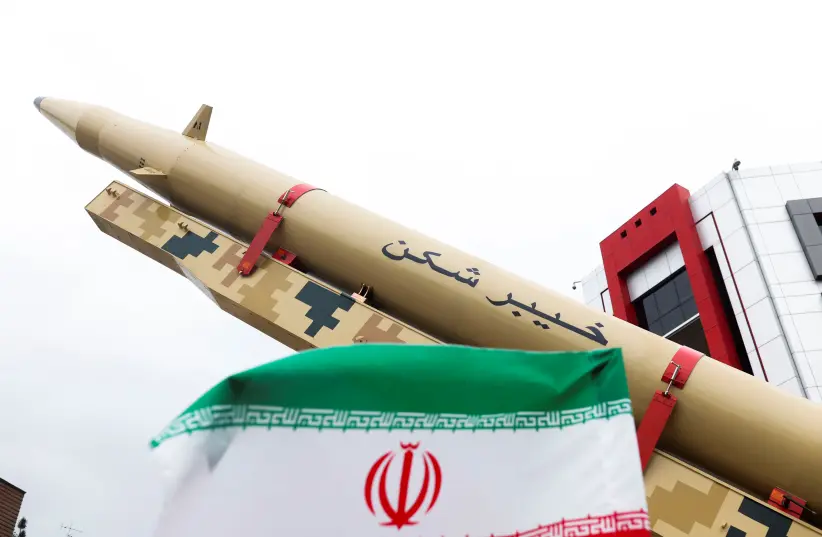
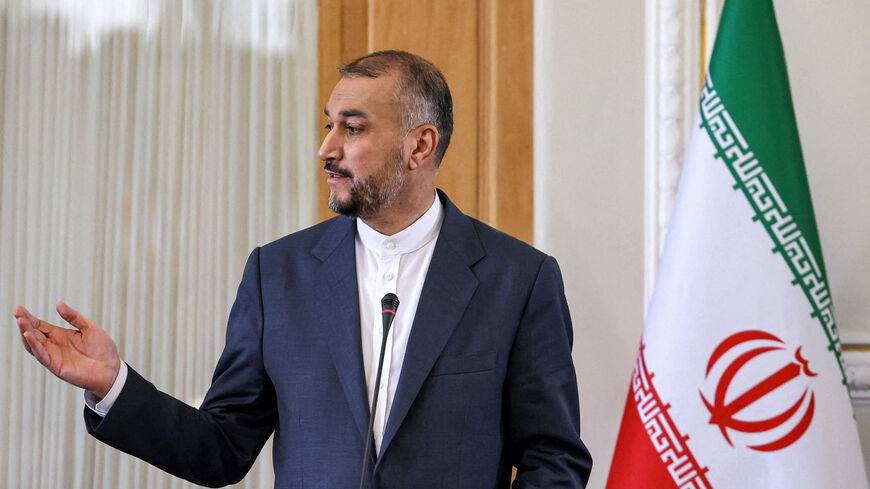
Few countries have maintained clearer or more consistent aspirations over the last four decades than the Islamic Republic of Iran. Since 1979, when Islamic revolutionaries transformed the country from an U.S.-allied monarchy into an ardently anti-American theocracy, Iran has sought to expel the United States from the Middle East, replace Israel with Palestine, and remake the region in its image. Unlike U.S. strategy toward Iran and the greater Middle East, which has shifted markedly with different administrations, Iranian strategy toward the United States and the Middle East has exhibited remarkable continuity. Tehran has not achieved any of its lofty ambitions, but it has made progress toward them—and it is feeling emboldened by its recent successes.
A high-level official delegation from Turkey will visit Israel this week as the two countries prepare for the planned visit of Israeli President Isaac Herzog to Turkey and to discuss relations between the two countries, the Office of the President of Israel and the Ministry of Foreign Affairs confirmed in a joint statement on Tuesday.
In order to maintain its neutrality in the Russia-Ukraine conflict, Israel has refused to sell the Iron Dome air defense system to Kyiv. The Ukrainian government officially requested last spring that the US deploy its MIM-104 Patriot anti-ballistic missile system, as well as the Iron Dome, on its territory.
A leaked report has revealed details about how the jihadi group used Turkey to traffic money and obtain supplies.
Shortly after the Islamic State’s (IS’s) leader was killed in a Syrian hideout near the Turkish border, a leaked report by Turkey’s Financial Crimes Investigation Board (MASAK) revealed details about how the jihadi group used the country to traffic money and obtain supplies, including drone parts.
At a weekend summit, six party heads charted a path to ending the executive presidential system that critics say has eroded the country’s democratic institutions.
Leaders of six Turkish opposition parties convened this past weekend in Ankara to chart a path back from the executive presidential system, which they say concentrates too much power in the hands of President Recep Tayyip Erdogan to the detriment of parliament, the courts and other democratic institutions.
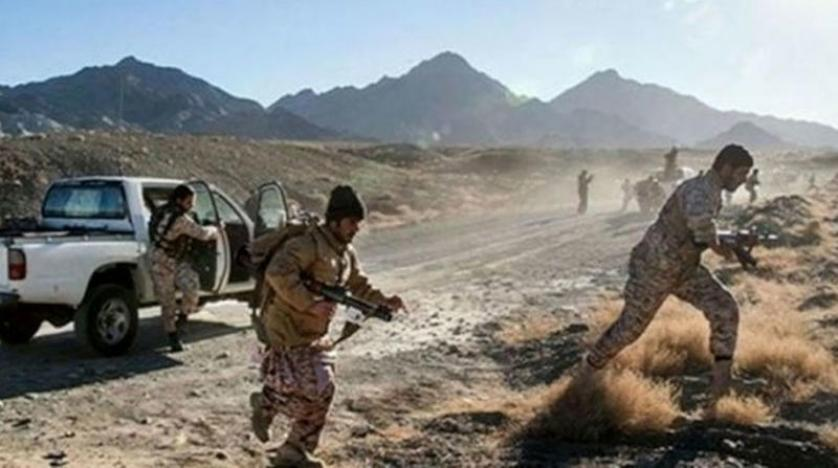
The four missile and drone attacks against the UAE in the space of less than three weeks are a cruel reminder of the fragility of peace moves in West Asia. Responsibility for the first three attacks that took place on 17, 24, and 31 January was claimed by the Houthis as retaliation for the UAE’s support for the Saudi-led coalition in Yemen. The Houthis have close ties with Iran, and it would be fair to assume that the missiles and drones used in these attacks are of Iranian origin, with Hizbollah technicians from Lebanon reportedly providing on-ground support. The fourth attack, an attempt by three armed drones to strike unknown targets in the UAE on 2 February 2022 has been attributed to a relatively unknown Iraqi Shia group with presumed ties to Iran. The missile attacks on 17 January and 31 January and the drone attack on 2 February were thwarted, while the drone attack on 24 January caused limited damage but resulted in the death of two Indian and one Pakistani national in Abu Dhabi.