As Russia menaces Ukraine, Crimea’s Tatars turn to Turkey

Complex ties stretch across centuries and continents, but Turkey’s affinity for its ethnic kin is taking a backseat to global relations with Russia.

Ilmi Umerov, a Crimean Tatar political leader, was lying on a hospital bed in Simferopol, the capital of Crimea in his pajamas when Russian secret service agents carted him off to the airport and put him on a plane to Ankara with fellow Crimean Tatar political detainee Ahtem Chigoz.

Russian invasion of Ukraine would spell more economic turbulence for Turkey

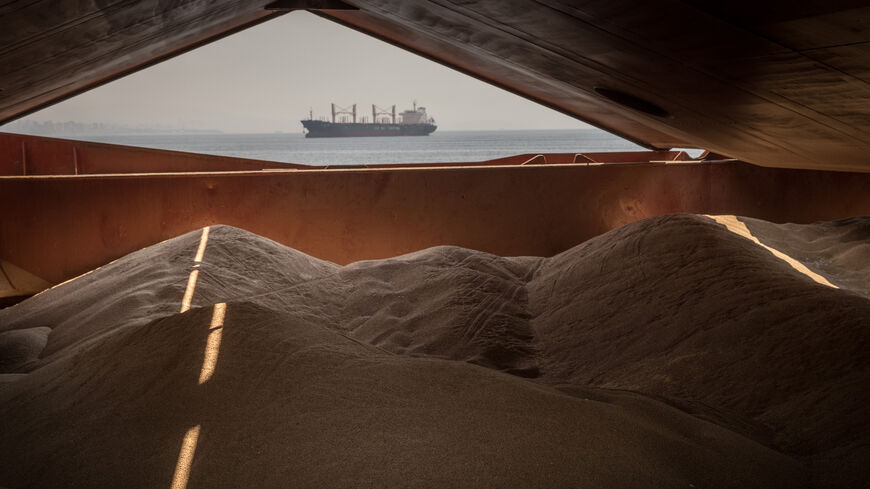
War would bring Turkey under intense pressure from its Western allies to join putative sanctions against Russia, a critical trading partner and supplier of natural gas.

Turkish President Recep Tayyip Erdogan’s Feb. 3 meeting with his counterpart Volodymr Zelensky in Ukraine yielded a string of accords aimed at deepening economic and military ties between Ankara and Kyiv and thereby significantly raised the stakes for both sides should Russia attack the former Soviet state.

Is Iran trying to provoke Israel against Russian assets in Syria? – opinion

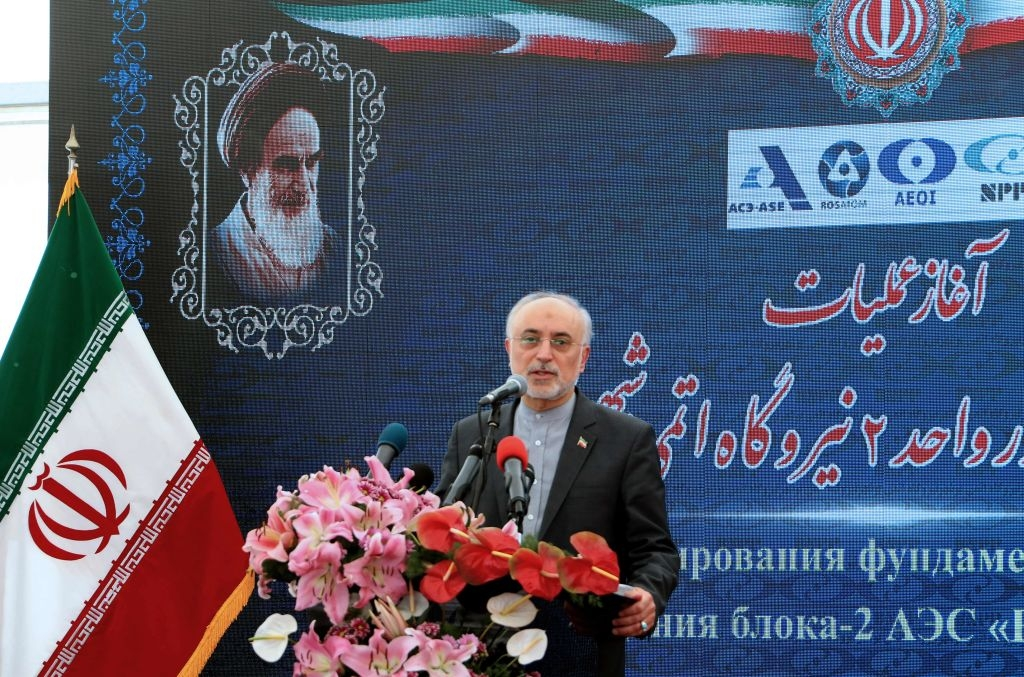
Iran is well aware of the changing dynamic, and it would like to advance its interests by creating a fissure between Israel and Russia.

Why would Iran want to incite Israel to strike Russian personnel or facilities in Syria? To answer that question, we need to understand the evolution of Iranian and Russian interests in Syria, which have diverged over time. Today’s post-war situation in Syria is very different from just a few years ago when Assad was hanging by a thread for his survival. At that time, Russian and Iranian interests aligned in their shared desire to defeat ISIS and prop up the Syrian dictator.

A Death In Idlib: The Killing of the Top ISIS Leader and Its Impact

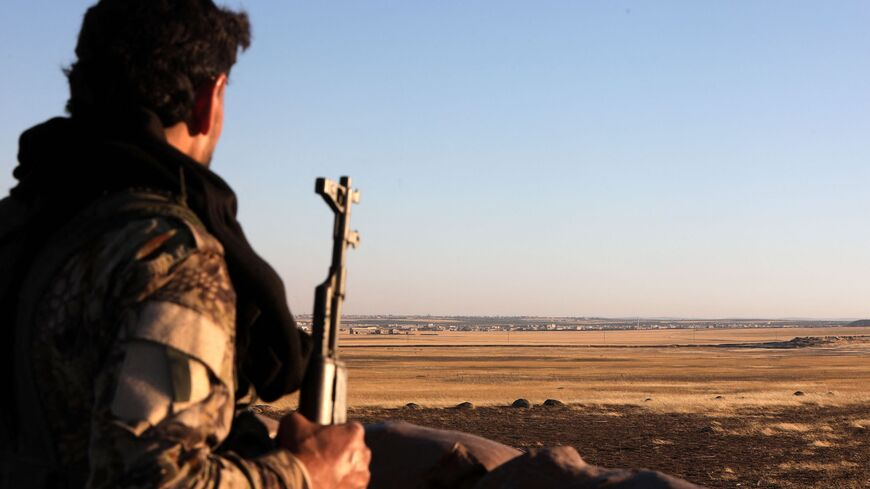
On 3 February, U.S. commandos raided a house in Syria’s Idlib province, killing Abdullah Qardash, head of the Islamic State’s core group in the Levant. In this Q&A, Crisis Group experts Jerome Drevon and Dareen Khalifa explore the implications of the ISIS leader’s demise.

Who was the ISIS leader killed yesterday in north-western Syria?

Abdullah Qardash, an Iraqi national also known as Abu Ibrahim al-Hashimi al-Quraishi, became ISIS leader on 31 October 2019, one week after his predecessor, Abu Bakr al-Baghdadi, was killed in a U.S. raid in Idlib province in north-western Syria. Qardash was a long-time jihadist veteran. He joined what was known as al-Qaeda in Iraq shortly after the 2003 U.S. invasion to fight the U.S.-led coalition forces and the new Iraqi government. Like several other future ISIS leaders, he was arrested for his role in the insurgency and spent time in the U.S. Camp Bucca detention facility.

Turkey Announces Winter Eagle Air Operation Against Terrorists in Syria and Iraq

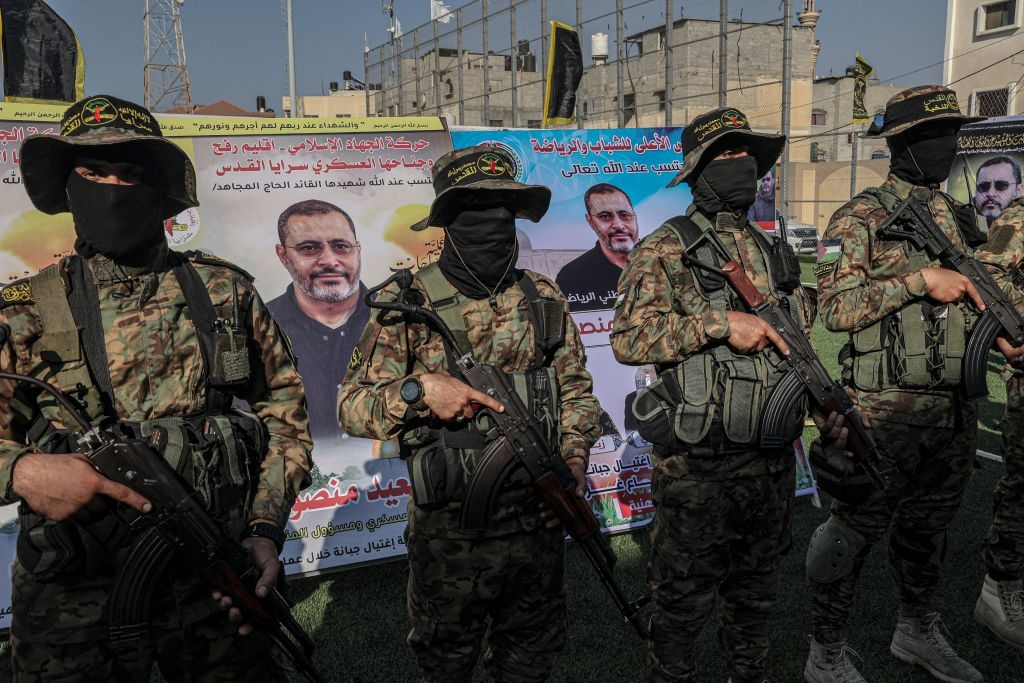
Turkey announced the beginning of an air campaign against “terrorist groups” on the border with Syria and Iraq, according to the Shaam News Network.

On Wednesday, the defense ministry of Turkey announced the launch of an air operation called Winter Eagle against so-called terrorists in the areas of Malikiyah – Derik, Sinjar, and Qarajiq –which they use as bases in northern Iraq and Syria, Turkey’s Anatolia news agency reported.

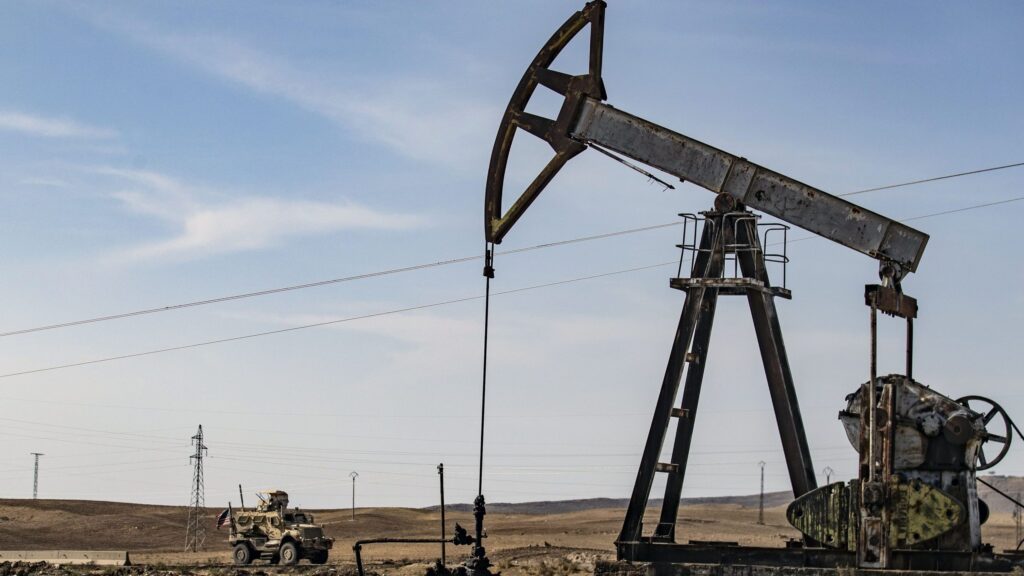
SDF Sells Syrian Oil to HTS Company in Idleb

The SDF signed an agreement with an HTS-affiliated company to supply it with oil, according to Athr Press.

Anonymous sources revealed to Athr Press that an oil supply agreement was signed between representatives of the Syrian Democratic Forces (SDF) and the militants of the Hay’at Tahrir al-Sham (HTS, al-Nusra Front and its allies). The latter are responsible for managing the Watad company, which is affiliated with the so-called Abu Muhammad al-Julani in Idleb. It distributes oil derivatives in the areas controlled by al-Nusra in the Idleb countryside.

Ministerial Meeting Soon to Discuss Syria Return to Arab League

The Secretary-General of the Arab League said a ministerial meeting would be held next month to discuss the return of Syria to the organization, al-Watan writes.

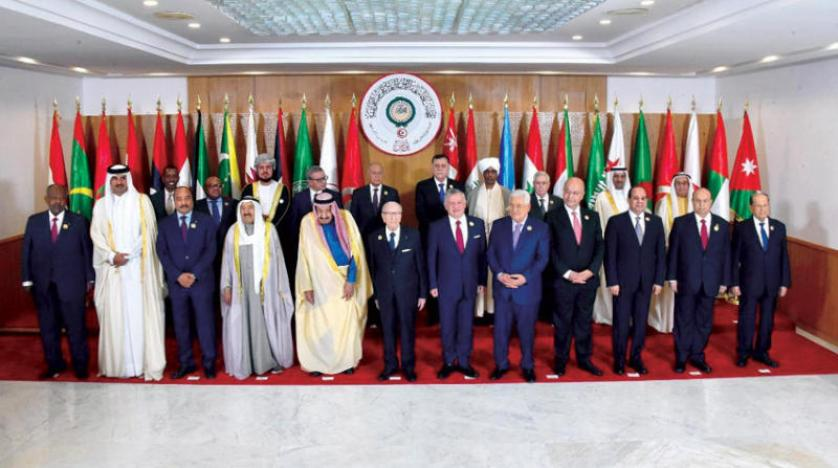
On Wednesday, the Secretary-General of the Arab League, Ahmed Aboul Gheit, announced that an Arab ministerial meeting will be held next month to discuss “the possibility of the return of Syria to the Arab League.” At the same time, King Abdullah II of Jordan emphasized his country’s keenness to support any effort to develop and institutionalize joint Arab action.