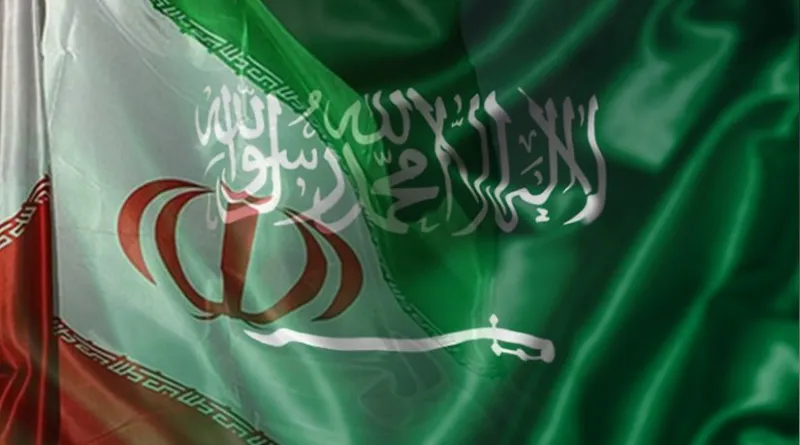
If there is one place Saudi Arabia was happy to be low on the totem pole, it was Iran. Those days are over. Strategic thinkers in Tehran have upgraded their perception of the threat posed by the kingdom.
Rather than simply viewing Saudi Arabia as a Middle Eastern extension of the United States and a political rival, Iran today sees the kingdom as a security threat.
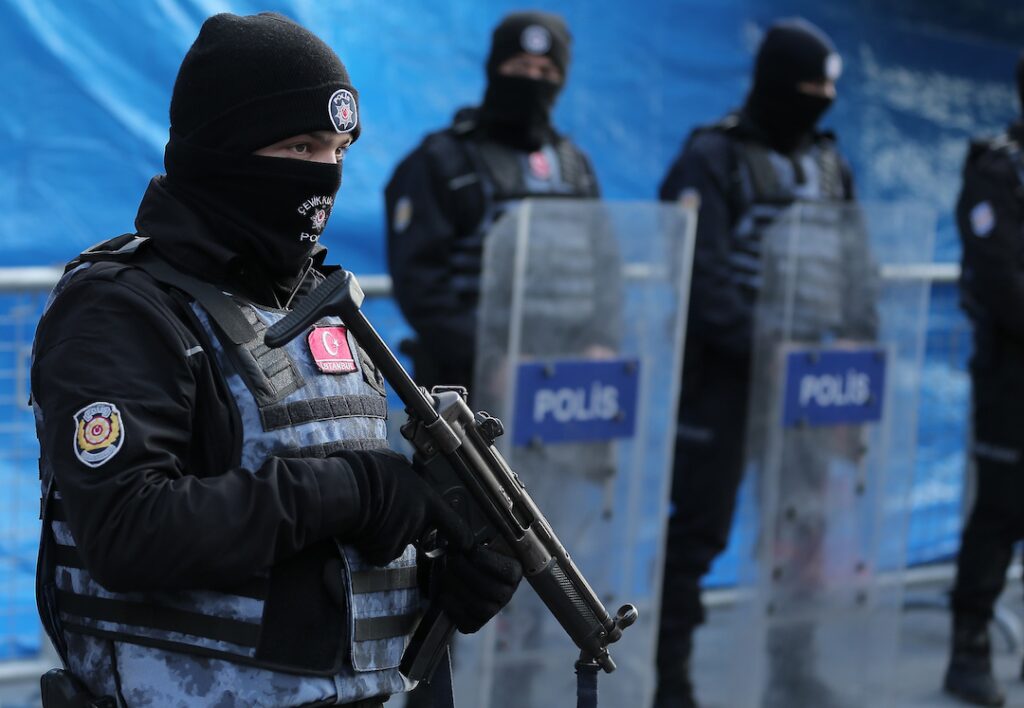
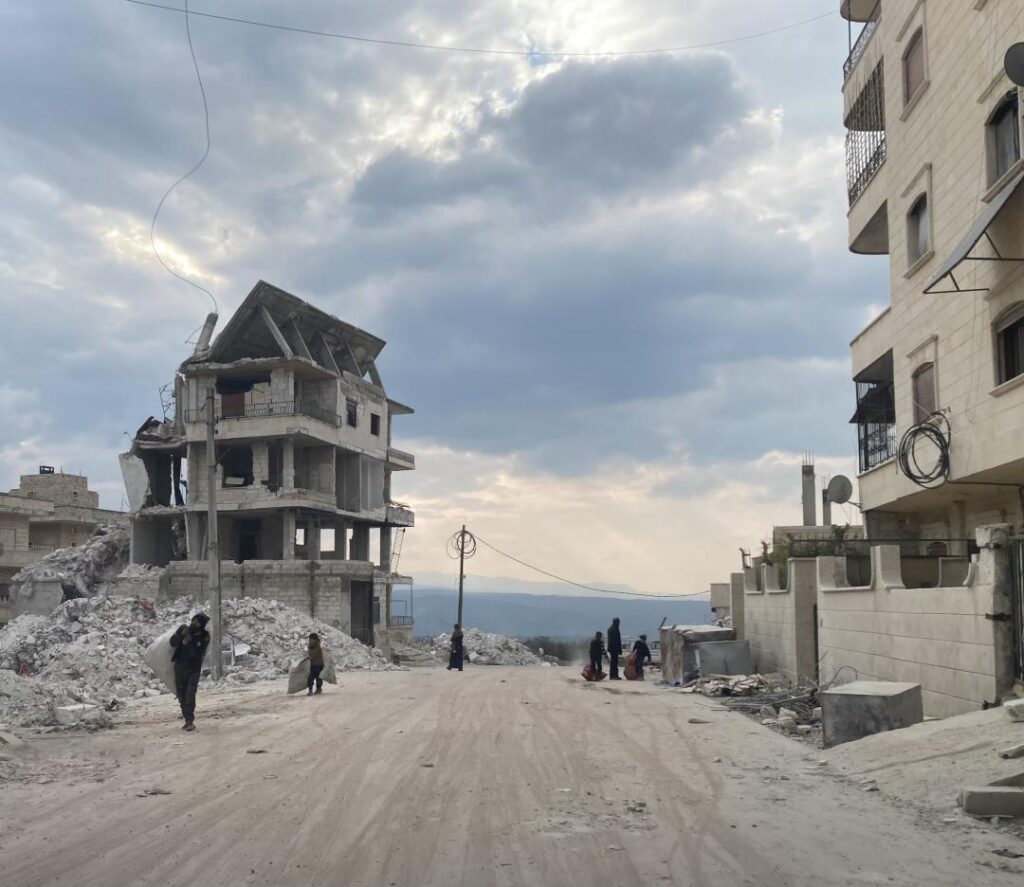
What’s new? Thousands of foreign nationals who joined ISIS in Syria and Iraq have crossed into Türkiye. Some have been deported. Others have stayed, with some still facing trial for terrorism-related charges and others nearing the end of their prison sentences. Their presence creates a humanitarian and security challenge for Türkiye, currently reeling from the devastating earthquakes of February 2023.
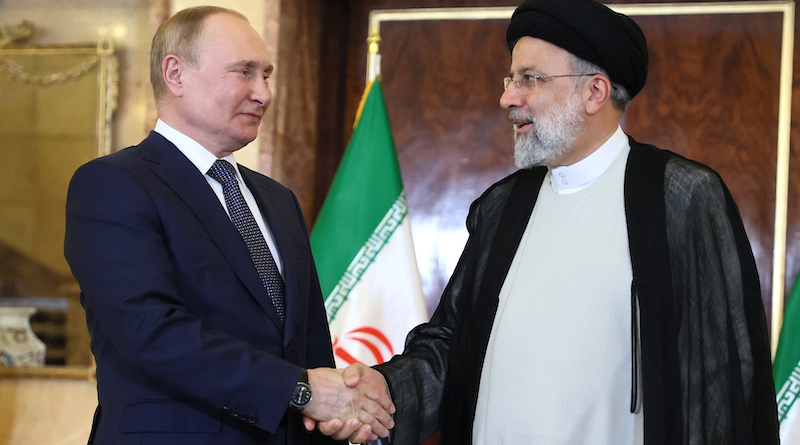
Both Russia and Iran have deep, multifaceted, and long-standing connections to Syria. During the Cold War, Damascus emerged as the Soviet Union’s most loyal Middle Eastern ally, and the relationship regained vibrancy in the 2000s as Vladimir Putin strove to reestablish Moscow’s regional preeminence. Meanwhile, the 1979 Iranian revolution reversed Tehran’s pro-U.S. orientation. Hafez al-Assad’s Syria was the first Arab state to recognize the Islamic Republic of Iran and the only Arab state (apart from Libya) to support Iran during its 8-year war against Iraq (1980-88). In subsequent decades, Tehran intensified its political, economic, and military ties with Damascus.[1]
What’s new? A three-year ceasefire in rebel-held Idlib has saved countless lives and allowed the main insurgent group, Hei’at Tahrir al-Sham (HTS), to redirect its efforts from fighting the regime to dismantling ISIS and other jihadist cells. Yet uncertainty regarding Türkiye’s Syria policy may threaten the relative peace and hamper humanitarian relief.
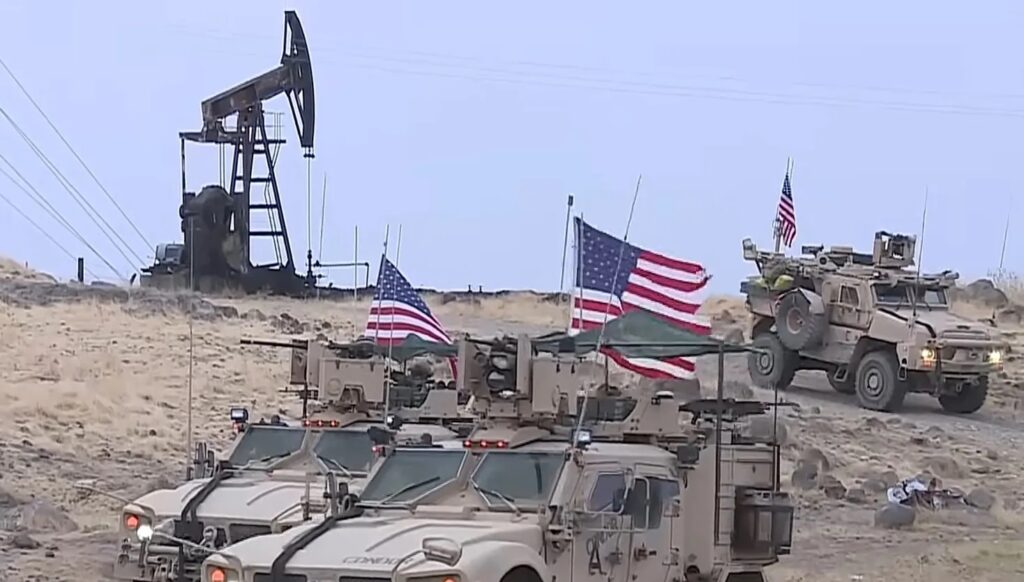
White House officials have previously boasted that Washington ‘owns’ one third of Syria’s territory, in particular the resource-rich northeast
The US occupation army renewed its oil smuggling campaign in northeast Syria three weeks after a 7.7 magnitude earthquake ravaged the war-torn country.
Extremist group HTS wishes to establish full control over the economy of Syria’s northern region
A 23 February report by Lebanese daily Al-Akhbar suggests that the Hayat Tahrir al-Sham (HTS) extremist group, formerly the Al-Qaeda affiliated Nusra Front, has been attempting with external support to consolidate its power in Syria’s north – with the aim of establishing full economic control over the region and thereby ‘legitimizing’ itself.
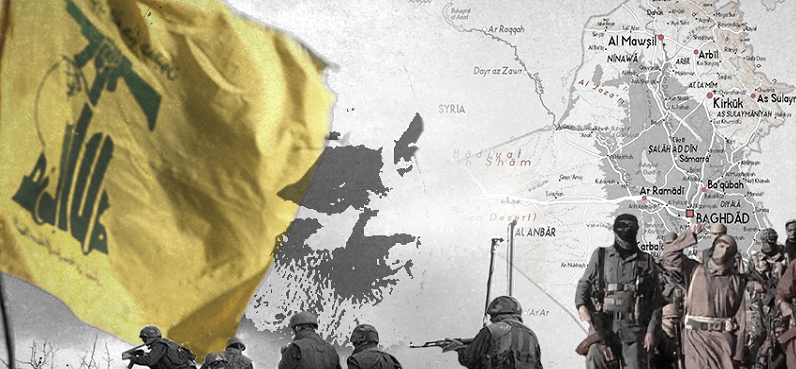
The Cradle s’est entretenu avec un haut responsable militaire du Hezbollah en Irak sur le rôle crucial joué par le défunt commandant iranien de la Force Quds, le général de division Qassem Soleimani, dans la conduite de la résistance contre Daech.
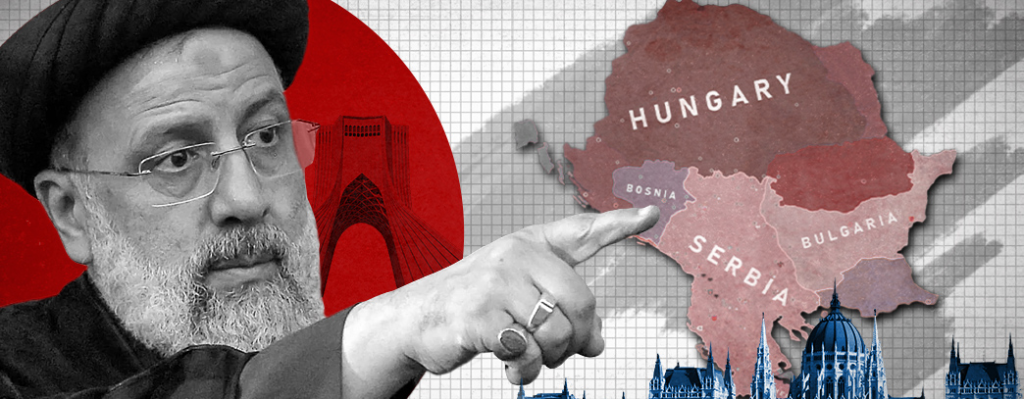
The Balkans presents a crucial junction for Tehran as an access point to Western Europe and an avenue for advancing its regional political and economic interests.
The Balkan region is strategically important for western countries as a geographic bloc through which they can increase their influence in former Soviet Eastern European states, including Russia.
Abstract: Once allies in the same organization, Hayat Tahrir al-Sham (HTS) and the Islamic State have an interesting history that turned them into ‘frenemies’ from April 2013 to February 2014 and then outright enemies over the past nine years. This led to a broader global fight between al-Qaida and the Islamic State. Yet, HTS continued to tread its own path by breaking from al-Qaida in 2016. From the spring of 2014 to the summer of 2017, the main avenue by which HTS and its predecessor group, Jabhat al-Nusra, dealt with the Islamic State was insurgent infighting. Yet since the summer of 2017, as HTS consolidated control over areas in northwest Syria and developed a governance apparatus, HTS has favored a lawfare approach to dealing with Islamic State cells in the territory it controls. Surveying the data on its arrest campaign against the Islamic State over the past half decade suggests HTS has been successful in countering the Islamic State. Yet, even if its fight against the Islamic State is deemed a net positive, HTS’ continued support for terrorism abroad and the authoritarian nature of its governance make it difficult for the West to countenance removing the group from the list of designated terrorist groups or engage with it.