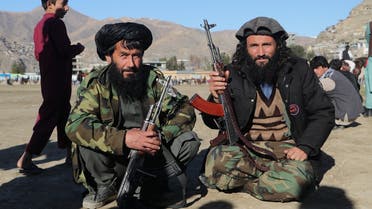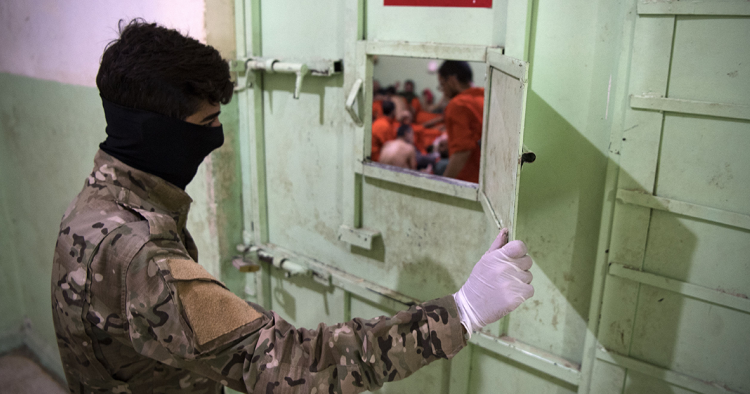
The regime is violently repressing the uprising in southern Syria.
Suweida has been witnessing a state of unrest since Sunday morning when a peaceful protest against difficult economic conditions was repressed with fire.
The US wants the pressure to be kept on ISIS, but every time Ankara has an election cycle or a need to distract from some issue at home, it will use drone strikes and threats of conflicts in Syria.
In late November, the US said that Syrian rebels in the south of the country had killed an ISIS leader. He was actually killed in October, but it apparently took time to confirm the details.
Syrian President Bashar al-Assad has rejected efforts by his Russian allies to arrange a meeting with his Turkish counterpart Recep Tayyip Erdogan, refusing to give him leverage in next year’s upcoming elections in Turkiye.
The US has voiced willingness to end support for Iran’s protest movement if Tehran stops selling drones to Moscow and makes concessions on its nuclear program.
There is a long history of western powers fuelling public unrest in Iran, even pre-dating the establishment of the Islamic Republic. But what makes the on-going protests since mid-September unique is that Washington is also signalling interest in reaching an accommodation with Tehran under certain conditions.
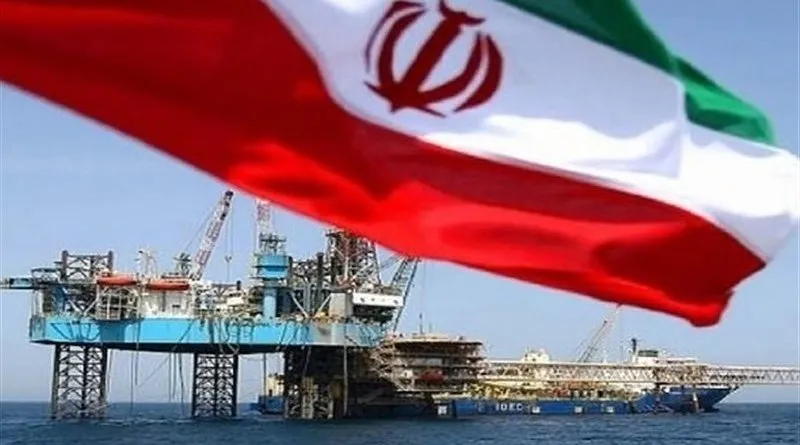
Riyadh’s interest in Pakistan’s Gwadar port is of particular concern for Tehran and its vital oil trade with China.
A $10 billion Saudi Aramco refinery is being built near the port city of Gwadar in Pakistan, about 169 kilometers (km) east of Iran’s Chabahar port in the western Sistan and Balochistan province.
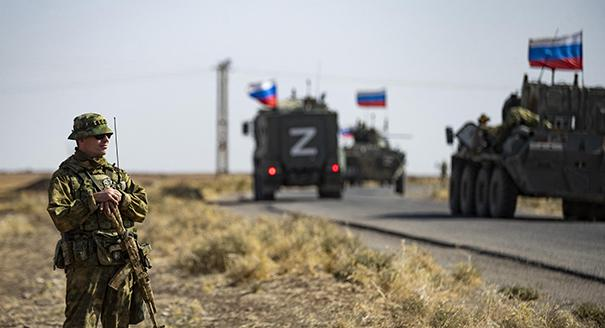
Russia has offered to mediate and facilitate a meeting between Turkiye and Syria, with limited success
On 6 December, Orhan Miroglu, the head of the Justice and Development Party, reported that Damascus turned down Ankara’s proposal to set up a meeting between Syrian President Bashar al-Assad and Turkish President Recep Tayyip Erdogan, Al-Mayadeen news reported.
US convoys in Hasakah have been limited to deterring Turkish strikes on oil installations, in fear of further degradation of the decaying infrastructure
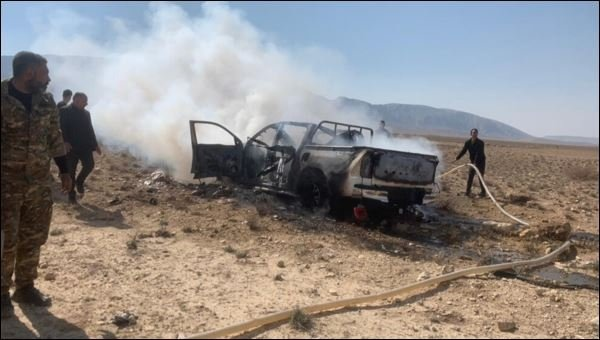
Lebanese daily newspaper Al-Akhbar reported on 7 December that the US-backed Kurdish militia, the Syrian Democratic Forces (SDF), has suffered immensely in the latest wave of Turkish airstrikes on northern Syria.
As Budapest actively implements its own “Look to the East” policy, Tehran will find a potentially useful partner in Europe.
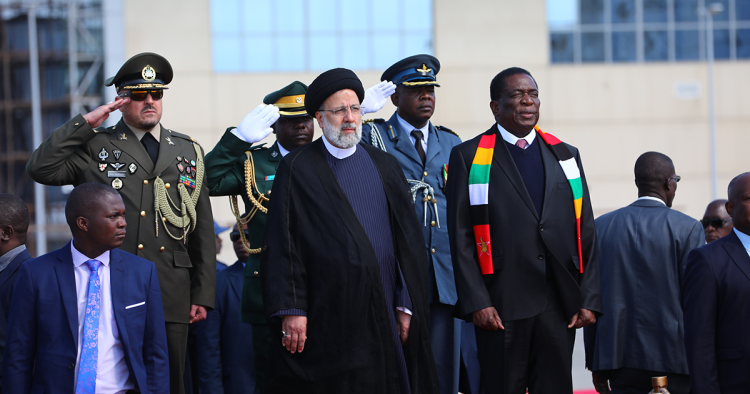
Upon signing the protocol of the third session of the joint commission for economic cooperation between Iran and Hungary on 16 November, Hungarian Foreign Minister Péter Szijjártó expressed support for Iran’s right to the peaceful use of nuclear energy.
During a two-week visit to Iran in November, I witnessed women of all ages walking freely on the streets without the hijab. But, what we’re not told, is that they have been doing so for years.
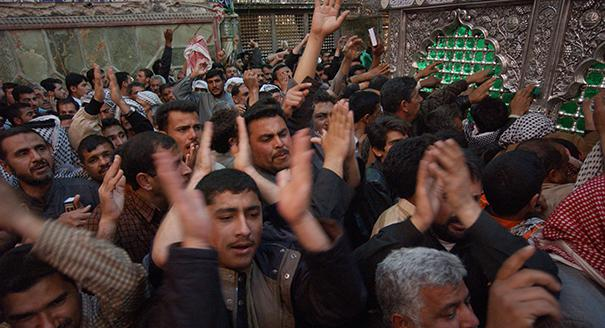
The explosion of protests in Iran that began in September were not about the Islamic Republic’s “hijab law” specifically, but about the abuses and excesses of the so-called morality police – the Gasht-e-Ershad (also known simply as Ershad, or in English, the ‘guidance patrol’) – against regular Iranian women who were considered to be immodestly garbed.
Iranian Foreign Minister Hossein Amirabdollahian described the three islands in the Persian Gulf as inseparable and eternal parts of Iran, stressing that Tehran will by no means compromise on its territorial integrity.