Can the Global Spiral of Violence Be Stopped?

The turmoil spreading across the globe makes it difficult to meaningfully respond to individual crises. The resulting expectation of impunity is emboldening aggressors.

In the last months alone, a bloody civil war has broken out in Sudan; Azerbaijan has conquered the Armenian-populated Nagorno-Karabakh; a Serbian militia has tried to destabilize the north of Kosovo; military coups have proliferated in Africa; the Sahel zone is increasingly turning to anarchy; and Russia’s war of aggression against Ukraine continues unabated. The latest outbreak of violence, Hamas’s terrorist attack on southern Israel followed by Israeli retaliation on the Gaza strip, could still escalate into a devastating conflagration across the Middle East.

Qatar: Extremism and Terrorism

On October 7, 2023, Hamas launched a surprise attack on Israel killing at least 1,200 people and kidnapping at least 240 men, women, and children. In response, Israel declared war on Hamas and launched a ground invasion of the Gaza Strip. Hamas leader Ismail Haniyeh and other Hamas leaders watched the attack unfold from Haniyeh’s office in Doha, Qatar. Qatar joined with Saudi Arabia and Iran in blaming Israel for the October 7 Hamas attack. According to a Qatari government statement, Qatar’s Ministry of Foreign Affairs held Israel “solely responsible for the ongoing escalation due to its ongoing violations of the rights of the Palestinian people, the latest of which was the repeated incursions into Al-Aqsa Mosque under the protection of the Israeli police.” That night, Qatari officials claimed they had begun mediation talks to convince Hamas to release captive women and children for Palestinian security prisoners in Israel. Israel denied negotiations were underway. On October 20, Hamas freed two hostages—an American mother and daughter pair—after Qatari intervention. Hamas said it released the hostages for “humanitarian reasons.” On October 24, Qatari Emir Sheikh Tamim Bin Hamad Al-Thani accused Israel of receiving an “unconditional green light and free license to kill” in Gaza. As of November 14, Hamas had released four hostages—two Americans and two Israelis—because of Qatari mediation. That day, the Qatari government renewed its call on Israel and Hamas to reach an agreement on releasing hostages, but Qatar Ministry of Foreign Affairs spokesman Majed bin Mohammed al-Ansari also blamed the “deteriorating” situation in Gaza for hindering mediation efforts. (Sources: Hamas Telegram Channel, Associated Press, Reuters, Daily Mail, Qatari Ministry of Foreign Affairs, Hill, Reuters, Al Jazeera, Associated Press, NPR, NPR, Agence France-Presse)

Houthis

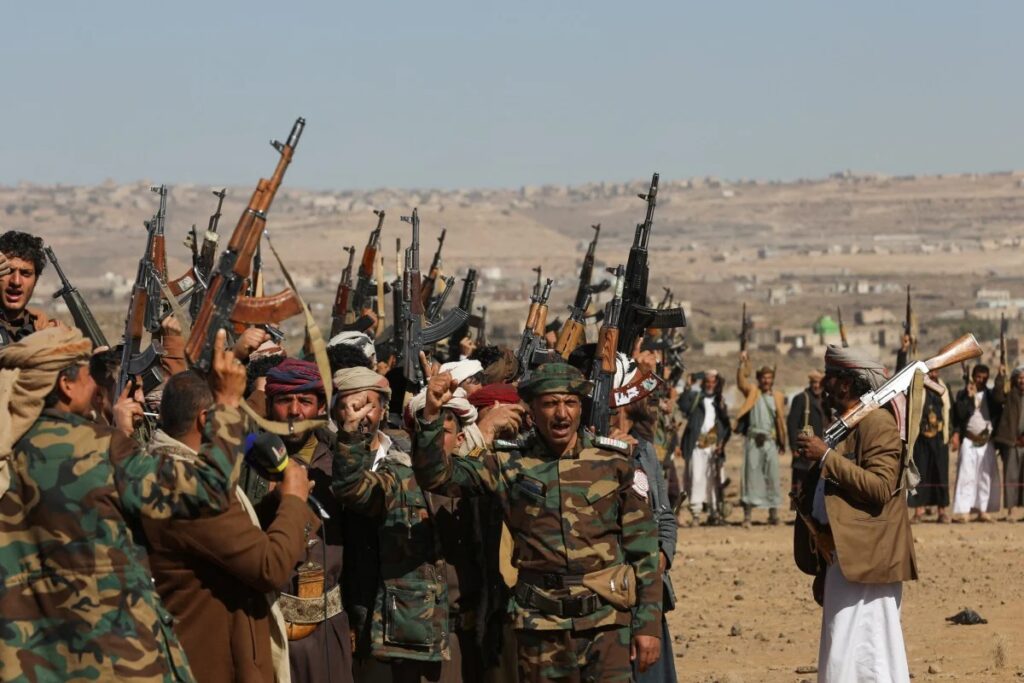
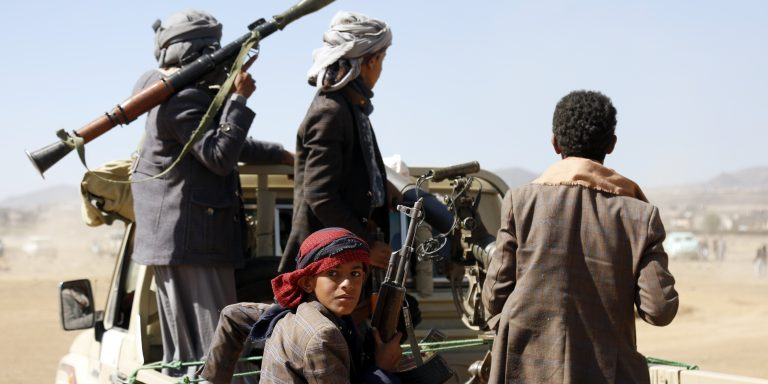
The Houthis are an Iranian-backed, Shiite Muslim armed religious and political movement in Yemen. The Houthis waged a series of bloody insurgencies against the Yemeni government for over a decade, leading to that regime’s overthrow in 2015.

Lebanese Journalists: Hizbullah Is Dragging Lebanon Into A Devastating War With Israel

Amid the escalating attacks launched at Israel from South Lebanon by Hizbullah and other armed organizations there, both Lebanese and Palestinian, many in Lebanon are increasingly concerned that the country will be dragged into a confrontation with Israel.[1] There is also concern about the growing power of the Palestinian militias in the country, and a possible return of the situation that prevailed there in the 1970s and 1980s, when Palestinian organizations were given free rein and dragged the country into a devastating war.

Kurdish Columnist On Saudi Website: It Is The Iranian Regime That Ignited The Fires Of War; The Solution Is To Topple This Regime

In an article on the Saudi news website Elaph, Kurdish journalist Nizar Jaff accused the Iranian leaders of hypocrisy, saying that they shed crocodile tears over the war in Gaza and deny having any hand in it, when the fact is that they are the force behind Hamas in Gaza, behind Hizbullah in Lebanon and behind the militias in Iraq. Iran, he adds, started the war in Gaza in order to draw attention away from the popular protests within its own borders, while playing on the religious sentiments of the people in the region. These people must understand that the solution to their problems lies in opposing the Iranian regime and overthrowing it, he concluded.

Jihadis From Iran, Iraq, Lebanon, Syria, And Yemen Amass In Multifront Threat To Israel

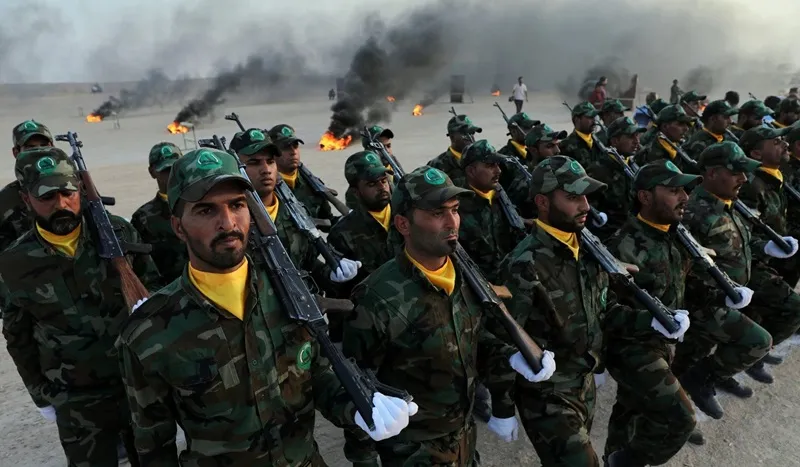
Since the October 7 Hamas attack on Israel, Iran and its regional proxies in Lebanon, Syria, Iraq, and Yemen, have joined in hostilities against Israel and the U.S. in a multifront maneuver which threatens regional escalation. Iran-backed groups have conducted attacks from Israel’s north, east and south to bolster Hamas’s war aims and detract from the Israeli response to the militant group in Gaza. Below, MEMRI JTTM provides an update on the most recent developments in the multifront threat to Israel.