The Limits of the U.S.-South Africa Relationship

The Biden administration’s attempts to build closer bonds with South Africa may not bear fruit, but it may be worth devoting more attention to nongovernmental actors.

The Biden administration’s attempts to build closer bonds with South Africa may not bear fruit, but it may be worth devoting more attention to nongovernmental actors.

China’s efforts to reshape existing global institutions and norms rely on the support of African governments, though this can often be at odds with African citizen interests.
Reshaping global institutions and norms to reflect Chinese perspectives are central to China’s approach to geostrategic competition. This is what the Chinese Communist Party (CCP) refers to as “reform” when calling on China to “take a vigorous part in leading the reform of the global governance system,” (jiji canyu yinling quan qiu zhili ti xì gaige, 积极参与引领全球治理体系改革). This concept was first adopted at the June 2018 Central Foreign Affairs Work Conference—a rarely held strategy session that gives overarching guidance to China’s foreign policy establishment. It is a cornerstone of foreign policy under CCP General Secretary Xi Jinping.

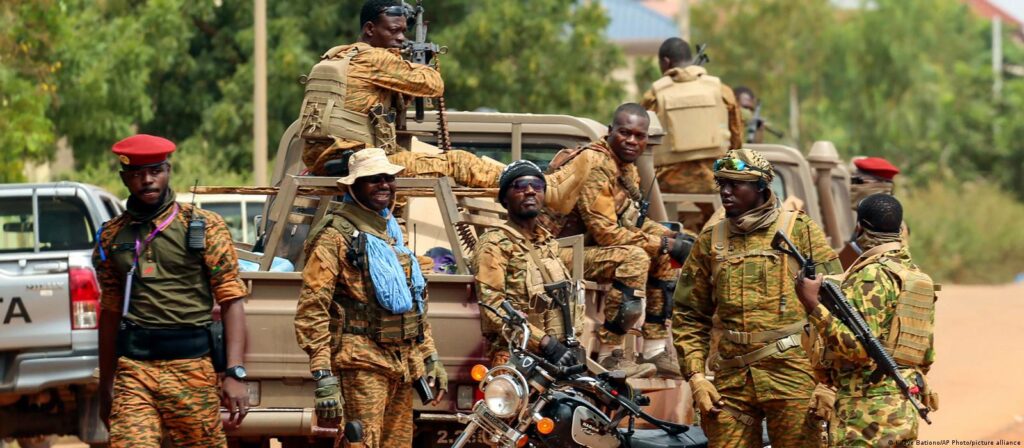
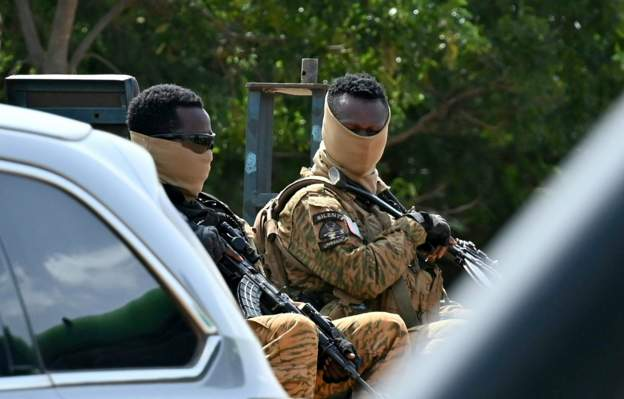
Jihadist groups have regrouped in the neglected hinterlands of Sahel countries and are launching attacks from them. To regain control of outlying districts, regional states must do far more to extend services and representation beyond recently recaptured provincial centres.

Le primat donné aux réponses militaires et le recours à des groupes armés à base communautaire pour combattre les mouvements jihadistes implantés dans la zone frontalière entre le Niger et le Mali n’ont fait qu’accentuer les tensions intercommunautaires. Les autorités nigériennes doivent adopter une approche plus politique, incluant réconciliation entre communautés, dialogue avec les militants et amnistie dans certains cas.

Who was Adnan Abu Walid al-Sahraoui?
Adnan Abu Walid al-Sahraoui was the nom de guerre of a prominent jihadist leader in the Sahel, Lehbib Ould Ali Ould Said Ould Yumani, who was born in 1973 in Laâyoune, Western Sahara. He spent part of his youth in Algeria, notably in the Tindouf refugee camps and at the University of Constantine, where he studied the social sciences. He was also reportedly a member of the Polisario Front, the political paramilitary movement that campaigns for Western Sahara’s independence, before joining jihadist insurgents in northern Mali around 2010.

The UK, Côte d’Ivoire and other nations plan to pull their troops out of the UN peacekeeping mission in Mali, clouding its future as it undergoes internal review. In this Q&A, Crisis Group experts discuss the mission’s challenges and scenarios for what could come next.

On 4 September, Lieutenant-Colonel Paul-Henri Sandaogo Damiba gave a speech reviewing his actions since he seized power on 24 January 2022. In this Q&A, Crisis Group experts Mathieu Pellerin and Rinaldo Depagne analyse this milestone.

Insurgents have established bases in an important nature reserve spanning parts of Benin, Burkina Faso and Niger. They pose a growing danger to local ecosystems and people living around the park. The three countries need to collaborate more closely to keep the threat at bay.

Projections show that Africa’s real gross domestic product will stabilize at 4% over 2023–24, then grow at consistently higher rates than other regions.
In the inaugural release of a report dubbed ‘Africa’s Macroeconomic Performance and Outlook’ released on Jan.19, the African Development Bank Group reported that “growth across all five African regions was positive in 2022 and the outlook for 2023–24 is projected to be stable.”

Composed of distinct operational entities, the militant Islamist group coalition Jama’at Nusrat al Islam wal Muslimeen serves the role of obscuring the operations of its component parts in the Sahel, thereby inhibiting a more robust response.