UN Secretary-General Antonio Guterres on Monday urged the international community to “fully invest” to help impoverished Niger fight jihadist insurgents threatening the government in Niamey and neighbouring countries.
The effects of the war in Ukraine leave policymakers with little room to maneuver.
Sub-Saharan African countries find themselves facing another severe and exogenous shock. Russia’s invasion of Ukraine has prompted a surge in food and fuel prices that threatens the region’s economic outlook. This latest setback could not have come at a worse time—as growth was starting to recover and policymakers were beginning to address the social and economic legacy of COVID-19 pandemic and other development challenges. The effects of the war will be deeply consequential, eroding standards of living and aggravating macroeconomic imbalances.
An ISIS franchise is tightening its hold on parts of north-eastern Nigeria near Lake Chad. Abuja should enhance its containment strategy, helping rival militants surrender, protecting internally displaced persons and working with neighbouring countries to cut off outside material support for the jihadists.
In the fall of 2012, as Syria plunged into civil war and the Eurozone crisis generated panic across global markets, a parliamentary election in Ukraine signaled trouble ahead to those who were paying attention. The results that trickled out on Oct. 28, 2012, indicated that then-President Viktor Yanukovych’s Party of Regions had secured a strong position through dubious constitutional maneuvers and ballot manipulation.
In 2021, the United Nations noted the newfound threats of the Group for Support of Islam and Muslims (JNIM), a branch of al-Qa`ida in the Islamic Maghreb (AQIM), that extended into Burkina Faso and the Ivory Coast, stretching farther yet into Ghana, Togo, and Benin. Had an observer in 2006 had this information presented to them, they might have scarcely believed it. That year, in which AQIM was formed, the group was a thoroughly North African organization and based primarily in Algeria. Fast forward 15 years, how did AQIM end up nearly 1,300 miles away, now posing immediate threats in the states of littoral West Africa?
Une nouvelle déclaration appelant à une action mieux concertée pour venir en aide à près d’ 1,4 million de Centrafricains déplacés a été signée mercredi au terme d’une conférence régionale clé organisée au Cameroun.
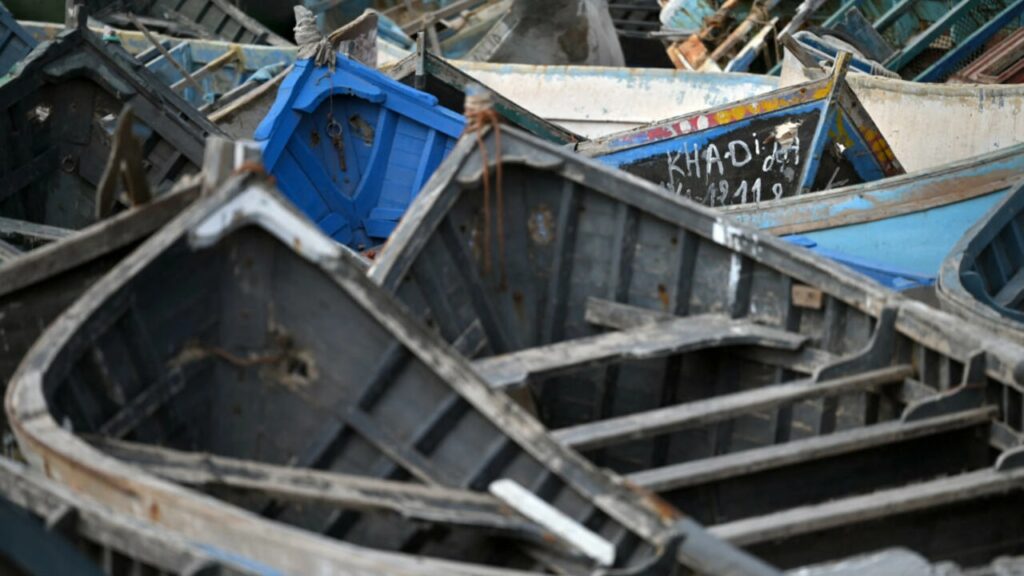
Plus de 3000 migrants sont morts l’an dernier en mer alors qu’ils tentaient de rejoindre l’Europe, soit le double du bilan enregistré en 2020, a indiqué l’ONU vendredi.
“Sur ce total, 1924 personnes ont été déclarées mortes ou disparues sur les routes de la Méditerranée centrale et occidentale, tandis que 1153 autres ont péri ou ont été portées disparues sur la route maritime de l’Afrique du Nord-Ouest vers les îles Canaries”, a déclaré une porte-parole de l’agence de l’ONU pour les réfugiés à Genève, Shabia Mantoo.
Plus de 4.000 Nigérians ayant fui les exactions jihadistes dans le nord-est du Nigeria vers le Niger voisin sont rentrés chez eux malgré l’insécurité et des services quasi-inexistants dans la région.
Les travailleurs humanitaires craignent que le retour fin mars des réfugiés à Malam Fatori, dans l’Etat du Borno, épicentre d’une insurrection jihadiste vieille de plus de 10 ans, cause davantage de victimes et de déplacés.
Outlining a new four-pronged investigation strategy to the Security Council on Thursday, the prosecutor of the International Criminal Court (ICC) pledged his commitment to delivering justice against crimes committed in Libya.
TotalEnergies is the latest multinational to give up its onshore asset for deep-water fields.
French oil major TotalEnergies has announced it will put up for sale its minority stake in a Nigerian oil joint venture.
The firm wants to focus on deep-water fields away from the difficulties of operating in close proximity with local communities, Bloomberg reported Thursday.