The Putin Doctrine
A Move on Ukraine Has Always Been Part of the Plan
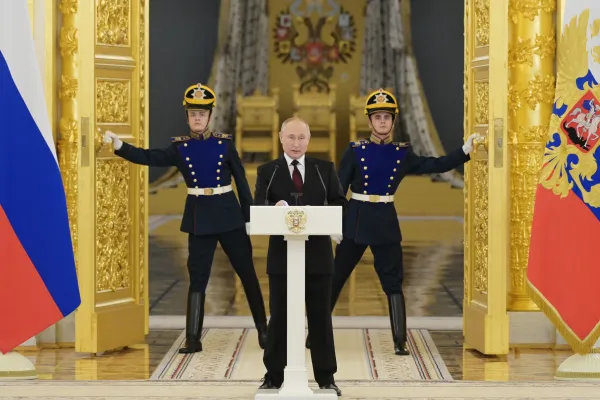
The current crisis between Russia and Ukraine is a reckoning that has been 30 years in the making. It is about much more than Ukraine and its possible NATO membership. It is about the future of the European order crafted after the Soviet Union’s collapse. During the 1990s, the United States and its allies designed a Euro-Atlantic security architecture in which Russia had no clear commitment or stake, and since Russian President Vladimir Putin came to power, Russia has been challenging that system. Putin has routinely complained that the global order ignores Russia’s security concerns, and he has demanded that the West recognize Moscow’s right to a sphere of privileged interests in the post-Soviet space. He has staged incursions into neighboring states, such as Georgia, that have moved out of Russia’s orbit in order to prevent them from fully reorienting.