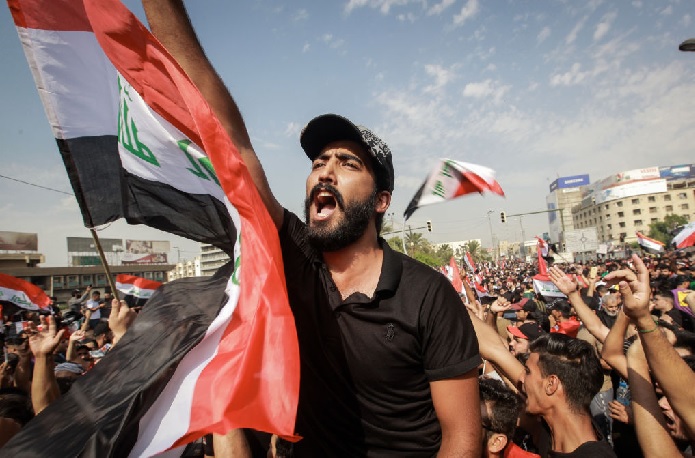
“We reached a level of injustice we could no longer take. For every action, there is a reaction,” explained one civil society activist following the Oct. 1 outbreak of protests in Baghdad and central and southern Iraq.
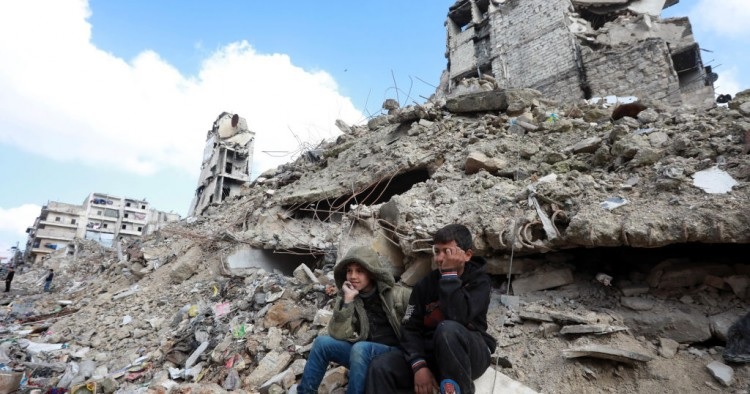
The team of researchers from the Syrian Association for Citizen’s Dignity (SACD) worked for months under extremely challenging conditions to interview 165 people in Homs, Damascus countryside, Dara’a, and Aleppo to document the security situation of returnees and those living in areas covered by “reconciliation agreements” in parts of Syria under the control of the regime of Bashar al-Assad. The resulting report and its underlying research comprise an unprecedented effort, considering that no international organization, including the UNHCR, has real, uncensored access to all areas under Assad’s control. It is virtually impossible to publicly gather information in these areas, especially when it comes to the security situation, threats facing returnees, their access to basic services, and their views on the return process and other relevant issues. That is why this report provides unique insights into one of the most relevant issues for the future of Syria.
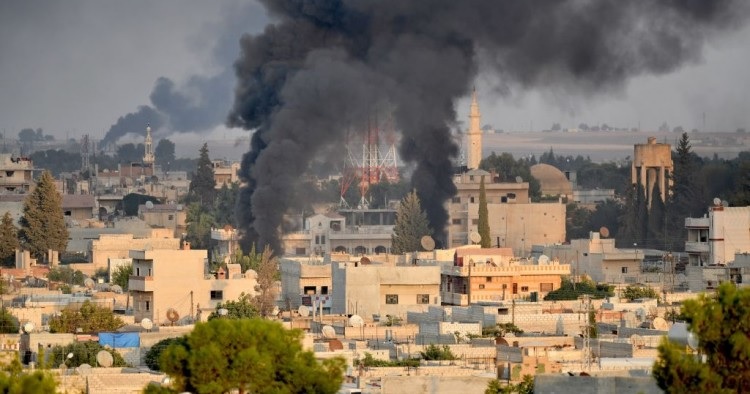
Turkey’s cross-border incursion into northeastern Syria has stirred up a hornet’s nest of instability and threats. If left unchecked, this latest “war within a war” will have deeply destabilizing consequences for many years. The blame for this catastrophe lies in the hands of one man: President Donald Trump. Following a phone call with Turkish President Recep Tayyip Erdogan on Oct. 6, President Trump swiftly ordered nearly 100 American troops to evacuate their positions along the Syrian-Turkish border, thereby removing the only obstacle that had, until then, prevented Turkey from crossing to attack. Although the president may not have given a verbal “green light,” his decision could only have been read one way in Ankara.
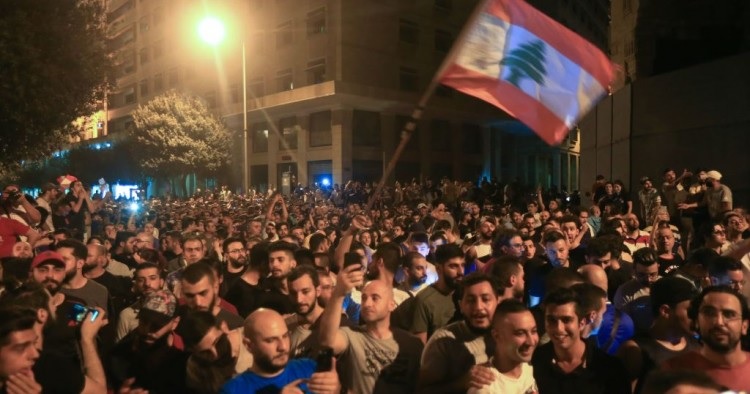
Decades of corruption and criminal mismanagement by Lebanon’s ruling elites — the same clique who have governed the country since its independence in 1943 — have finally led to an economic implosion and a social explosion.
While much of the discussion around disinformation focuses on the role of nation-states, violent non-state actors have also developed fairly sophisticated disinformation capabilities.
« Aucune civilisation n’est détruite du dehors sans s’être tout d’abord ruinée elle-même, aucun empire n’est conquis de l’extérieur qu’il ne se soit préalablement suicidé », disait l’historien René Grousset. Avec une intervention militaire par an pendant près de soixante ans, c’est une situation unique au monde que la France fait subir à ses anciennes colonies francophones. En effet, la Grande-Bretagne n’a jamais monté une opération dans son ex-empire colonial sous prétexte de sauver tel ou tel pays de ses démons. On peut en dire de même du Portugal, de l’Espagne et de la Belgique.
The contribution should provide a policy proposal regarding the future of EU migration and asylum policies, defined as precisely as possible and accompanied by an explanation about their added value;
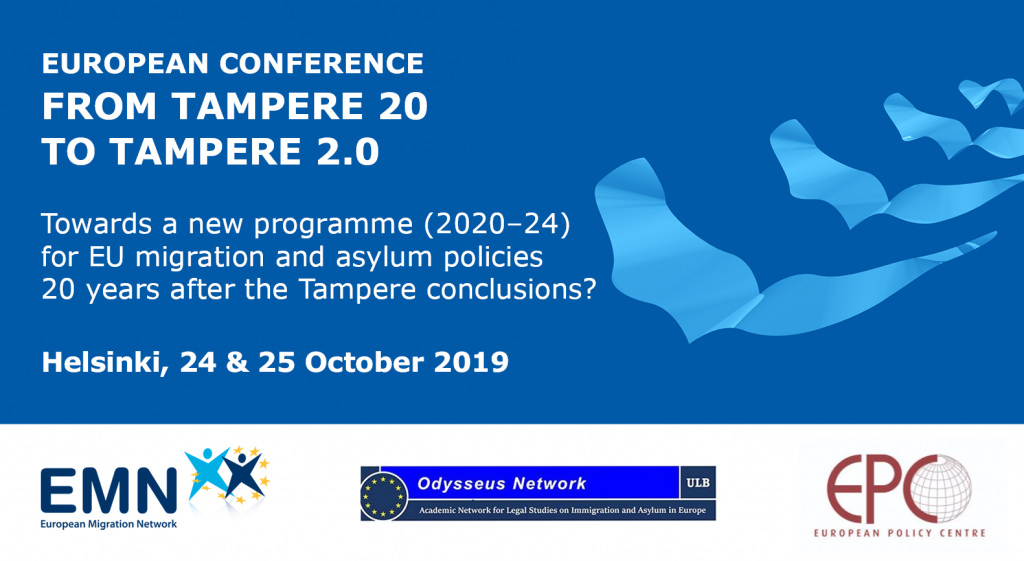
The Tampere conclusions adopted by the European Council in October 1999 under the Finnish Presidency deeply influenced EU migration & asylum policies. This conference, more than celebrating their 20th anniversary, will explore upcoming developments: a new strategic agenda to be adopted by the European Council; a renewed Parliament and Commission with new policy priorities following the European elections; and a five-year programme (2020-2024) including migration and asylum policies that should also be adopted by the European Council.
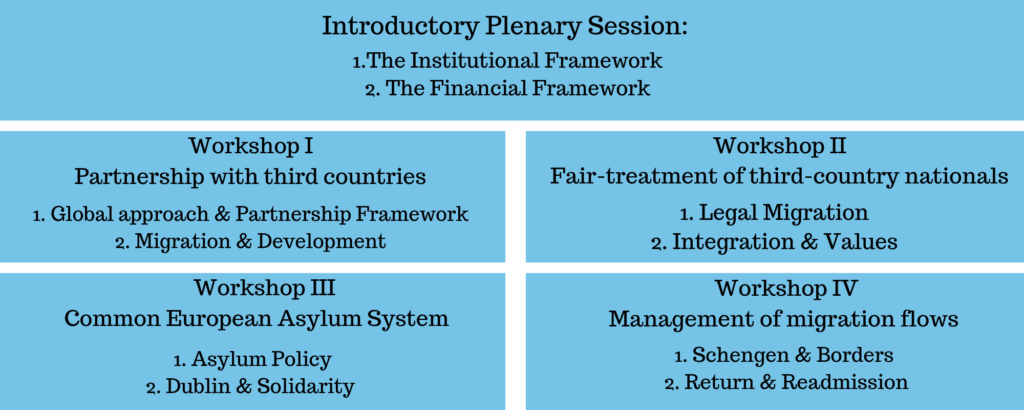
EMN Finland, the Odysseus Academic Network and the European Policy Centre (EPC) organise this event to provide ideas and suggestions for the five-year programme mentioned above. A call for contributions has been launched to fuel the five preparatory workshops in charge of drafting papers to be discussed at the conference. A final document will be presented after the conference to the EU institutions, and to the Member States for discussion. The conference follows the structure of the Tampere conclusions as following:
Workshops will leave ample time for a discussion with participants. High-level speakers, policy makers, stakeholders and academics from all over Europe will figure among the speakers. High level speakers such as Director General of the IOM Antonio Vitorino, UN High Commissioner for Refugees Filippo Grandi, Executive Director of EASO Nina Gregori and ICMPD Director General Michael Spindelegger have confirmed their participation. High level representatives of EU institutions and Agencies, Member States, NGOs as well as leading academics will participate.
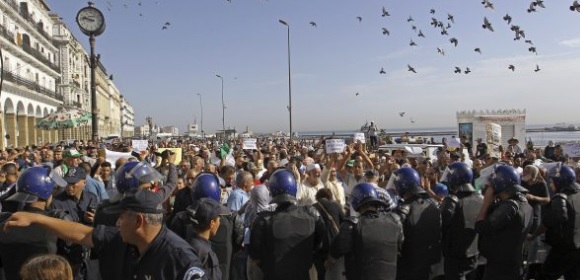
Plus d’un millier de personnes manifestent dimanche à Alger contre une loi sur les hydrocarbures devant être examinée en soirée par le Conseil des ministres. Ils dénoncent un bradage du pays aux multinationales étrangères.
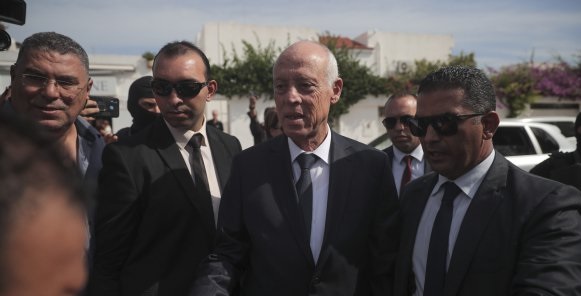
Kaïs Saïed devance largement Nabil Karoui au second tour de l’élection présidentielle, selon les premières estimations des instituts de sondage, qui lui accordent entre 72 % et 77 % des voix. Les résultats officiels doivent être proclamés lundi 14 octobre par l’Instance électorale.