
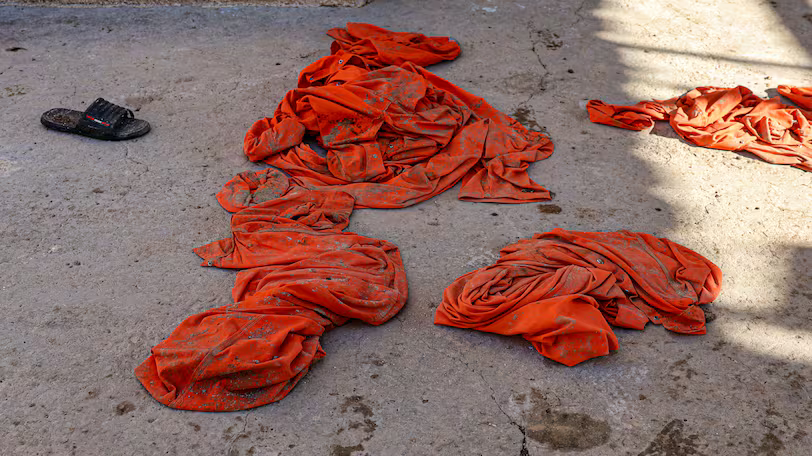
Iraq’s judicial authorities have begun investigating 1,387 ISIS militants recently transferred from Syria, a Baghdad court said on Monday.
The investigation, supervised by the Chief of the Supreme Judicial Council, Faiq Zaidan, is being led by specialist judges in anti-terrorism courts, the Baghdad court said in a statement.
“These procedures are part of Iraq’s efforts to complete the investigation of ISIS members involved in line with national laws, with international co-ordination, aimed at dealing with [the] ISIS members issue and their crimes that amount to genocide and crimes against humanity,” it said.
The Iraqi government expects to receive more than 7,000 ISIS detainees from Syria, it added. The National Centre for International Judicial Co-operation “will provide documented evidence to investigative bodies and courts”.
The transfer of ISIS detainees from Syria is a result of co-operation between Iraq, the US and the Syrian Democratic Forces (SDF), a militia that was managing detention centres in north-east Syria. The Kurdish-led SDF had been holding about 10,000 ISIS detainees and thousands of their relatives in camps.
The Iraqi government has also called on other countries, especially EU states, to begin repatriating their citizens who travelled to join ISIS and are in legal limbo in the camps system.
A security official told The National that the plan was for the detainees to be held in Nasiriyah Prison in Dhi Qar and Karkh Prison near Baghdad Airport, with smaller numbers to be detained in Sulaymaniyah, in the Kurdistan region.
Iraqi courts have handed down hundreds of death sentences and life terms to people convicted of terrorism offences, including foreign fighters. Human rights groups have criticised some trials, saying they were rushed, and highlighted concerns about due process.
In recent months, Iraqi forces have arrested or killed several ISIS members, including high-ranking field leaders, explosives experts and logistics co-ordinators. They have carried out operations outside Iraq, mainly in Syria.
In mid-2014, ISIS controlled large parts of northern and western Iraq along with territory in Syria, unleashing a war that lasted nearly four years.