
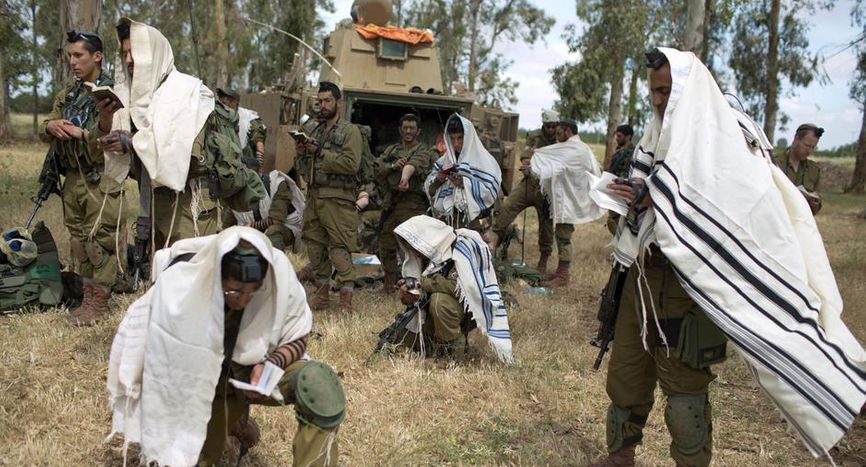
On November 19, Israel’s Supreme Court gave the government 45 days to develop effective measures to combat the evasion of military service by ultra-Orthodox Jews. Ultra-Orthodox Jews make up 14% of Israel’s population, yet they serve almost exclusively in the army. This practice had been legal for the past 70 years. In 2017, the Supreme Court ruled it unfair, but the status quo remained in place for several more years. On November 19 of this year, Israel’s Supreme Court ordered the government to develop measures to address the issue within six weeks. Following the Hamas terrorist attack and the outbreak of hostilities in Gaza, the debate over the draft of ultra-Orthodox Jews has become one of the country’s major internal conflicts. However, opponents of the draft have their own compelling arguments: the IDF has failed for many years to create suitable conditions for ultra-Orthodox service.
According to a ruling by the Supreme Court of Israel (High Court), the government must rescind religious exemptions within 45 days and criminalize draft evasion. The judges accused state authorities of effectively sabotaging the general conscription law. “The oppressive and blatant inequality that underlay previous decisions on this issue has been seriously exacerbated by the outbreak of war on October 7, 2023,” the High Court ruling stated.
The judges noted that it’s not just a matter of inequality and injustice, but also a real shortage of soldiers in the IDF. The problem has been going on for decades. From the establishment of Israel, from 1948 until 2023, students at Jewish religious institutions were officially exempt from military service. And other members of the ultra-Orthodox sect were almost never called up for service.
Since the creation of Israel, from 1948 until 2023, students at religious institutions were officially exempt from military service.
In 1948, religious communities were small, and only 400 people received a deferment. By 2023, over 60,000 young men of draft age had already taken advantage of the deferment—effectively, an exemption from military service. These included yeshiva students and “avrekhs,” young men who are already married and studying Torah in a kollel , continuing to do so until they reach the age of conscription. Jewish education differs from Christian or Islamic education in that it has no time limit whatsoever: Jewish sacred texts can be studied until the age of 100.
According to estimates by the Israel Democracy Institute (IDI), the ultra-Orthodox, or Haredim, make up approximately 14% of the country’s population, with 1.392 million members in 2024. It’s important not to confuse them with religious Zionists, an even larger group.
Religious Zionists—also known as “kippah-wearers”—also adhere to Orthodox Judaism. However, they see the existence of Israel as fulfilling a Torah commandment, while the ultra-Orthodox do not. Therefore, the former easily combine yeshiva studies with military service, while the latter mostly defend the right to a deferment. For most Haredim, their community is far more important. Representatives of the most radical movements even consider the modern Jewish state an illegitimate entity.
The ultra-Orthodox have more children than other groups: an average of 6.4 children per woman. All other Israeli Jews have an average of 2.5 children per family (with religious Zionists having a rate of 3.8, and secular Zionists having only 2).
It’s no surprise that the Haredi population has nearly doubled since 2009. Demographers predict that by 2045, it will reach 3 million, surpassing the Arab population. And this ever-growing minority of Israelis contributes almost no soldiers to the IDF.
A clear example is the army’s statistics on the mobilization of reservists during the current war. The average resident of Modi’in Maccabim Re’ut spent 24 times more days in reserve service than the average resident of neighboring Modi’in Illit, a city with a large ultra-religious population.
Bnei Brak, a city neighboring Tel Aviv, has a population of 234,000, the majority of whom are Haredim. Beit El, a religious Zionist settlement in Samaria, has a population of 6,500, or 36 times smaller. Meanwhile, Bnei Brak residents spent almost as many days in reserve service last year as Beit El residents.
During the war with Hamas, Hezbollah, and Iran, hundreds of thousands of Israeli reservists were mobilized. They fought, spending six months or more away from home. Several hundred gave their lives defending Israel. Among them were fathers of large families, business owners, engineers and programmers, teachers and office workers, professors and students. Most Haredim are ineligible to serve in the reserves because they did not complete compulsory military service and lack military training.
Typically, by age 21, 88% of Jewish men (excluding Haredim) serve or have already served in the army. Among ultra-Orthodox men, according to IDI data , only 1.7% have completed their military service by age 24.
The situation is changing
Until 2002, deferments for Haredim were in effect in practice, but not formally enshrined. Since 2002, they were regulated by the Tal Law , which ceased to be effective in 2012. After that, ultra-Orthodox yeshiva students were exempted from military service under a temporary provision . However, in 2017, the High Court of Justice ruled all deferments unfair and instructed the Knesset to develop a new legal framework.
The temporary provision was nevertheless extended several times and finally expired only in July 2023, just months before the Hamas terrorist attack. And in June 2024, the High Court of Justice ruled that since there was no law, the extension should no longer apply.
At the same time, there is and has never been any formal legal reason for exempting other young ultra-Orthodox men who don’t study in yeshivas or kollels from military service. They simply rarely wanted to join the army, and the army turned a blind eye for years, according to Israeli military analyst Sergei Auslender: “Until October 7, the IDF essentially sabotaged their conscription. But now there’s a catastrophic shortage of men.”
Until October 7, the IDF largely sabotaged their recruitment. But now there’s a catastrophic shortage of people.
The main burden falls on the Jewish population. Israeli Arabs and Bedouins serve in the army only on a voluntary basis. However, there are special Bedouin units, which recruit 500–600 men annually. Among the Druze (except those living in the Golan Heights), military service is mandatory, but only for men. Approximately 80% of Druze men are conscripted into the IDF.
For the third year running, the Israeli army has been trying to recruit more Haredim into its ranks. While 1,266 ultra-Orthodox conscripts entered military service in 2022, the number has risen to 2,940 in 2024. While this appears to be a significant increase, it’s still a small increase compared to the overall conscription. By comparison, the IDF plans to send out 54,000 draft notices in 2025.
Additionally, Haredim have access to the “Shlav Bet” (“Second Stage”) program, which allows them to complete a short military course and immediately become a reservist in a less demanding position. Over the past two years, more than 1,200 ultra-Orthodox have taken advantage of this opportunity.
For three years now, the Knesset has been discussing various versions of a new conscription law. The latest version, prepared by MK Boaz Bismuth, proposes that yeshiva students will not be conscripted at all. And half of those Haredim who do not study Torah will be conscripted within five years.
Bismuth, a member of parliament from the ruling Likud party, has formed a coalition with two Haredi parties. His proposed law is not at all what the majority of the population wants, judging by polls.
An October survey by the Israel Democracy Institute found that 49.5% of Jews and 26% of Arabs support mandatory conscription for Haredim, excluding some particularly outstanding yeshiva students. Another 31% of Jews and 23% of Arabs support leaving yeshivas alone but conscripting all other young ultra-Orthodox students, rather than just half, as in Bismuth’s bill. Only 15% of Jews and 35% of Arabs support maintaining the current policy.
49.5% of Jews and 26% of Arabs support compulsory conscription for Haredim
According to a July study by the National Security Institute, 62% of Israeli Jews believe the policy of not drafting Haredim into the IDF is a threat to national security, and 71% believe the practice significantly reduces motivation to serve throughout society.
Opposition politicians are sensing the public mood and proposing bills with strict penalties for those who dodge military service. For example, on November 5, the Yisrael Beiteinu party submitted a bill to the Knesset that would strip men who have not served in the army of the right to vote. The bill was supported by former Prime Minister Yair Lapid’s Yesh Atid party, but the Knesset rejected it.
Million Man March
Meanwhile, even the Bismuth Law seems too harsh to Haredim themselves. According to the same survey , only 15% of ultra-Orthodox believe that members of the community who are not studying in yeshivas should serve. No one supports the idea of conscripting students.
Even before the Supreme Court’s November ruling, the IDF began using coercive measures against Haredi draft dodgers. In September, before Rosh Hashanah, when many believers make the pilgrimage, military patrols were deployed at Ben-Gurion Airport. Draft dodgers were arrested and imprisoned in an army prison.
On the eve of the holiday, the IDF offered amnesty to all Haredi draft dodgers if they reported to recruiting centers. However, the IDF’s press service told The Insider that only 50 people accepted the offer. The crackdown, however, sparked widespread outrage among ultra-Orthodox Jews.
On October 30, tens of thousands of protesters filled the streets of Jerusalem. The ultra-Orthodox called this protest the familiar Russian term “March of a Million.” Journalists counted 200,000 people there, while organizers estimated 500,000, though this is unlikely given the size of the community.
The march featured a variety of slogans, from the innocuous “We’re not afraid of arrests!” to the rather radical “To hell with the Zionists!” and “We’ll die rather than be drafted!” This was the largest protest, but not the only one. Over the past year, small groups of ultra-Orthodox Jews have periodically blocked highways to protest the draft.
Authoritative rabbis are also adding fuel to the fire. For example, Yitzhak Yosef, until recently one of Israel’s two chief rabbis, became famous for statements such as: “Anyone who studies Torah is forbidden from joining the army. He should not be drafted—even if they send him to prison for it,” “Whoever receives a draft notice should tear it up,” and “If yeshiva students are forced to be drafted, we will flee the country.”
The ultra-Orthodox faction of the High Court of Justice commented on the November 19 ruling: “The High Court has proven that it does not want a conscription law, but a civil war.”
Arrest for Sabbath observance
The Torah, the Jewish holy book, does not prohibit military service, ultra-Orthodox journalist Yakov Solganik noted in a conversation with The Insider. During the last Knesset elections, he led the Russian-language campaign of the Degel HaTorah party. The party entered parliament as part of the Yahadut HaTorah (Torah Judaism) bloc and represents the positions of Ashkenazi communities.
“Jews served in the armies of David and Solomon, and many would agree to serve in such an army today. The ultra-Orthodox also fought in the War of Independence. One of the Haredi companies lost almost all of its fighters. But consider why they stopped serving,” says Yakov Solganik.
Indeed, religious Jewish units existed within the Haganah, the Jewish underground self-defense forces of the British Mandate . They participated in the 1948 War of Independence. One of them is associated with the first religious conflict in the Israeli army.
In the midst of the war, despite the Sabbath, soldiers were urgently called to participate in an operation. The believers did not refuse: Judaism has a principle called “pikuach nefesh,” which states that a commandment can be broken to save a human life.
But the fighters set out hungry. A secular officer protested and forced the cooks, despite it being the Sabbath, to prepare a hot meal. Two of them, ultra-Orthodox Shimon Mannheim and Eliezer Blumenthal, refused, saying the cooking wasn’t necessary to save someone’s life.
After the operation, the cooks were tried for disobeying orders and arrested for seven days. This was a compromise of sorts, as the penalties for such offenses were much harsher back then. The cooks appealed the decision, and their arrest was extended to three months. Religious soldiers supported the arrested men and went on a hunger strike. Eventually, the scandal reached the government, the Minister of Religion resigned, and the cooks were released. A deep mutual mistrust developed between the army and the ultra-Orthodox.
This story is still well remembered among Haredim, explains Yakov Solganik: “Everyone saw that the army wasn’t enough for the ultra-Orthodox to simply serve. They wanted to re-educate them, to make them secular. The army’s education department is still working on this. After that incident, there was a rabbinical convention. The ultra-Orthodox decided they wouldn’t serve. But the religious Zionists decided they would and would try to transform the army into a normal, democratic place, suitable for everyone.”
The army isn’t enough for the ultra-Orthodox to simply serve. They want to re-educate people, to make them secular.
All this gave rise to the principle of “Torato umanuto,” which translates as “Torah is his craft, his calling.” The idea is that people who choose to study Jewish sacred texts as their life’s work can receive a deferment from military service. However, in this case, they are not allowed to work or earn extra money.
Critics call this principle and the documents that document it a legalized deviation from military service. However, the ultra-Orthodox themselves interpret it quite differently, explains Solganik: “The Haredim were unhappy with the fact that they weren’t joining the army and participating alongside everyone else in building the country. The great Rabbi Chazon Ish (Avraham Yeshayahu Karelitz) lived in Bnei Brak, and he decided that our service would be studying Torah.”
At the turn of the 1940s and 1950s, this seemed acceptable to many. Many rabbis perished during the Holocaust, and there was indeed a shortage of clergy. And the number of ultra-Orthodox youth in Israel was not so large that their refusal to serve in the army would have made a difference.
Since then, ultra-Orthodox service has remained essentially voluntary, with the number of volunteers varying depending on the specific community. Haredi Mizrahi (descendants of immigrants from the Middle East and North Africa) served, albeit rarely. Among Ashkenazi Haredim, members of the Chabad Hasidic sect actively joined the army. Other Hasidim and Litvaks almost never did so.
Service as a message of faith
Yigal Dubinsky is a Chabad rabbi and a reservist sniper. He was called up to the reserves on October 7, 2023, and has served intermittently for over a year since then.
He’s expecting another call-up at the end of December, but he’s philosophical about it: “On the one hand, it’s incredibly disruptive—both from a family standpoint and from a work standpoint: I teach and help new repatriates. But in the reserve service, I do an equally important job: I’m an ambassador.”
Chabad teachings assign a special role to “messengers”—people who spread the faith and commandments among secular and assimilated Jews. For example, on Fridays, you can see young men in black hats handing out prayer utensils on city streets—these are also Chabad emissaries.
Military service opens up great opportunities for this activity, Yigal explains: “In the army, you meet completely different people: city dwellers, kibbutzniks. Many of them have never interacted with Haredim. But you serve together, carry out tasks together, and they understand that Haredim aren’t such bad people; they, too, share this common burden. In the military, everyone sees a community they haven’t encountered in civilian life: different nationalities, religions, and political views. That’s how people come together.”
That’s why Chabad members serve in the IDF far more often than other Haredim. Until 2024, Chabad had an agreement with the IDF, which was lost to the Supreme Court ruling abolishing deferments. According to this agreement, young members of the community enlisted after completing their religious education, that is, not at 18, but at 21 or 22.
This was important because older people are more resistant to the temptations of social life, explains Igal Dubinsky. He says that in the army, the environment doesn’t always correspond to the “requirements of modesty,” and there’s a risk that “a fragile soul will find itself in an immodest situation.” Therefore, it’s important for a young man to acquire basic knowledge and have time to get married.
In the Yigal community in Haifa, 70–80% of men of suitable age are reservists. Some served their mandatory military service, others completed the Shlav Bet program.
But serving as a strictly observant Jew is objectively difficult, Rabbi Dubinsky notes. Although all food in the IDF is kosher, kashrut standards there are completely different from those of the Haredim. Yigal admits that he only eats dairy products and bread from the communal table, and during reserve duty, he constantly brings tuna and other canned goods from home to supplement his diet.
The rabbi-sniper has other complaints about the IDF. For example, he’s convinced that it’s much easier for a secular person to get promoted than a religious one. “In my unit, the entire junior officer corps is a bunch of ‘knitted yarmulkes,'” he says. “But at the top, it’s a completely different group. If you want Haredim to serve, be prepared for them to appear in the army’s top ranks, too.”
If you want Haredim to serve, then be prepared for them to appear in the army’s top ranks too.
Yigal is confident that bending the ultra-Orthodox community to force them to serve en masse under the current conditions will be impossible. The way things work in the army is that those who don’t want to serve won’t, he explains.
“Ultimately, a person will simply serve two to four weeks in an army prison and be exempted from military service for life. Currently, only a small percentage of Haredim serve—those who want to serve. And if the state tries to conscript thousands who don’t want to, it will break the system. It will be easier for the army to refuse the draft than to provide conditions,” says Yigal. “Even completely eliminating state benefits for draft dodgers won’t help. Seculars are on their own, but here we have a community that votes in solidarity and defends itself. They’ll find money from some American foundation. So we shouldn’t resort to force. We need to meet with the rabbis and ask what their demands are.”
Ultra-Orthodox battalions
Efforts have long been made to create favorable conditions for Haredim in the army. Unless they are Chabad members, they are conscripted into special units with strict kosher rules and no female comrades. These units include the Netzach Yehuda Battalion of the Kfir Infantry Brigade, the Hetz Company of the Parachute Brigade, the Tomer Company of the Givati Infantry Brigade (which no longer recruits), the Negev Unit, and several companies in the MAGAV (Border Police). Haredim also serve in rear and support positions in the Logistics Directorate, Communications and Cyber Defense, Military Intelligence (AMAN), the Air Force, and the Navy.
New this season is the special ultra-Orthodox brigade, “Hashmonaim,” which has adopted a strict religious code from the outset. This year, the brigade recruited its first fighters and participated in its first battles.
Itzhak (not his real name) currently serves there. He immigrated from Russia in 2014. He later returned to Russia, but returned to Israel in 2022. In Russia, Itzhak was also a member of the ultra-Orthodox community. After October 7, he completed his Shlav Bet (Orthodox Order) and joined the military rabbinate. One of the difficult tasks of this service is identifying the bodies of the fallen. This is precisely what Itzhak had to do during the first months of the war.
Then he read online that the Hashmonaim Brigade was being formed and that additional training was available to reach combat level. He passed the test, trained as a machine gunner, and this fall was already fighting in Gaza as part of the new brigade.
The main goal of Hashmonaim commanders is to ensure that their soldiers maintain a religious lifestyle after completing their service, explains Yitzhak. Therefore, the requirements for religious observance are particularly strict. For example, those who remain on base for Shabbat are asked to bring traditional clothing. Many conscripts wear frock coats and hats on this day, and some even wear shtreimels—wheel-shaped fur caps. Since not everyone in the unit is Haredi (though they are all religious), the rest are asked to wear black kippahs, according to The Insider’s source.
Itzhak himself wears black pants and a white shirt around the base on Shabbat. But that’s unless there’s an operational assignment, he explains: “Being on duty, guard duty, patrolling—it’s all about saving lives, which frees you from the obligation to observe Shabbat. There’s no problem turning on night vision goggles on Shabbat. Now, Hashmonaim has officially withdrawn from the Gaza Strip, but I and some other guys remained there even after the ceasefire.”
Being on duty, on guard, patrolling is a matter of saving lives, which frees one from the need to observe the Sabbath
The night vision device isn’t just a joke, as pressing the button that closes the electrical circuit is a direct violation of Shabbat regulations. However, Yitzhak tries to avoid doing this more than necessary. If he’s on duty on Shabbat, he doesn’t listen to the radio like all the other soldiers, but presses the buttons only when he needs to report the situation.
“Hashmonaim” is far from the first attempt to create suitable conditions for Haredim, notes Yakov Solganik: “From previous units, we know that the food they brought was kosher, but completely inedible. But kashrut isn’t just about food. For example, there shouldn’t be women on the base. And there were cases where a female sports instructor was sent to the unit.”
His friend’s son served in the Netzach Yehuda Battalion, which was created as a religious unit. But after two or three years, the arrangements changed. The new commander stated that he hadn’t promised separation from women, Solganik claims.
“There were girls in the army, and my friend’s son started hanging out with them. From a secular perspective, there’s nothing wrong with that. But from a religious perspective, you’ve sent your child to a place where they’ve lost the most important thing: an understanding of why we live, why we were born, and why we will die,” says Solganik. “Look at it from a different perspective. What would happen if your children were required by law to serve in an army where half of those who serve return as ultra-Orthodox Jews with sidelocks? Would you send your child to serve in such a place?”
Netzach Yehuda is currently only officially an ultra-Orthodox unit. In fact, its members are mostly religious Zionists, confirms Yitzhak.
In the community, serving in such units is viewed as a failure in life, explains Solganik. If a young man is completely incapable of learning Torah, he can still serve. His friend’s son, for example, ended up in the army after being expelled from his fifth yeshiva in a row.
I hope the community doesn’t find out
But after October 2023, the situation changed. Many Haredim realized they wanted to defend their people, Yitzhak notes: “This is a new phenomenon for the community. That’s why we have many Litvaks in our unit, who almost never served before.”
One such conscript, David (not his real name), had never considered military service before the Hamas attack: “I wasn’t raised for it, quite the opposite. About 15 years ago, I served in alternative civilian service and was exempted from the army. But after October 7th, I wanted to give it my all. I remember pacing the house like a caged lion in those first days. Praise be to God, who paved the way for me.”
Almost none of David’s community acquaintances have served in the army, and none have joined now. He himself is forced to hide his service from his neighbors. On leave, David wears civilian clothes and is unarmed—another exception to the rules made for ultra-Orthodox members of the IDF. David uses this opportunity to blend in among those who oppose military service, he explains: “It’s better that the people where my children study don’t know about this.”
According to Itzhak, many of his fellow soldiers face the same problems. They keep their service under wraps to avoid being looked at by neighbors and to avoid negative comments about their fathers at school.
David could recall only one time when fellow Haredim directly insulted him for his military service. He was called a “Mizrokhnik”—a slur used in the ultra-Orthodox Ashkenazi community, first to denounce Eastern Jews (Mizrahim), and now to denounce religious Zionists. “But in person, most of the comments are positive,” he continues. “It’s clear that people appreciate my choice and are even a little envious. It’s important to emphasize that the majority of the Haredi community cherishes and values the IDF soldiers who give their lives for all of us. It’s clear to everyone that without an army, there is no state.”
The majority of the Haredi community cherishes and values the IDF soldiers who give their lives for all of us.
Yakov Solganik tries to justify the prejudice against soldiers with fear: “Why are the ultra-Orthodox wary of people in uniform? Because a soldier is proud of his uniform. Parents are afraid that if their children see him, they too will want to become soldiers. That’s why many don’t pray for soldiers out loud, so as not to have to explain all the details to their children.”
Solganik shares statistics that confirm the concerns of ultra-Orthodox parents. They were recently cited by Channel 12, the most left-leaning channel on Israeli television. After military service, only 30% of ultra-Orthodox Jews remain so, 40% continue to lead a religious lifestyle but cease to be Haredim, and the remaining 30% identify as secular.
However, this percentage speaks less to a loss of faith during service than to military falsifications intended to show that members of these communities were successfully conscripted. If you look at the full study , 63% of the “ultra-Orthodox” reported by the IDF actually left their communities before being drafted. And 17% did so within the first year after their draft.
Only 20% of those who lost their community affiliation and 14% of all Haredim drafted actually did so under the influence of military service. Now, when the ultra-Orthodox community is resisting conscription, those who enlist are more likely to be those who are morally prepared to break with the community.
Experiment
It is against this backdrop of contradictions that the experiment with the Hasmonaim Brigade is unfolding. Although the results of the 2025 draft are not yet available, media reports indicate a significant shortfall in the new brigade. It is known that on September 1, the draft’s start day, 120-130 recruits were expected in Hasmonaim, but only 54 showed up .
Many ultra-Orthodox also distrust this brigade. The brigade was formed under the wing of Rabbi David Leibel, head of the organization “Ahat Torah.” But not all communities approve of this choice, explains Yakov Solganik: “It’s clear that they decided to put him in charge because he’s more liberal. But why didn’t they consult with the Haredim? He’s not seen as an authority figure. He himself recently gave an interview and said that he doesn’t yet recommend his students to serve in Hasmonaim. So what can we expect from other ultra-Orthodox?”
Rabbi Leibel’s interview truly caused quite a stir. In it, he urged not only yeshiva students but also young Haredim who don’t study Torah to avoid joining the army. For now, the rabbi believes, service is only permitted in high-tech units where soldiers can sleep at home every night.
In this interview, David Leibel expressed outrage that the army’s education department invites lecturers who question faith. He demands that the rules of conduct in the Hasmonaim, which allow for the preservation of a religious way of life, be enshrined at the level of the army’s General Staff. Furthermore, the rabbi categorically rejects any pressure on Haredim who do not want to serve. He called on his students to participate in the “Million March” against the draft.
Still, there are high hopes for Hashmonaim. Perhaps when the rabbis see that men returning from service in this brigade continue to lead an Orthodox lifestyle, they will change their attitude toward conscription, Yigal Dubinsky speculates. However, the problem isn’t just the conditions of service, but also the long-standing policy “whereby the government simply bribed the ultra-Orthodox, giving them benefits and concessions. They know that if they vote for their parties, they will receive concrete benefits.”
The Israeli parliament, the Knesset, has 120 seats. After the elections, a coalition of 61 members must be formed. No single leader has that many seats. Therefore, smaller parties are invited to join the government, and religious parties often accept this role. The current coalition will collapse if religious parties withdraw. This is precisely what they threaten if a conscription law they don’t like is passed.
Alternative service
There’s no need to force Haredim to serve in military bases and bear arms. Alternative civilian service could be greatly expanded for these people, believes Yakov Solganik: “Did you know that at ZAKA, at United Atzala, and many other charitable organizations, the majority of employees are already Haredim? It’s just that the state doesn’t recognize this as alternative service. And yet, it’s a good solution. There are various options. For example, you could serve not just two full years, but 15 years, a few hours a week.”
ZAKA is a volunteer rescue organization that assists emergency services, collects bodies, and prepares them for burial. Ihud Atzala is a charitable equivalent of an ambulance. The official ambulance service, MADA, has also seen an increasing number of Haredim joining the organization recently, says Yigal Dubinsky.
“They understand that if a girl loses consciousness, they’ll have to touch her, see her naked, and perform CPR, but they’re willing to do it to save her life. Ultra-Orthodox Jews could serve in the MDA, the fire department, or the police. This is much less of a threat to their way of life, because they sleep at home and remain part of the community,” the rabbi says.
If the girl loses consciousness, they will have to touch her, see her nakedness, but the ultra-Orthodox are ready to do this to save her life.
Military analyst Sergei Auslender is skeptical of this approach. While ZAKA, MDA, and United Atzala do have ultra-Orthodox members, he says they’re typically older men, not young Haredim, adding, “If they’re so eager to serve, we have the civilian service. There’s a catastrophic shortage there.”
For now, the situation is at a stalemate, the expert believes. The ultra-Orthodox are demanding special conditions, demanding that “a separate army, separate bases without women, be created for them—and this in Israel, where there are numerous female soldiers.” Secularists are demanding that all citizens serve. “As a result, no dialogue is possible. And this problem cannot be resolved radically without dialogue,” Ausländer states.