
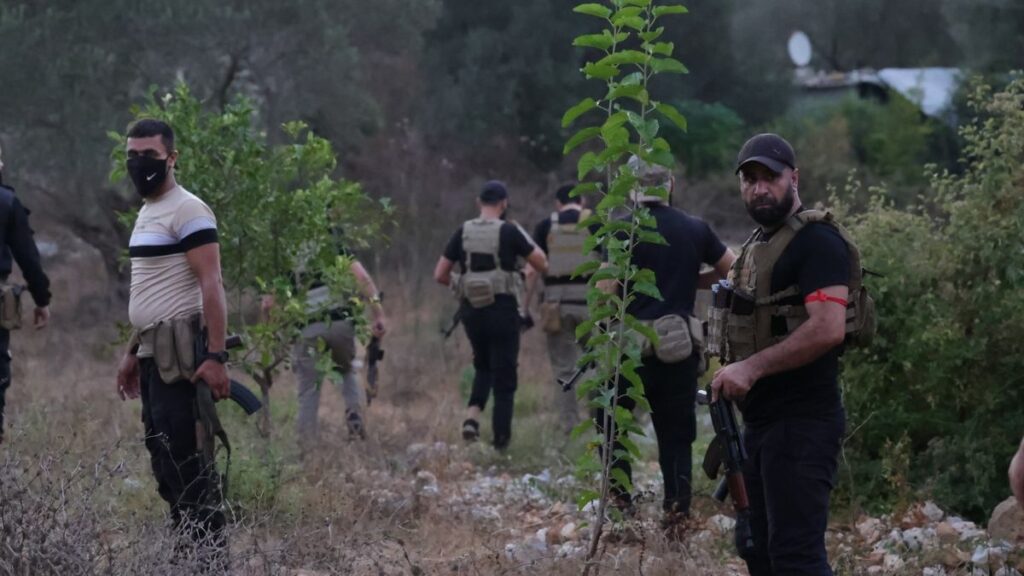
A new armed group calling itself “Men of Light – Saraya al-Jawad” has announced the start of its operations against Syrian government forces in the coastal region, saying its actions are “revenge for the souls of the martyrs.”
The group began posting short video clips on a Facebook page created on August 2.
The page also carries content supportive of the former Assad regime. On August 2, it marked “Syrian Army Day,” and issued a warning directed at “Golani’s Daesh and Nusra tails,” stating: “From now on, only two words remain between us: leave the coast. You have been warned, if you do not listen, the skies will speak.”
On September 3, the group published a video of what it described as an August 19 operation targeting a vehicle belonging to the General Security forces. The footage showed an explosion, with a masked speaker calling it “revenge for the martyrs.”
The group said the operation was “a response to violations committed by Golani’s terrorist de facto authority,” adding that it had delayed the attack several times due to the presence of civilians.
Local news outlets in Syria’s coastal region reported on August 14 that an explosion occurred near the iron factory in Jableh (Latakia countryside).
The Syrian Ministry of Defense later confirmed through the state-run Syrian Arab News Agency (SANA) that a military vehicle had come under attack by what it described as “remnants of the defunct regime” in rural Latakia, without casualties.
Enab Baladi compared landmarks in the group’s footage with Google Earth imagery, confirming the explosion near the iron factory in Jableh matched the site of the August 14 attack claimed by the “Saraya.”
According to the following map:
The expected attack site.

The electricity pole visible in the video.

The railway track visible in the video.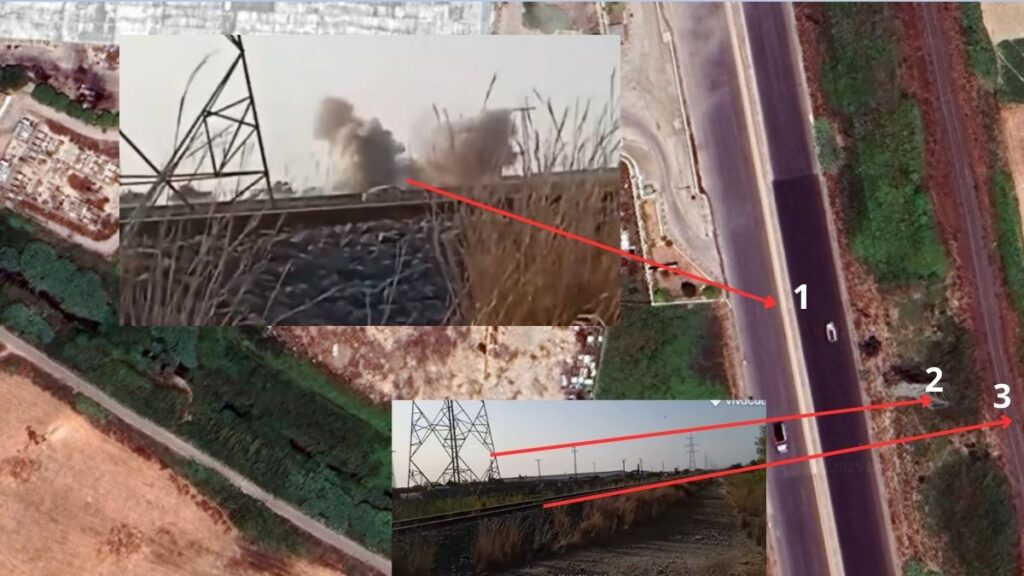
In March, Syria’s coastal region witnessed bloody clashes after movements by groups loyal to the former Syrian regime.
The events left more than 1,400 people dead, most of them civilians, alongside members of the General Security forces. The violence included summary executions of entire families, as well as incidents of torture and abduction.
The “Radar” incident
On September 4, the group released another video it said was carried out in revenge for Bashar Mihoub and his companions. The video contained only the sound of a large explosion, without specifying the location or target.
Syrian social media had circulated claims that Mihoub was killed and beheaded by a foreign fighter in the Radar neighborhood of Tartus, and that his head was paraded on a vehicle.
However, on September 5, the Interior Ministry announced the arrest of a “terrorist cell” in Tartus province, carried out by its Special Missions Unit. The ministry said those arrested were involved in the killing of two Internal Security Forces members at one of Tartus’ entrances on August 18, and in previous attacks on security and defense sites on March 6.
Syrian journalist Sumer Hatam, who covers coastal affairs, published a photo of Bashar Mihoub, confirming he was among those arrested by the Interior Ministry.
In a Facebook post, Hatam said the ministry had released photos of individuals it clashed with in Tartus days earlier, accused of killing two General Security members, showing that none of them had been killed.
He added that his team had already denied reports of Mihoub’s beheading and the parading of his body, since “no one in Tartus witnessed such an incident and it never happened.” Hatam noted that Mihoub had not even been killed in the clashes, as his image appeared among the detainees. “I believe the news of him being alive is far better than the news of his death,” he wrote.
Security campaigns in Tartus and Latakia
On August 30, the Interior and Defense ministries launched a security campaign in Tartus province (western Syria), following the killing of two Internal Security officers in the city.
Colonel Abdul Aal Mohammed Abdul Aal, head of Internal Security in Tartus, said that Special Missions Units and the Defense Ministry’s 56th Division carried out what he described as a “qualitative operation” in the province’s countryside, targeting several points used by groups the government labels as “outlaws.”
The forces raided a farm that the group had used as a base of operations and a medical point to treat its members. Abdul Aal stated that an armed clash broke out with the cell members and lasted for some time.
According to his statement, published by the ministry, the operation resulted in the “neutralization” (killed or injured) of a number of fighters, the arrest of others, and the seizure of weapons and ammunition allegedly used in attacks against the army and Internal Security forces.
In Latakia, Internal Security announced on September 4 the arrest of Hussein Kala Shukr, whom investigations linked to participating in several battles against opposition areas during the Syrian uprising.
Throughout August, Internal Security in Latakia intensified its operations, arresting a number of former regime figures accused of committing crimes against civilians.
On August 28, Brigadier General Abdul Aziz Hilal al-Ahmad, head of Internal Security in Latakia, said that his forces, in cooperation with the local Counter-Terrorism Branch, had arrested Major General Pilot Riyad Abdullah Youssef, from Termanin (Idlib countryside).
Al-Ahmad added that Youssef was implicated in overseeing airstrikes that killed unarmed civilians, rising through the ranks until he became commander of Dumayr Military Airport.
Another security operation in Latakia on August 22, also carried out with the Counter-Terrorism Branch, led to the arrest of Mohammed Shafiq Shamlus, described by the Interior Ministry as a member of “outlaw groups.”
The ministry said Shamlus was involved in assassinations targeting Internal Security officers, as well as in attacks on Defense Ministry sites. He has since been referred to the competent authorities for prosecution.