For years, Morocco’s Generation Z has been characterised as disengaged, with studies consistently showing them to be sceptical of politics and institutions.
Fewer than one-third of 18- to 24-year-olds registered to vote in the 2021 elections, while around 70 percent say they distrust elected officials.
Terrorist roadblocks strangle the economies of Mali and its neighbours
JNIM’s blockades have become a strategic weapon that threatens regional commerce and the Malian army, and harms civilians.
Since 3 September, the al-Qaeda-affiliated Jama’at Nusrat al-Islam wal-Muslimin (JNIM) has been obstructing traffic on the strategic roads linking Mali to Senegal and Mauritania. The terrorist group is carrying out its threat to blockade the cities of Kayes and Nioro in retaliation for the local populations’ alleged support for the Malian army.
Cabo Delgado insurgency persists amid failed military strategy
Eight years on, northern Mozambique’s terrorist threat remains acute despite the deployment of thousands of local and foreign troops.
Cabo Delgado’s armed insurgency marked its eighth anniversary this October. With attacks occurring on a near-daily basis, terrorism continues to pose a serious threat to local communities.
Sudan’s civil war reignites the illicit car trade into Chad
Numerous actors are involved in this surging criminal enterprise, with members of the rebel Rapid Support Forces becoming key players.
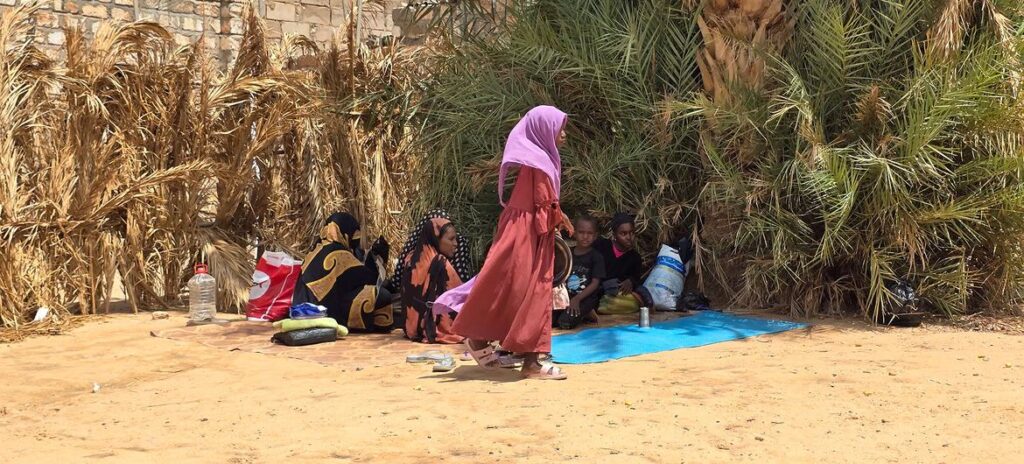
Sudan’s third civil war, which began in April 2023 between the rebel Rapid Support Forces (RSF) and Sudanese Armed Forces, has reignited the illicit cross-border trade in vehicles. At the onset of the conflict, significant looting occurred in Khartoum and other major cities, primarily perpetrated by RSF members.
Numerous actors are involved in this surging criminal enterprise, with members of the rebel Rapid Support Forces becoming key players.
Sudan’s third civil war, which began in April 2023 between the rebel Rapid Support Forces (RSF) and Sudanese Armed Forces, has reignited the illicit cross-border trade in vehicles. At the onset of the conflict, significant looting occurred in Khartoum and other major cities, primarily perpetrated by RSF members.
In its 2024 Openness Index, the Centre for Journalism Innovation and Development (CJID) declared Imo State the worst place to be a journalist in Nigeria. The index, a subnational assessment of press freedom and civic space in Nigeria, was published in July. It ranked states based on political openness, media independence, and the safety of civic actors.
By attacking transportation arteries, fuel tankers, and population centers in western Mali, the JNIM coalition is targeting the economic, security, and political vulnerabilities of the military junta in Bamako.
The Maçina Liberation Front (FLM) launched a series of seven simultaneous attacks spanning hundreds of kilometers in western Mali in border towns near Senegal and Mauritania on July 1, 2025. This represented a dramatic shift in tactics and an expansion in the reach of the Jama’at Nasrat al Islam wal Muslimeen (JNIM) coalition of which FLM is the most active member. Over the past year, nearly 20 percent of JNIM violent activity in Mali—resulting in a doubling of fatalities to over 450 deaths—took place in the west and south of the country. JNIM had previously been primarily concentrated in north and central Mali. Only 8 percent of violent episodes linked to JNIM were in western and southern Mali the year before.
The Ugandan woman spoke of the months she spent in Albania as the worst time of her life. “Like prison,” she said.
“We didn’t have ID cards, we didn’t have employment permits, we didn’t have passports. Any identification document was withheld and we couldn’t move,” she said.